Knowing how to clean a moka pot is the easiest way to improve the coffee it makes. Many people blame the beans when a moka pot tastes bitter or flat. Often the real problem is old coffee oil, limescale, or a tired rubber ring. The good news is that cleaning takes about two minutes after each brew.
In Italy, the moka is the small aluminum stovetop pot that sits in almost every home kitchen. Families hand it down like a recipe. It is simple, but it needs a little care. This guide shows you the right way to clean a moka pot, what to avoid, and when to replace the parts that wear out.
Why You Should Clean a Moka Pot Properly
Coffee leaves oils behind. These oils turn stale and bitter within days. If you do not remove them, they end up in your next cup. Hard water adds a second problem. It leaves white limescale inside the base, which slows the flow and can change the taste.
A clean pot also lasts longer. A well-kept moka can serve a family for decades. A neglected one gets pitted, smelly, and hard to unscrew. Regular care is cheap, and it protects the coffee you already paid for. If you are new to the pot, our moka pot brewing guide explains the full method from start to finish.
What You Need Before You Start
You do not need special products. Most of the tools are already in your kitchen. A few small extras make the job easier:
- Warm running water.
- A soft sponge or a small bottle brush for the narrow spout.
- A microfiber cloth to dry every part.
- Citric acid for the occasional deep clean.
- A spare gasket and filter plate set that fits your pot.
How to Clean a Moka Pot After Every Brew
This is the daily routine. It is short, and it prevents most problems. Let the pot cool first. Hot aluminum can burn your hand, and cold water on a hot pot can warp the metal.
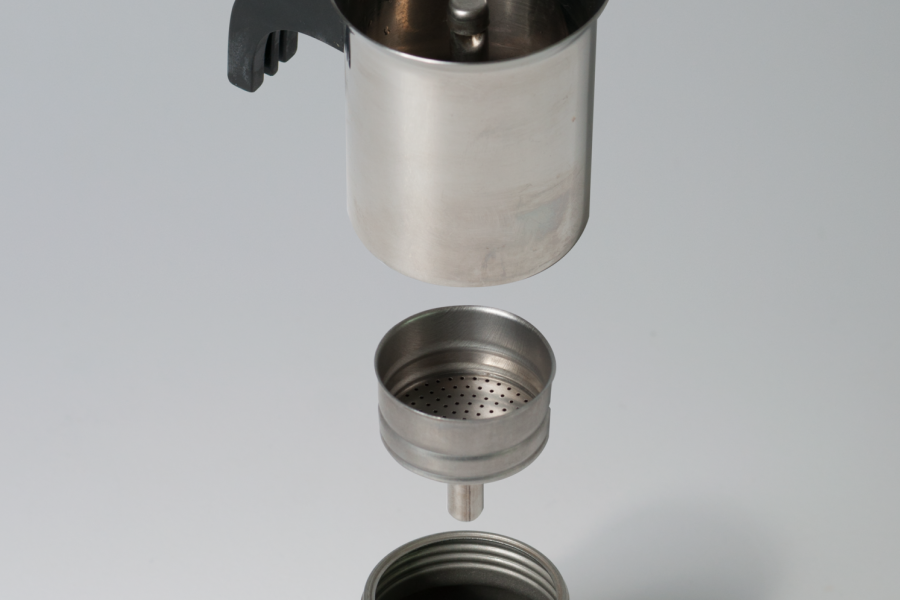
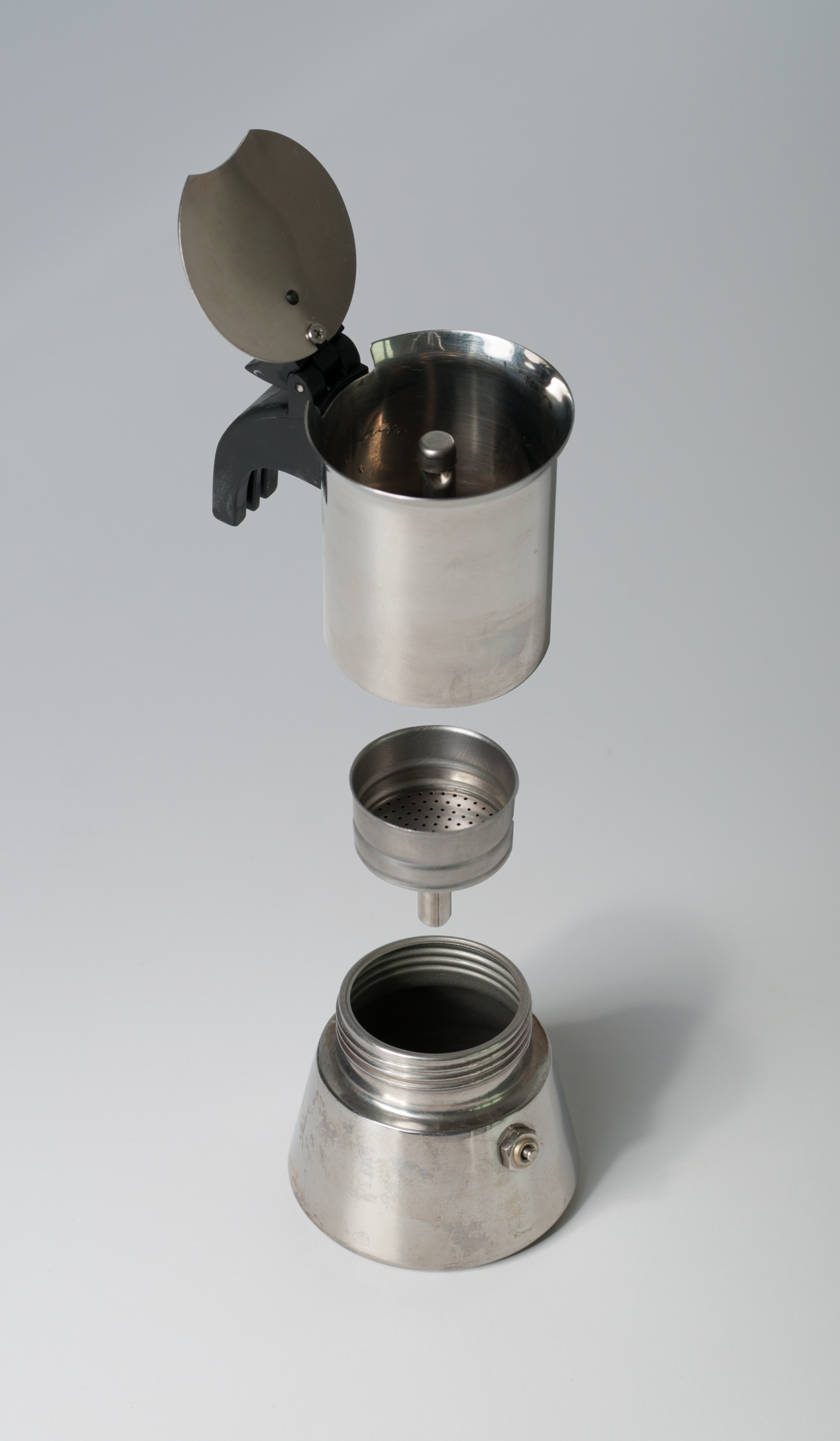
- Unscrew the pot. Take the upper chamber off the base. Remove the funnel and the filter plate.
- Knock out the grounds. Tap the funnel on a bin or a compost pot. Do not bang it on the sink.
- Rinse with warm water. Rinse the base, the funnel, the filter plate, and the upper chamber one by one.
- Check the holes. Look at the filter plate. If the holes are blocked, rub them gently with a soft brush.
- Dry every part. Wipe each piece with a cloth. Let them air dry before you screw the pot back together.
Should You Use Soap on a Moka Pot?
This is the most common question, and the answer is simple. Bialetti, the best-known maker, advises warm water only. Soap and harsh detergents can harm the aluminum. They can also leave a taste that ends up in your coffee. Plain water is enough for daily care.
Some stainless steel pots are different. Check the maker’s manual for your exact model. For aluminum pots, a little patience is better than a strong cleaner.
What Never to Do
- Do not use the dishwasher. Heat and strong detergent can darken aluminum and ruin the finish.
- Do not scrub hard. A rough pad removes the thin natural layer that protects aluminum. Coffee tastes better from a pot with a calm, matte inside.
- Do not store it wet. Trapped water leads to oxidation and a stale smell.
- Do not leave it screwed shut. Store the pot open, or with the parts stacked loosely, so air can move through.
How to Deep Clean a Moka Pot and Remove Limescale
Every two or three months, give the pot a deeper clean. Do it sooner if you see white spots or if the coffee flows slowly. The method below is a popular home tip. It is not part of the official Bialetti manual, so use it sparingly and rinse well.
- Mix one teaspoon of citric acid in warm water. A white vinegar mix also works, but citric acid has a milder smell.
- Fill the base to just below the valve with this mix.
- Put the funnel in, screw the top on, and heat the pot gently for a minute or two. Do not brew coffee.
- Switch off the heat and let the pot cool.
- Pour out the liquid, then rinse every part with plenty of clean water.
- Run one batch of plain water through the pot, then throw it away. Dry everything.
If your tap water is very hard, consider using filtered water for brewing. It protects the pot and gives a cleaner cup. Our guide to water temperature also explains why water matters so much.
The Rubber Gasket: Check It and Replace It
The rubber ring, called the gasket, seals the pot. It also holds odors. Wipe it after each brew and look at it once a month. Replace it when it feels hard, looks cracked, or does not seal well. For daily use, that usually means about once a year.
Replacing it is easy. Lift the old ring out of the groove in the upper chamber, press the new one in, and place the filter plate on top. Always buy parts made for your size and brand. A 3-cup pot and a 6-cup pot use different gaskets. You can find a ricambio, which is Italian for spare part, for most popular models.
A Simple Moka Pot Cleaning Schedule
| Part | What to do | How often |
|---|---|---|
| Coffee grounds | Knock out the puck and rinse | After every brew |
| Filter plate and funnel | Rinse and check the holes | After every brew |
| Rubber gasket | Wipe and check for cracks | Monthly check, replace about once a year |
| Whole pot | Deep clean for limescale | Every two to three months |
Common Problems and Quick Fixes
The coffee tastes metallic or sour
New aluminum pots need seasoning. Brew two or three batches and throw them away. Then the taste settles.
The coffee tastes bitter or burnt
Old oils may be the cause. Do a deep clean and check the gasket. Also lower the heat, because high heat can burn the coffee. Our perfect moka pot guide has more tips on heat and timing.
The coffee flows slowly or not at all
Check the filter plate holes for limescale. Make sure you did not pack the grounds too tight. A medium-fine grind works best.
The pot leaks from the middle
The gasket is probably worn, or grounds are stuck on the rim. Clean the rim and replace the ring if needed.
Does a Clean Pot Change the Coffee?
Yes, and you can taste it. Fresh, good beans cannot hide the flavor of old oil. If you care about specialty coffee, a clean pot is the first step. If you want to go deeper into the pot’s story, read about the history of the moka pot. For more pots to try, see our best moka pots roundup. The pot was invented in Italy in 1933, and the design has barely changed. You can read the basics on Wikipedia’s Moka pot page.
Moka Pot Cleaning FAQ
Can I put a moka pot in the dishwasher?
No. Bialetti says its aluminum Moka Express is not dishwasher safe. The heat and detergent can damage the metal.
How often should I clean a moka pot?
Rinse it after every brew. Deep clean it every two or three months, or more often if your water is hard.
Is it safe to use vinegar?
Many home users do it, but it is not in the official manual. Citric acid is milder. Always rinse well and run a batch of plain water afterward.
How do I know when to replace the gasket?
When it feels hard, looks cracked, or the pot leaks. Once a year is a good rule for daily use.
As an Amazon Associate, IndieRoastersItaly earns from qualifying purchases. This does not change the price you pay.
IndieRoastersItaly is a project that celebrates Italy’s independent coffee roasters. We are building a way for you to find and taste small-batch Italian coffee. Visit our homepage to join the waitlist.
This article was written with the support of artificial intelligence for content structuring, and was fully reviewed, verified, and refined by the author.