V60 coffee is today one of the most loved filter methods among specialty coffee fans. It was born in Japan. Its cone-shaped funnel and spiral ridges allow a level of control over extraction that few other methods offer. Let’s look at how to brew it step by step. Unlike the moka pot or espresso, V60 coffee highlights the most delicate part of the flavor profile. That makes it the ideal tool for tasting single-origin specialty lots.
What Is the V60 and Why Coffee Lovers Love It
The V60 is a cone-shaped dripper designed by Hario in the 2000s. Its name comes from the 60-degree angle of its walls. The spiral ridges inside let air escape as the water flows down, so the flow never slows to a crawl. The result is a clean cup, with bright acidity and clearly defined aromatic notes. That’s why V60 coffee is the top choice for anyone who wants to truly taste the nuances of an origin.
What You Need to Get Started
Brewing a V60 coffee only takes a few basic tools. All you need is a dripper — like the classic Hario V60, available in ceramic, glass, or plastic — dedicated paper filters, a thin-spout kettle for precise pouring, a scale, and a timer. A burr grinder also helps, since it delivers a more even grind than a blade grinder.
The Right Ratio: Coffee, Water, and Grind
A good starting point is a 1:16 ratio between coffee and water. For example, 20 grams of coffee for 320 milliliters of water. The grind should be medium-fine, similar to granulated sugar. Water should sit between 90 and 96 degrees Celsius. Water straight off the boil works fine. Total brew time should land between two and a half and three and a half minutes.
Step by Step: How to Brew It
Rinse the paper filter with hot water. This removes the papery aftertaste and preheats the dripper. Add the ground coffee and level the surface. Pour in twice the water’s weight compared to the coffee (that’s the bloom, more on this below) and wait 30 seconds. Then pour the remaining water in circular motions, moving from the center outward, in two or three pours. Keep the water level steady and let all the liquid drain through before removing the dripper.

The Bloom: The First Step That Makes the Difference
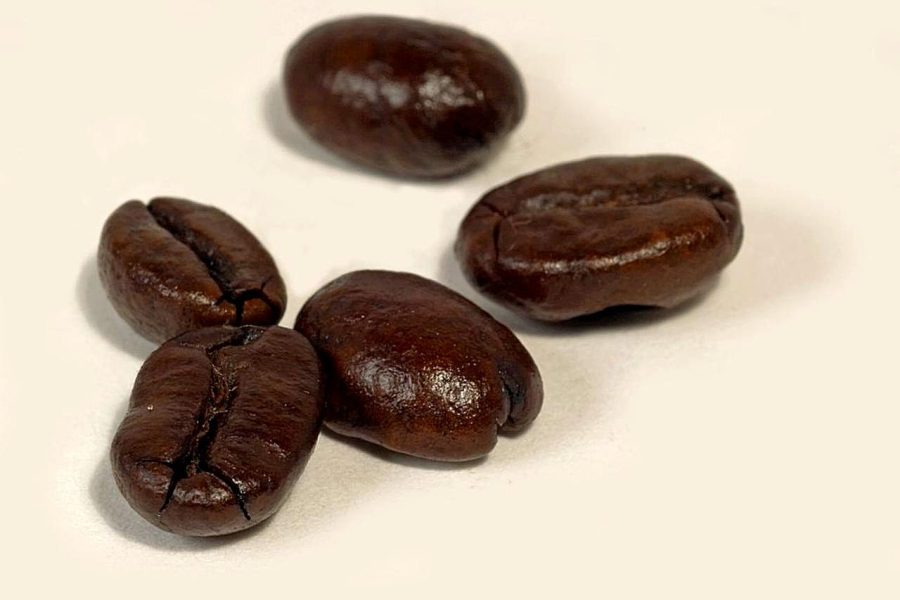
The bloom is the stage when the freshly wet ground coffee releases the carbon dioxide built up during roasting. You’ll see the surface puff up and form small bubbles. If the coffee is fresh, the bloom will be more visible. With older coffee, the reaction will be weaker. Skipping this step leads to uneven extraction, with the risk of a watery or astringent cup.

Common Mistakes to Avoid
Pouring all the water at once prevents even extraction. A grind that’s too fine slows the flow and leads to bitterness. One that’s too coarse speeds it up and leaves the coffee watery. Water quality matters too. Water that’s too hard, or too low in minerals, changes the flavor. Finally, V60 coffee should be drunk within a few minutes of brewing, while the aromas and temperature are still at their best.
V60 Recipe at a Glance
Here is the whole method in one table. Use it as your starting point, then adjust one variable at a time.
| Coffee | 15 g (one large mug) or 20 g (two cups) |
| Water | 240 g or 320 g |
| Ratio | 1:16 (try 1:15 for more body, 1:17 for a lighter cup) |
| Grind | Medium-fine, like granulated sugar |
| Water temperature | 90–96 °C (lighter roasts at the hotter end) |
| Bloom | 2× the coffee weight in water, 30–45 seconds |
| Total brew time | 2:30–3:30 minutes |
How to Dial In Your V60 by Taste
Your tongue is the best brewing tool you own. Brew with the recipe above, taste the cup as it cools a little, and change only one thing for the next brew.
- Sour, thin or salty: the coffee is under-extracted. Grind a little finer or use slightly hotter water.
- Bitter, dry or harsh on the finish: the coffee is over-extracted. Grind a little coarser or shorten the brew.
- Drawdown much slower than 3:30: the grind is probably too fine, or the bed was disturbed too much and fines clogged the filter.
- Weak but not sour: the extraction may be fine, but the ratio is too diluted. Use 1–2 g more coffee for the same water.
A useful habit is to note dose, grind setting and total time for every brew. After three or four cups you will know exactly where your grinder sits for each coffee.
Ceramic, Glass, Plastic or Metal: Which V60 Should You Buy?
The shape is the same, but the material changes how the dripper handles heat. Plastic is the cheapest and, perhaps surprisingly, keeps the brew temperature very stable, because it absorbs little heat. That is why many baristas use it in competitions. Ceramic looks beautiful and holds heat well once warm, but it needs a thorough preheat, otherwise it cools the first pours. Glass sits in between and lets you watch the bed. Metal heats up quickly and is almost unbreakable, which makes it good for travel.
Size matters more than material: the 01 size is right for one or two cups, the 02 for one to four cups, and the 03 for larger batches. If you mostly brew for yourself, the 01 is the easiest to control.
Two Famous V60 Techniques Worth Trying
The 4:6 method. Created by Tetsu Kasuya, who won the 2016 World Brewers Cup with it. You split the water into five equal pours. The first 40% (two pours) shapes the balance between sweetness and acidity; the remaining 60% controls strength. It uses a coarser grind than most recipes and is very forgiving for beginners.
Bloom, swirl and steady pour. A popular approach with a larger bloom, a gentle swirl of the dripper to wet all the grounds, and then one or two continuous pours, finishing with a final swirl to flatten the bed. It gives a very even extraction and a flat coffee bed at the end, a good sign that the water flowed evenly.
How to Make Iced V60 Coffee
For a fragrant iced coffee, use the Japanese method: brew hot directly onto ice. Keep the same 1:16 ratio but replace about 40% of the water with ice in the server, and brew with the remaining hot water and a slightly finer grind. The coffee chills instantly and keeps its aromatic notes, unlike coffee that is brewed hot and left to cool.
V60 Coffee FAQ
Do I need a gooseneck kettle for a V60?
It is not mandatory, but it helps a lot. A thin spout lets you control where and how fast the water lands, which keeps the extraction even. With a normal kettle, pour slowly and in smaller amounts.
How much coffee do I need for one cup?
About 15 grams of coffee for 240 grams of water makes one generous mug at a 1:16 ratio.
Why is my V60 coffee bitter?
Usually because the grind is too fine or the brew takes too long. Grind slightly coarser and aim for a total time under three and a half minutes. Very dark roasts can also taste bitter in a V60; lower the water temperature to around 90 °C for them.
Can I use pre-ground coffee?
You can, but you lose much of what makes the V60 special. Ground coffee loses aroma within minutes, and pre-ground coffee is rarely ground for pour-over. If you buy ground coffee, ask for a filter grind and use it within a week or two.
Is a V60 better than a Chemex?
Neither is better, they are different. The V60 uses thinner filters and gives a brighter, more aromatic cup; the Chemex uses thick filters and gives an even cleaner, lighter-bodied cup that suits larger batches. For a full comparison, read our V60 vs Chemex guide.
V60 coffee performs best with a bright, complex profile, like Kenya AA. If you’re after something more traditional, the moka pot remains a great everyday alternative.
IndieRoastersItaly exists to bring specialty coffee to your door, selected from independent Italian roasters, roasted to order, and suited to methods like the V60. Want to be among the first to try it? Join the waitlist at indieroastersitaly.it. Every month we select different lots from independent Italian roasters, with full traceability of origin and roast profile. It’s a real commitment to quality and transparency.
Keep reading: AeroPress Coffee: The Complete Guide to a Perfect Brew in 7 Steps · Best gooseneck kettles for pour-over · Japanese iced coffee with a V60 · Hario V60 Review: 6 Essential Facts Before You Buy
This article was written with the support of artificial intelligence for content structuring, and was fully reviewed, verified, and refined by the author.
Read next: Torn between two pour-over classics? Read our V60 vs Chemex comparison.
Related reading: Timemore C3 Hand Grinder Review · Kalita Wave Guide: 6 Steps for a Sweeter Cup · Best Coffee Scale: 6 Top Picks · How to bloom coffee before pour-over
As an Amazon Associate, we earn a small commission from qualifying purchases made through the links on this page, at no extra cost to you.