Ask ten coffee lovers how much coffee to use and you may get ten answers. A scoop, two spoons, “a good handful”. The truth is simpler. The best cup starts with the right coffee to water ratio. Get that number right and every other step gets easier. Get it wrong and even great beans can taste thin, sour or harsh.
In this guide you will learn what the ratio means, why grams beat spoons, and the right numbers for pour over, French press, AeroPress, espresso, the Italian moka pot and cold brew. You will also find a simple chart to save and a few fixes for when the cup tastes off.
What Is the Coffee to Water Ratio?
The coffee to water ratio is the weight of ground coffee compared with the weight of water you brew it with. We write it as 1:16, for example. That means 1 gram of coffee for every 16 grams of water. So 20 g of coffee needs 320 g of water.
Why grams and not millilitres? For water it makes no real difference, since 1 ml of water weighs about 1 g. But for coffee it matters a lot. A spoon of light roast weighs more than a spoon of dark roast, because dark beans lose more mass in the roaster. A fine grind also packs more tightly than a coarse one. A scale cuts out all of that guesswork.
The ratio controls strength: how much coffee ends up dissolved in your cup. More coffee per gram of water gives a stronger, heavier drink. Less coffee gives a lighter, more delicate one. It works hand in hand with grind size, brew time and water temperature, which control how much flavour you pull from each grain.

The Golden Ratio: A Good Place to Start
For filter coffee, most baristas start somewhere between 1:15 and 1:17. The Specialty Coffee Association (SCA) has long used a “Golden Cup” standard of about 55 g of coffee per litre of water. That works out close to 1:18. Many home brewers find 1:16 a happy middle ground: rich enough to taste the origin, light enough to stay clean and sweet.
Think of these numbers as a starting line, not a rule. Your taste, your beans and your gear all play a part. A fruity washed Ethiopian may shine at 1:17. A heavy, chocolatey Brazil may feel better at 1:15. The point of a ratio is that you can repeat a cup you love, then change one thing at a time.
Coffee to Water Ratio Chart by Brew Method
Here are reliable starting points for the most common methods. Each one brews in a different way, so each needs its own number.
- Pour over (V60, Kalita, Chemex): 1:15 to 1:17. Try 15 g of coffee to 250 g of water for one mug.
- French press: 1:12 to 1:15. Try 30 g of coffee to 450 g of water.
- AeroPress: 1:12 to 1:16 for a regular cup. Try 15 g of coffee to 220 g of water.
- Drip machine: 1:15 to 1:17, the same as pour over. Try 60 g of coffee to 1 litre of water.
- Espresso: about 1:2, dose to drink. Try 18 g of coffee for 36 g of espresso in the cup.
- Moka pot: roughly 1:7 to 1:10. Fill the basket level and the boiler to just below the valve.
- Cold brew: 1:4 to 1:8 for a concentrate you dilute later, or about 1:12 to drink straight.
Pour Over and Drip
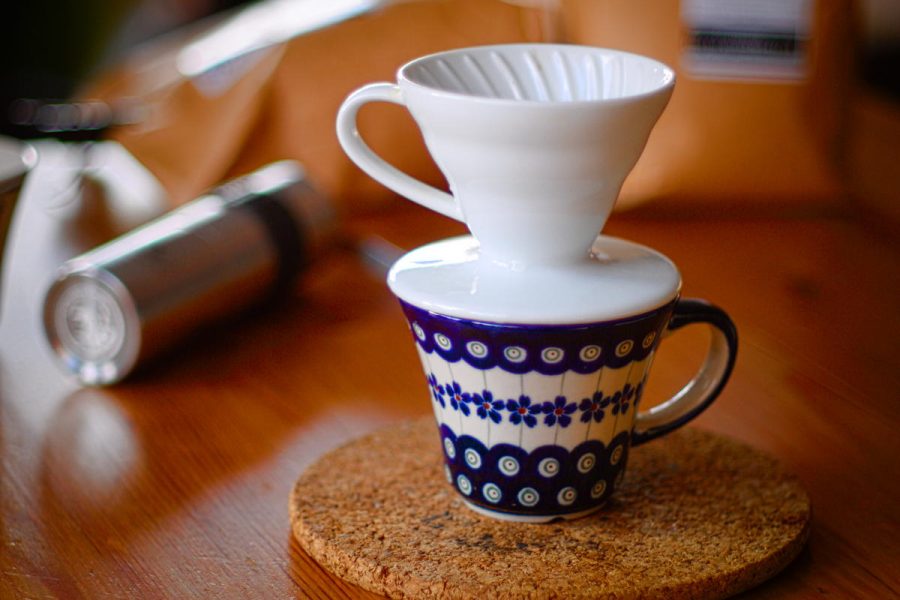
Pour over gives you the most control, so it is the best method to learn ratios with. Start at 1:16 and pour slowly in stages. If you are new to it, our V60 guide walks you through each pour. A thicker paper filter, like the one in a Chemex, often suits a slightly stronger ratio such as 1:15.
French Press and AeroPress
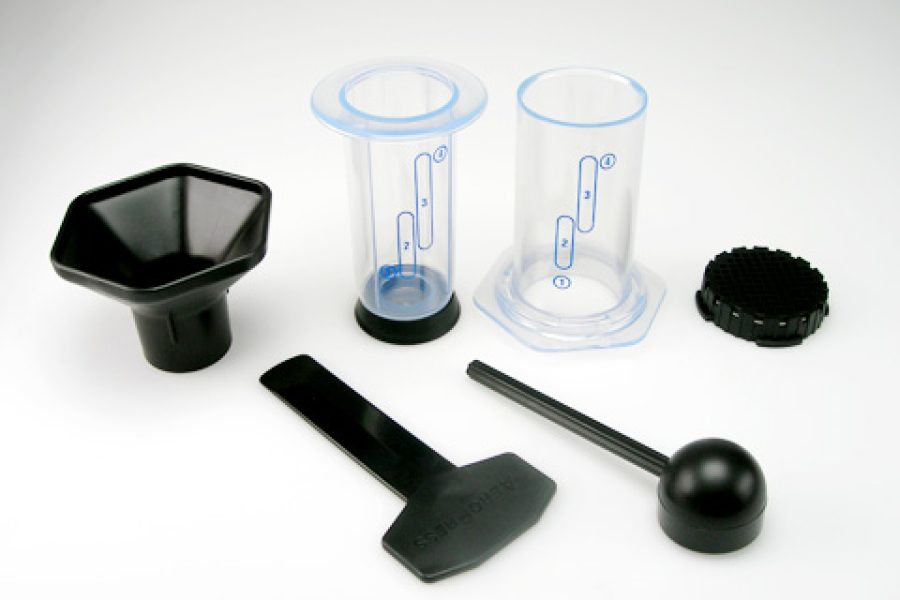
These are full immersion methods. All the coffee sits in all the water for the whole brew. Because of that, they can take a little more coffee and a coarser grind without turning bitter. Our French press guide uses 1:15 as its base. The AeroPress is very flexible: some recipes brew a strong shot and then top it up with hot water.
Espresso and the Italian Moka Pot
Espresso is a different world. Here the ratio compares the dry dose with the liquid espresso in the cup, not the water you start with. A classic shot sits near 1:2. A ristretto, the short “restricted” shot Italians love, goes tighter, around 1:1 to 1:1.5. A lungo, the “long” shot, runs closer to 1:3.
The moka pot is the small stovetop brewer found in almost every Italian home. It does not really let you play with the ratio, since the basket and boiler set the dose for you. Just fill the basket level, without pressing, and fill the water to just below the safety valve. The moka pot guide covers the rest of the method.
Cold Brew
Cold brew steeps in cold water for 12 to 24 hours. Many people make a strong concentrate at 1:4 to 1:8, then dilute it with water or milk to taste. It keeps well in the fridge for a few days. See our cold brew guide for the full recipe.

How to Measure Your Coffee to Water Ratio
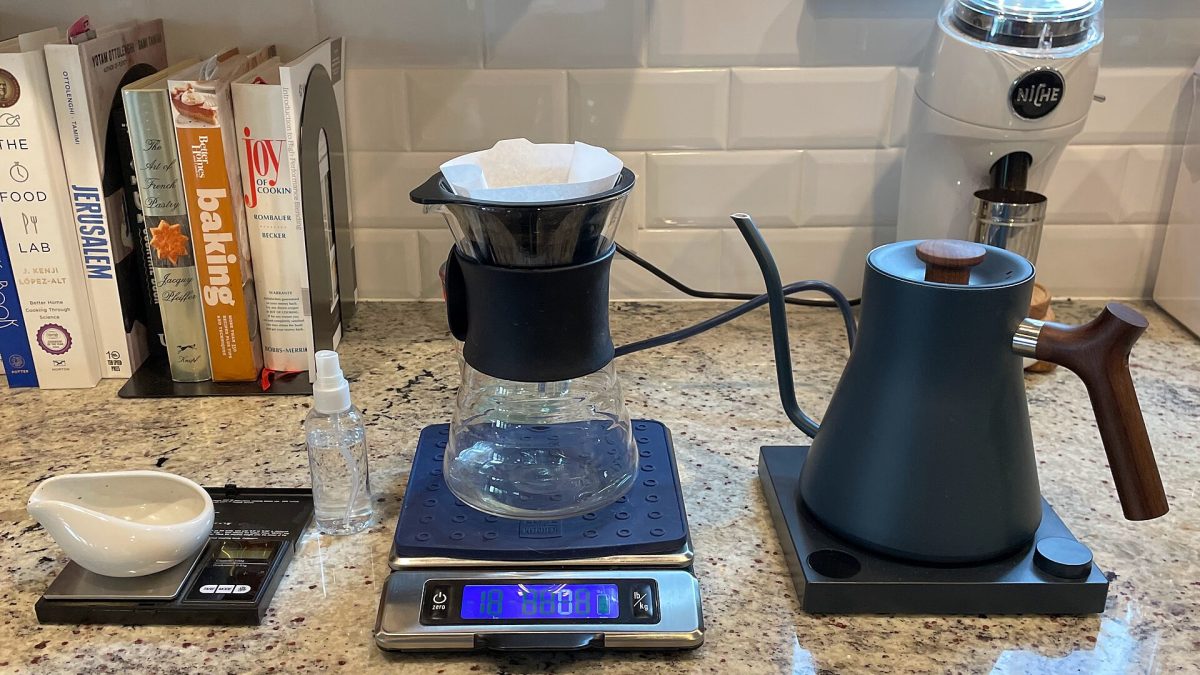
You only need one tool: a kitchen or coffee scale that reads to 1 g, or better to 0.1 g. A scale with a built-in timer, like the Hario V60 Drip Scale, helps you track both weight and brew time at once. Then follow these steps:
- Choose your ratio and the size of the cup you want.
- Divide the water weight by the ratio to get your dose. For 300 g of water at 1:16, that is 300 ÷ 16 ≈ 19 g of coffee.
- Weigh the beans, then grind them just before you brew.
- Put your brewer on the scale, tare it to zero, and pour the water by weight.
No scale yet? A level tablespoon of whole beans weighs roughly 5 to 7 g, so two level spoons for each 200 ml mug lands you near the right zone. It is fine for a start, but you will taste the difference once you weigh.
How to Adjust the Ratio to Your Taste
Once you have a base recipe, taste and tweak. Change only one thing per brew so you know what made the difference.
- Too weak or watery? Use more coffee, for example move from 1:17 to 1:15.
- Too strong or heavy? Use less coffee, or add a splash of hot water to the cup.
- Sour and thin, even at a good ratio? The coffee is likely under-extracted. Grind finer or use hotter water.
- Bitter and dry? It is likely over-extracted. Grind coarser or shorten the brew.
Keep in mind that strength and extraction are not the same thing. The ratio sets strength. Grind, time and heat set extraction. A cup can be strong and sour, or weak and bitter. Learning to tell them apart is the fastest way to brew better coffee at home.
Final Thoughts
A good coffee to water ratio is the quiet secret behind almost every great cup. Start at 1:16 for filter, 1:15 for French press and 1:2 for espresso. Weigh your coffee, write down what you did, and adjust one step at a time. In a week or two you will brew cups you can repeat on purpose. To read more about the craft, the Wikipedia page on coffee preparation is a good overview of the main methods.
Of course, even the best recipe needs good beans. That’s the idea behind IndieRoastersItaly: a curated selection of small Italian roasters, with beans roasted to order and sent fresh to your door. Visit our home page and join the waitlist to be among the first to try it.
This article was written with the support of artificial intelligence for content structuring, and was fully reviewed, verified, and refined by the author.
Related reading: Coffee Brewing Myths Debunked · Kalita Wave Guide: 6 Steps for a Sweeter Cup · Best Coffee Scale: 6 Top Picks