
Coffee at home is full of rules. Some come from a grandparent, some from a forum, and some from a barista who said it once with great confidence. A few of them are right. Many are half right. And some are plain wrong. In this guide we look at seven common coffee brewing myths, what the science says, and what to do instead.
You don’t need a lab or a pricey setup to brew well. You just need to know which habits help and which ones quietly hold your cup back. Let’s start with the one that sparks the most debate.
Myth 1: Boiling Water Burns Your Coffee
This is one of the most repeated coffee brewing myths. The idea is that water at a full boil “scorches” the grounds. But coffee beans are roasted at well over 200°C (about 400°F). Water at 100°C (212°F) can’t burn them in any real sense.
What water heat does change is extraction. Hotter water pulls flavor out faster. The Specialty Coffee Association suggests a range of about 90–96°C (195–205°F) for most brewing. Water right off the boil is at the top of that range, or just above it. For a dark roast, that can tip the cup toward bitter. For a light roast, near-boiling water often works very well, since dense, lightly roasted beans are harder to extract.
The simple fix: boil the water, then wait about 30 seconds before you pour. If you brew a lot of pour-over, a kettle with a set heat, like this Cosori gooseneck electric kettle, takes the guessing out of it.

Myth 2: More Coffee Always Makes a Better, Stronger Cup
Adding an extra scoop feels like a safe bet. In truth, it often makes things worse. Strength and flavor are two different things. Strength is how much coffee ends up in the water. Flavor depends on extraction, which is how well the water pulls out the good parts of the grounds.
Too much coffee for the water can leave the cup under-extracted. It tastes heavy but also sour and thin at the finish. A steady ratio is the real key. For filter coffee, around 1 gram of coffee to 16 grams of water is a great start. Our guide to the coffee to water ratio explains how to tune it for each method.
Myth 3: The Bloom Is Just for Show
The bloom is the short pause at the start of a pour-over. You wet the grounds with a little water and wait 30 to 45 seconds. Some people skip it as barista theater. It isn’t.
Freshly roasted coffee holds a lot of carbon dioxide. When hot water hits it, that gas rushes out and the bed bubbles up. If you pour all the water at once, the gas pushes water away from the grounds. The result is uneven extraction. A short bloom lets the gas escape first, so the rest of the brew flows evenly.
A big, lively bloom is also a good sign of fresh beans. Coffee that barely bubbles has likely been sitting on a shelf for months.
Myth 4: You Must Tamp Espresso With 30 Pounds of Force
Many home baristas learn that a “perfect” tamp needs exactly 30 pounds of pressure. It’s a handy rule of thumb, but the number itself isn’t magic. Once the coffee bed is fully packed, pressing harder does very little. The espresso machine pushes water at around 9 bars, far more than any arm can add.
What really matters is a level, even tamp, done the same way every time. A tilted puck lets water rush through the thin side. This is called channeling, and it gives a sour and bitter shot at once. Press until the coffee stops giving, keep the tamper flat, and stay consistent. Some people like a calibrated espresso tamper for this, since it clicks at the same pressure each time.

Myth 5: A Finer Grind Always Means More Flavor
Grinding finer does speed up extraction. So it’s easy to think finer is always better. But every brew method has a sweet spot. Go too fine in a pour-over and the water drains slowly, the bed clogs, and the cup turns bitter and dry. Go too fine in a French press and the mesh lets sludge through.
The goal is the right grind for the method, not the finest one. A good burr grinder helps more than any other tool, since it makes even particles. For a full chart by method, see our coffee grind size guide.
Myth 6: Rinsing Paper Filters Is a Waste of Time
Paper filters can give a faint papery taste, mainly in light, delicate coffees. A quick rinse with hot water washes most of it away. It also warms the dripper and the cup, so your brew doesn’t lose heat in the first minute.
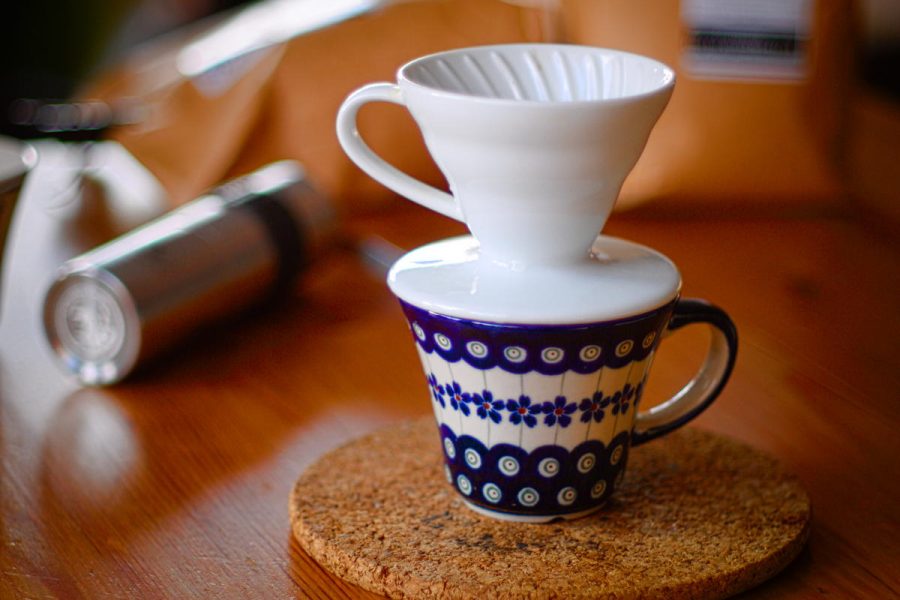
It takes ten seconds and uses a splash of water. Just remember to throw away the rinse water before you start brewing. If you use a cone dripper, our V60 coffee guide walks through the full routine step by step.

Myth 7: Water Doesn’t Matter, Only the Beans Do
A cup of filter coffee is about 98% water. So water quality shapes the taste more than most people think. Very hard water can mute bright notes and leave scale in your gear. Distilled water, with no minerals at all, tends to give a flat and hollow cup. Minerals like calcium and magnesium help pull flavor from the grounds.
You don’t need fancy bottled water. If your tap water tastes good, it is often fine. If it tastes of chlorine or leaves heavy scale, a simple filter jug is an easy upgrade. The SCA coffee standards include target values for brewing water if you want to go deeper.
How to Avoid Common Coffee Brewing Myths at Home
Here is a short checklist to keep these myths out of your kitchen:
- Let boiled water rest about 30 seconds, or use a kettle with a set heat.
- Weigh your coffee and water instead of adding “one more scoop”.
- Bloom fresh coffee for 30 to 45 seconds before the main pour.
- Tamp level and the same way each time, rather than as hard as you can.
- Match the grind to the brew method.
- Rinse paper filters and preheat your gear.
- Use clean, good-tasting water with some minerals in it.
How to Tell Fact From Folklore
Ask where a claim comes from. If it cites a study, look at who ran it and how large it was. If it comes from a seller, take it with care. A single cup tells you little. Patterns across many people tell you more.
Simple Habits That Beat Any Myth
- Use fresh, good-quality beans.
- Weigh your coffee and water.
- Keep your gear clean.
- Taste and adjust, one change at a time.
These habits work for almost every brew method. They also protect you from most myths about brewing.
Final Thoughts
Most coffee brewing myths start with a grain of truth. Water heat, grind and tamping all matter. They just matter in more subtle ways than the old rules suggest. Change one thing at a time, taste the result, and trust your own palate. For a wider view of the main methods, the Wikipedia page on coffee preparation is a good place to start.
Of course, even the best technique needs good beans. That’s the idea behind IndieRoastersItaly: a curated selection of small Italian roasters, with beans roasted to order and sent fresh to your door. Visit our home page and join the waitlist to be among the first to try it.
Related reading: Specialty Coffee Myths: 7 Truths · Cold brew myths debunked
This article was written with the support of artificial intelligence for content structuring, and was fully reviewed, verified, and refined by the author. · Coffee Water Temperature: The Essential Guide