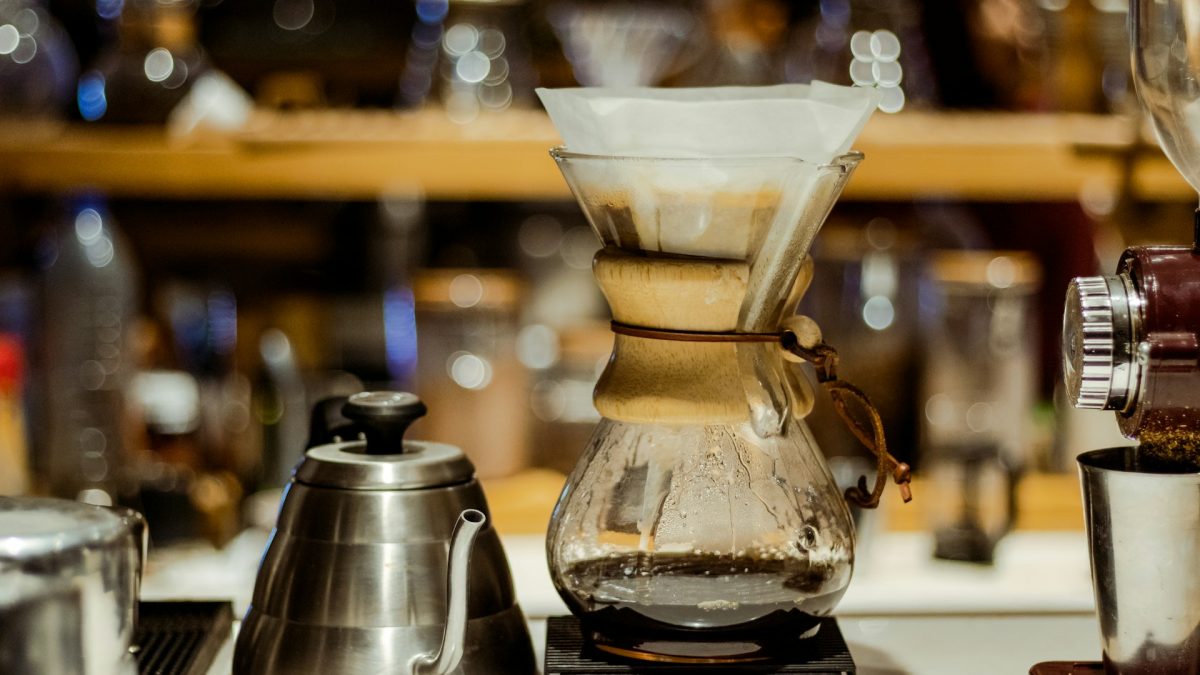
Chemex coffee is a filter brewing method born in 1941. Its inventor was German chemist Peter Schlumbohm. Since then, it has become an icon of specialty coffee.
In this article, we look at what you need to use it. We’ll cover the basic recipe and the steps for a clean, balanced brew.
What Is a Chemex, and Why Is It Different
The Chemex is a glass, hourglass-shaped carafe. It has no plastic or metal parts touching the coffee. Its design is part of the permanent collection at MoMA in New York.
The filter is the real secret of this method. It’s much thicker than a normal filter. It traps the coffee’s oils and gives you a clean, light cup. Wikipedia tells the full story of this brewing method.
Washed, floral origins pair well with this method. A full-bodied coffee, like Sumatra Mandheling, works better with a moka pot or French press.
What You Need to Make Chemex Coffee
You need just a few key tools: a 3-, 6-, or 8-cup Chemex (a 6-cup bundle already comes with the original thick paper filters), a kitchen scale, a grinder with a coarse setting, and a gooseneck kettle. The kettle helps you pour water with precision.

The Basic Recipe: Ratio, Temperature, and Time
For Chemex coffee, the standard ratio is 6 grams of coffee for every 100 ml of water. For a 500 ml Chemex, you need 30 grams of coffee. The grind should be medium-coarse, like coarse salt. Find a full guide in our article on coffee grind size.
The ideal water temperature is around 94°C (201°F). Total brew time is about 3-4 minutes. If the coffee drains too fast, the grind is too coarse. If it drains too slow, make the grind coarser.
5 Steps to a Perfect Brew
Step one: fold the filter and rinse it with hot water. This removes the paper taste and warms up the glass.
Step two: pour the ground coffee into the filter. Level the surface with a light shake.
Step three: pour a small amount of water to wet all the coffee. Wait 30-45 seconds. This stage is called the bloom, and it releases gas from the coffee.

Step four: pour the rest of the water in slow, steady circles. Start from the center and move out toward the edges. Avoid pouring straight onto the paper filter.
Step five: wait until all the water has filtered through. Remove the filter and serve the coffee right away.
The Chemex cleans easily with hot water after each use. Skip scented soap: it can leave odd smells in the glass. With the right care, this carafe lasts for years and always gives you the same clean cup.
Common Mistakes to Avoid
The first mistake is the wrong grind. A grind that’s too fine clogs the filter. A grind that’s too coarse makes weak coffee.
The second mistake is pouring the water too fast. The flow should stay slow and steady. A good comparison is the V60, another filter method that needs the same care when pouring.
The third mistake is using coffee ground too long ago. Coffee loses aroma within a few weeks. It’s best to grind it right before brewing.
One last tip is about water. Always use filtered or low-mineral bottled water. Water that’s too hard changes the flavor of your Chemex coffee and hides its more delicate notes. With these tips, your cup will always be balanced.
Chemex Recipes by Size
The Chemex comes in several sizes. You don’t need to fill it to the top: keep the 6 g per 100 ml ratio and scale the recipe to how many people you are brewing for.
| Model | Coffee | Water | Serves | Approx. total time |
|---|---|---|---|---|
| 3-cup | 20 g | 330 ml | 1–2 mugs | 3–3:30 min |
| 6-cup | 30 g | 500 ml | 2–3 mugs | 3:30–4 min |
| 6-cup (full) | 40 g | 650 ml | 3–4 mugs | 4–4:30 min |
| 8 or 10-cup | 50–60 g | 830–1,000 ml | 4–6 mugs | 4:30–5:30 min |
Larger batches take longer simply because there is more coffee in the filter. If a big brew runs much beyond five and a half minutes, grind a little coarser.
Chemex Filters: Folding, Types and Alternatives
Chemex paper filters are noticeably heavier than standard filter papers, and they are the main reason for the method’s clean, tea-like cup. Place the filter so that the side with three layers of paper faces the pouring spout. The thicker side keeps the filter from collapsing into the spout and lets air escape while the coffee drains.
- White (bleached) filters give the most neutral taste after rinsing and are the most common choice.
- Natural (unbleached) filters can leave a slight papery note, so rinse them generously.
- Pre-folded squares or half-moons brew the same way; it is only a matter of convenience.
- Reusable metal or cloth filters let more oils into the cup, giving more body but a less clean, less “Chemex-like” result.
Troubleshooting Your Chemex
- The coffee stops draining halfway: the filter may be sealed against the spout, creating an airlock. Make sure the triple layer sits on the spout side.
- The brew takes more than six minutes: the grind is too fine, or the coffee contains a lot of fine dust. Go coarser.
- The cup tastes thin and sour: the grind is too coarse or the water too cool. Go a little finer and use water just off the boil.
- The cup tastes papery: rinse the filter longer with hot water, then discard the rinse water.
How to Clean a Chemex
Rinse the carafe right after use, then wash it with warm water, a drop of washing-up liquid and a long bottle brush. Coffee oils slowly leave a brown film on the glass; a soak in warm water with a little white vinegar or a coffee descaler removes it. If your model has the wooden collar and leather tie, remove them before washing, and never put them in the dishwasher.
Chemex FAQ
How long should a Chemex brew take?
Between three and a half and four and a half minutes for a typical 30–40 g brew, bloom included. Smaller brews finish faster, bigger ones slower.
Can I make just one cup in a Chemex?
Yes, especially with the 3-cup model. In a larger Chemex a very small dose drains quickly, so grind slightly finer to keep the brew time above three minutes.
What is the difference between a Chemex and a V60?
Both are pour-over methods, but the Chemex uses a much thicker filter and is also the serving carafe. It gives a cleaner, lighter-bodied cup and suits brewing for several people. The V60 uses thin filters, brews faster and gives a slightly brighter, more aromatic cup. We compare them point by point in our V60 vs Chemex guide.
Which coffee works best in a Chemex?
Light to medium roasts with clear flavors: washed Ethiopian, Kenyan or Central American coffees shine in a Chemex. Very dark roasts can taste flat, because the thick filter removes much of the body that hides their bitterness.
Does the paper filter make the coffee healthier?
Paper filters hold back most of the coffee oils, including compounds called diterpenes (such as cafestol), which can raise cholesterol when consumed in large amounts. That is one reason filtered coffee is often recommended over unfiltered methods for people watching their cholesterol.
IndieRoastersItaly is selecting specialty coffee from small Italian roasters, roasted to order. Visit the IndieRoastersItaly homepage to sign up for the waitlist and find out about the first origins arriving.
Keep reading: AeroPress Coffee: The Complete Guide to a Perfect Brew in 7 Steps
This article was written with the support of artificial intelligence for content structuring, and was fully reviewed, verified, and refined by the author.
Read next: Not sure whether to pick a Chemex or a V60? Our V60 vs Chemex comparison breaks down the differences.
Related reading: Kalita Wave Guide: 6 Steps for a Sweeter Cup · Coffee bloom: the essential first step