
The history of cappuccino is the most misunderstood part of Italian coffee, abroad and even in Italy itself. Its name comes from Capuchin friars. But the cappuccino we drink today is much newer than most people think. Its story runs through a convent, a Viennese cafe, and a steam machine built in Milan.

Why Is Cappuccino Called Cappuccino?
Short answer: cappuccino is named after the Capuchin friars, cappuccini in Italian. The drink’s brown color matches their brown habits. The friars themselves took their name from the cappuccio, the long hood on their robe.
The name comes from a color. The robes of the Capuchin friars, a Franciscan order founded in 1525 by Matteo da Bascio, were a very distinct dark brown. In 18th-century Vienna, cafés served coffee with cream and sugar as a “Kapuziner”, because its brown color looked just like that robe. A popular legend links the drink to the Capuchin friar Marco d’Aviano and the siege of Vienna in 1683, but there is no historical proof. From there came the name “Kapuziner,” which later became “cappuccino” in Italian.
There’s an important detail here, though. The Capuchin friars didn’t invent the drink. The link is only about color. No recipe, no convent, no real invention on their part: just a name borrowed from a shade of brown.
Where Cappuccino Was Born: Vienna or Italy?
The history of cappuccino really begins in Vienna. In 1683, after the Ottoman siege, the city was left with abandoned sacks of coffee. That’s how a tradition of Viennese coffee drinks with cream, cinnamon, and honey got started: the “Kapuziner.” But that drink looked little like today’s cappuccino. It was sweeter, thicker, and often had no real foamed milk at all.
The cappuccino we know now, with creamy milk foam on top of espresso, is an Italian invention from the 1900s. And it comes from a technical invention, not a recipe.
The Steam Machine That Created the Modern Cappuccino
In 1901, Luigi Bezzera patented the first espresso machine in Milan. It used steam to pull coffee shots faster. But that same steam, sent through a wand, could also froth milk. In the 1930s and 1940s, as espresso bars spread across Italy, baristas started using that steam jet to make foam. If you want to go further back, our piece on the legend of Kaldi tells the story of how coffee itself began. This is how the modern cappuccino was born: espresso, hot milk, and foam, in the proportions we know today.

Why Italians Don’t Drink Cappuccino After 11am
This is the most famous unwritten rule of Italian coffee. Cappuccino is a breakfast drink, never ordered after lunch. The reasons are practical, not about taste. Milk is seen as a meal on its own, not a digestive aid. After a big lunch, another dose of milk and foam feels heavy on the stomach. Espresso, on the other hand, stays light: that’s why Italians only order that after eating.
It’s a social custom, not a scientific rule. But it’s so deeply rooted that ordering a cappuccino at 3pm in an Italian bar still gets a few curious looks.
Cappuccino Around the World: From Italy to the US
In the 1980s and 1990s, cappuccino landed in the United States. Coffee chains reshaped it: bigger cups, more milk, less foam than the Italian tradition. That’s the cappuccino many people outside Italy know today. It’s different from the original, but it still owes everything to that same Milanese invention from the early 1900s.
The Perfect Cappuccino: Getting the Proportions Right
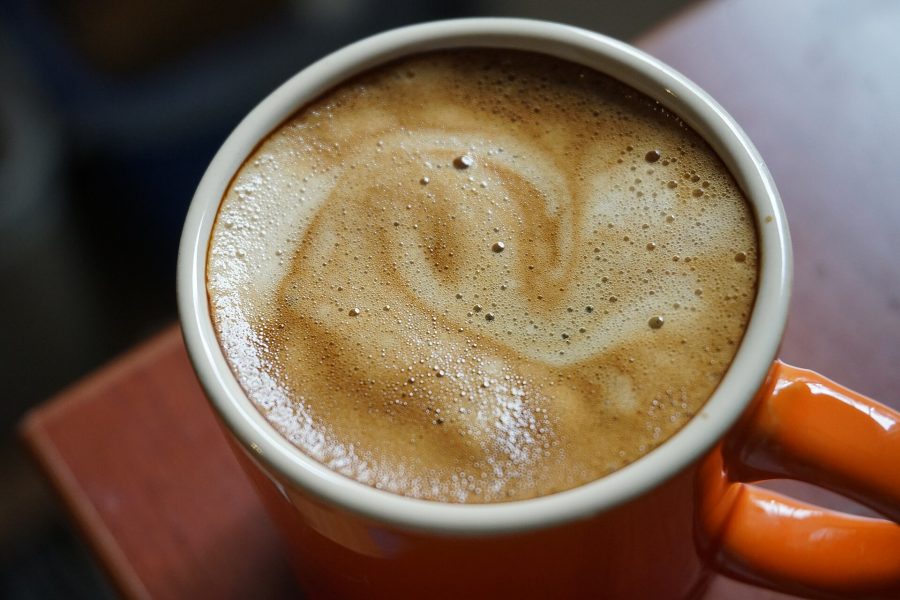
The classic Italian recipe calls for three nearly equal parts: one third espresso, one third hot milk, one third foam. The foam should be dense and fine, not puffed up like whipped cream. And it should be poured, not just spooned on top: that pour is what creates the classic heart or rosette shapes of latte art.
Cappuccino vs Latte vs Flat White
Outside Italy, these three drinks are often confused. They all combine espresso and steamed milk, but the amount of milk and the texture of the foam make them very different.
| Cappuccino | Caffè latte | Flat white | |
|---|---|---|---|
| Typical size | 150–180 ml | 240 ml or more | about 160 ml |
| Coffee | One espresso (Italy) or a double | One or two espressos | Usually a double, often ristretto |
| Milk foam | Thick, velvety layer of 1–2 cm | Thin layer | Very thin, glossy microfoam |
| Taste | Balanced coffee and milk | Mild and milky | Coffee-forward |
| Origin | Italy, 20th century | Italy (caffè latte), popularized abroad | Australia / New Zealand, 1980s |
A tip for travelers: in Italy, “latte” simply means milk. If you order “a latte” at an Italian bar, you may get a glass of warm milk. Ask for a “caffè latte” or a “latte macchiato” instead.
Cappuccino Variations You Will Find in Italian Bars
- Cappuccino scuro: “dark”, with less milk and a stronger coffee taste.
- Cappuccino chiaro: “light”, with more milk.
- Cappuccino senza schiuma: without foam, for those who just want the milk.
- Cappuccino con cacao: with a dusting of cocoa on top, very common in the morning.
- Cappuccino d’orzo: made with roasted barley instead of coffee, caffeine-free.
- Cappuccino di soia (or with oat milk): plant-based milk is now available in most city bars.
- Cappuccino viennese: in many bars, topped with whipped cream and cocoa or chocolate instead of milk foam, a small nod to the drink’s Viennese ancestor.
How to Order a Cappuccino in Italy Like a Local
Order it in the morning, usually with a cornetto (the Italian cousin of the croissant). Drink it at the counter: in most bars it costs less standing up than sitting at a table with table service. In many cities you pay first at the till, then hand the receipt to the barista. Just say “un cappuccino, per favore”. If you want it less hot, ask for it “tiepido”; if you want it very hot, “bollente”.
How to Make a Cappuccino at Home
- Pull one espresso (about 25–30 ml) into a preheated cup of 150–180 ml.
- Pour about 100–120 ml of cold whole milk into a small steel jug. Whole milk foams best; for plant milk, choose a “barista” version.
- Place the steam wand just under the surface and let in a little air for a few seconds, until the milk grows by about a third.
- Sink the wand slightly deeper and let the milk spin until the jug feels hot but still touchable, around 60–65 °C. Hotter milk loses sweetness.
- Tap the jug on the counter and swirl it until the milk looks glossy, like wet paint.
- Pour steadily into the espresso, starting high and finishing close to the surface to bring the foam on top.
No espresso machine? Brew a strong moka pot coffee and froth the hot milk with a handheld frother or by pumping it in a French press. It will not be a bar cappuccino, but it gets surprisingly close.
Cappuccino FAQ
Why is cappuccino called cappuccino?
Because of its color. Coffee mixed with milk turns the same brown as the habits of the Capuchin friars, called cappuccini in Italian. In 18th-century Vienna a coffee with cream was already called a “Kapuziner”. Italy later used the same idea for its espresso and milk drink.
Where was cappuccino invented?
It has two homes. Its ancestor, the Kapuziner, came from the coffee houses of Vienna. The cappuccino we drink today, with espresso and steamed milk foam, took shape in Italy in the 20th century, once espresso machines spread through Italian bars.
Is it rude to order a cappuccino after 11am in Italy?
Not rude, just unusual. Nobody will refuse to make it, especially in tourist areas. Ordering one with or right after a big meal is what really surprises Italians.
How much caffeine is in a cappuccino?
The same as the espresso inside it. The milk adds volume, not caffeine. An Italian cappuccino made with a single espresso has the same caffeine as one espresso.
What is the difference between a cappuccino and a macchiato?
A caffè macchiato is an espresso “stained” with just a spoonful of milk foam, served in a small espresso cup. A cappuccino has much more milk and a full layer of foam.
Why does my homemade foam disappear quickly?
Usually the milk was too hot, not cold enough at the start, or too much air went in at once, creating big bubbles. Start with cold milk, add air only at the beginning and stop before it gets too hot.
Knowing the history of cappuccino also helps you pick better coffee to make one. A well-balanced espresso, roasted to hold up under milk, makes the difference between an average cappuccino and a truly good one. That’s where the work of a specialty roaster shows, even under the foam. For a broader historical deep dive, the Wikipedia entry on cappuccino gathers sources and the different theories on its origin.
IndieRoastersItaly is a project now building its waitlist. It picks lots from small Italian roasters, roasted to order. If you want to find specialty coffee chosen with this level of care, visit the homepage and join the waitlist.
Keep reading: Italian Coffee Drinks: 10 Essential Orders and the Unwritten Rules
This article was written with the support of artificial intelligence for content structuring, and was fully reviewed, verified, and refined by the author.
Related reading: Italian Coffee Drinks Explained · Historic Cafes in Italy · How to Froth Milk at Home · Marocchino coffee, the cocoa cousin of the cappuccino