The historic cafes in Italy are more than places to drink coffee. They are living museums. Writers, painters, rebels and royals once sat at their marble tables. Many still serve coffee in rooms that have barely changed in 200 years. If you love coffee and history, these six are worth a trip.
Coffee reached Italy through Venice in the 1600s, thanks to trade with the Ottoman Empire. At first it was sold as a costly drink, almost a medicine. Soon, coffee houses opened across Europe. You can read the full story in our piece on the first coffee houses in Europe. In Italy, these rooms became the heart of city life.
Why Historic Cafes in Italy Matter
In the 18th and 19th centuries, the café was where people met to talk. They read the news, argued about politics and shared new ideas. There was no internet and few public places to gather. So the café played the role of a club, a library and an office, all at once.
Today, Italy has a formal group of “historic places” called Locali Storici d’Italia. It lists cafés, bars and pastry shops that have kept their old look and spirit. Many of the places below are part of it.
6 Legendary Historic Cafes in Italy
1. Caffè Florian, Venice (1720)
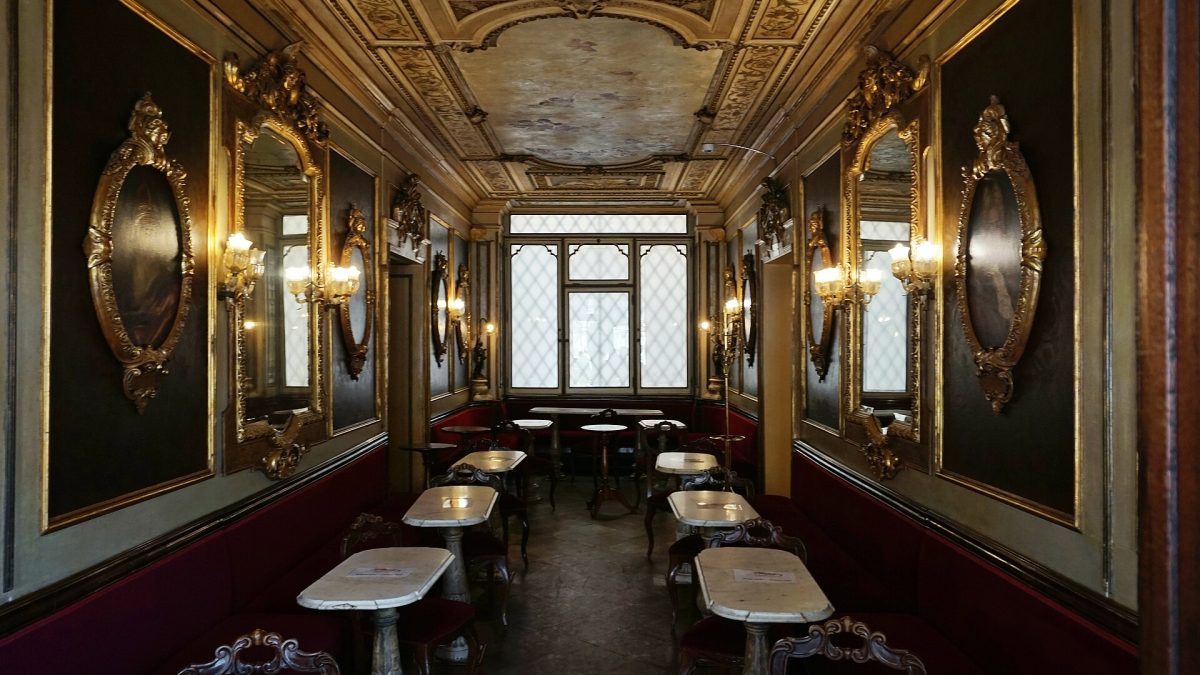
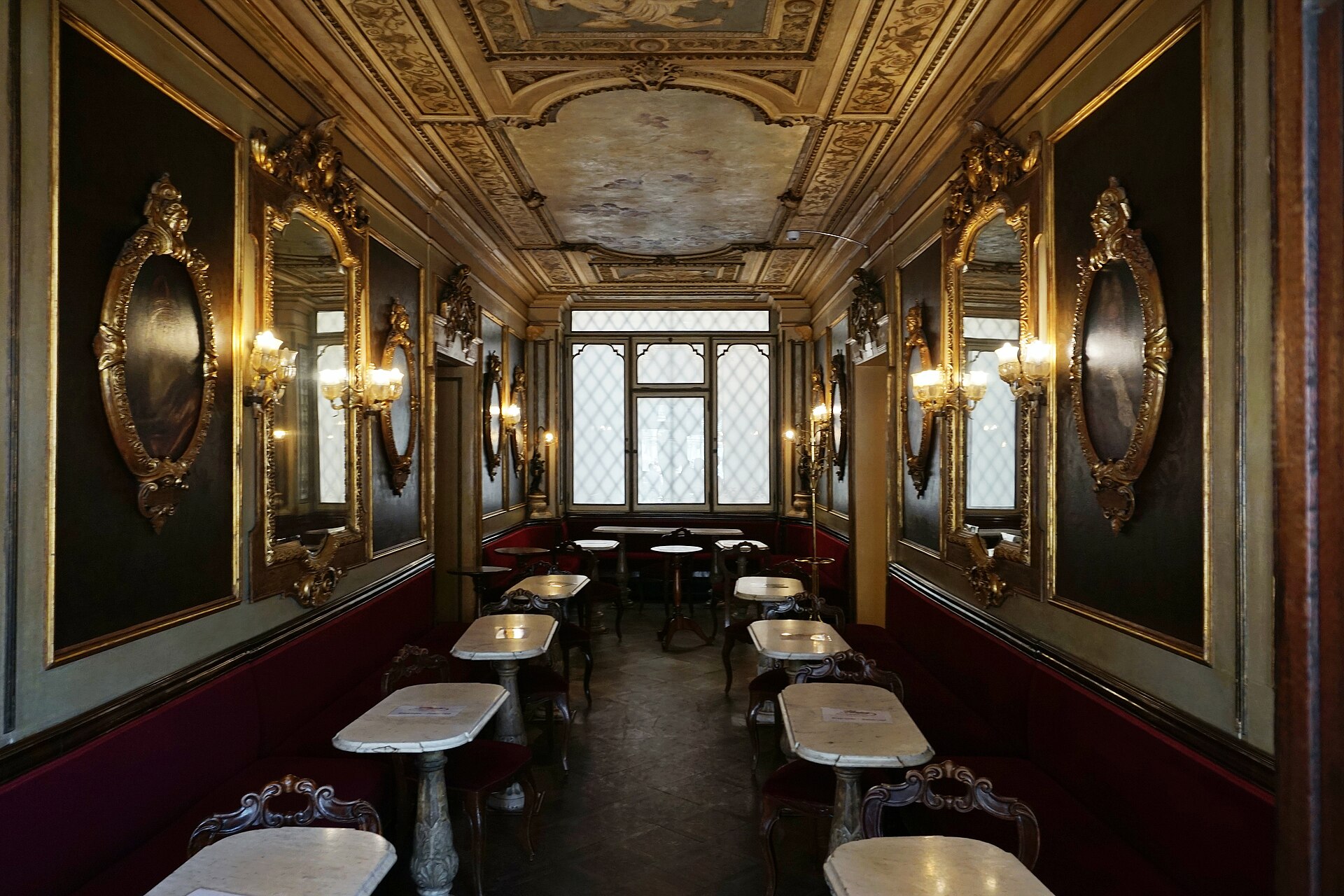
Caffè Florian is often called the oldest café in Italy still open today. It opened in 1720 under the arches of Piazza San Marco. The founder was Floriano Francesconi, and the café soon took his name. Its small rooms are covered in mirrors, gold frames and painted panels. It is one of the few places in Venice where women were welcome in the 1700s.
A coffee at Florian is not cheap, above all when the small orchestra plays outside. But you are paying for the room, the view and three centuries of history.
2. Antico Caffè Greco, Rome (1760)
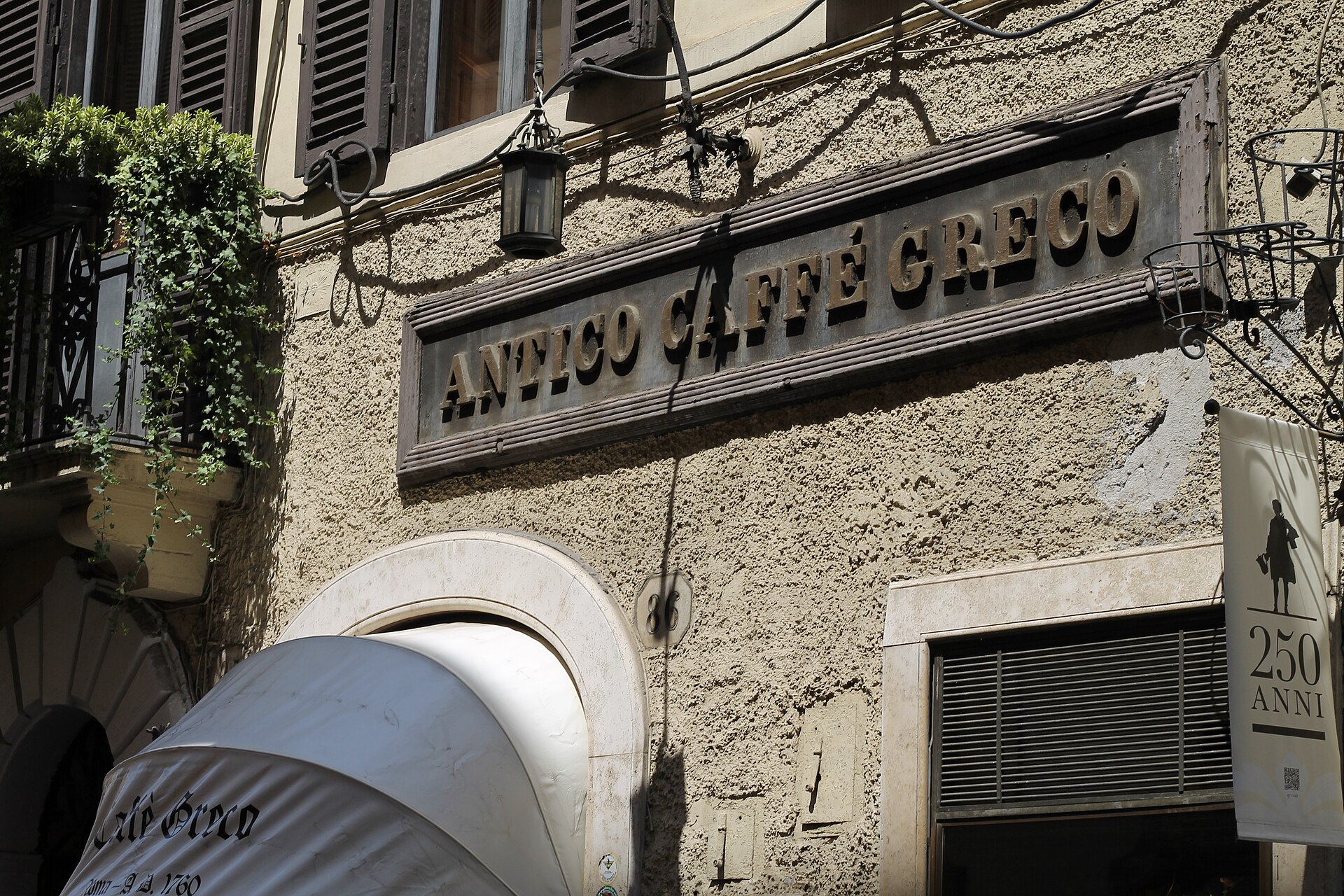
Antico Caffè Greco opened in 1760 on Via dei Condotti, near the Spanish Steps. It is the oldest café in Rome. Its long, narrow rooms are lined with red velvet and hundreds of paintings. Over the years, artists and poets from across Europe came here. Goethe, Byron and Keats are among the names most often linked to it.
3. Caffè Al Bicerin, Turin (1763)
This tiny café in Turin has only a few round marble tables. It opened in 1763 and gave its name to a local drink: the bicerin. It is a small glass with layers of espresso, hot chocolate and cream, served without stirring. The statesman Camillo Benso, Count of Cavour, is said to have come here to rest from politics.
4. Caffè Pedrocchi, Padua (1831)
Caffè Pedrocchi is a grand building in neoclassical style. The architect Giuseppe Jappelli designed it for the coffee maker Antonio Pedrocchi, and it opened in 1831. Locals called it the “café without doors”, because until 1916 it stayed open day and night. It was a meeting point for students of the nearby university. In 1848, it was also the scene of a student revolt. You can learn more on the Pedrocchi Café page on Wikipedia.

5. Gran Caffè Gambrinus, Naples (1860)
Gambrinus sits on Piazza Trieste e Trento, next to the royal palace and the San Carlo opera house. It opened in 1860 and soon became the living room of Naples. It is also linked to the caffè sospeso, the “suspended coffee” you pay for a stranger. For more on the city’s coffee rituals, read our guide to coffee in Naples.
6. Caffè San Marco, Trieste (1914)
Trieste is one of the great coffee ports of Europe. Caffè San Marco opened there on January 3, 1914. It has a rich Vienna-style interior, with dark wood and painted walls. It has long been a home for writers such as James Joyce and Italo Svevo. Today it is also a bookshop, so you can read with your coffee.
Tips for Visiting Historic Cafes in Italy
- Know the price rule. In most Italian cafés, coffee costs less if you drink it standing at the bar. A table, above all in a famous square, costs more.
- Go early. Mornings are calm, and you get to see the rooms without a crowd.
- Order like a local. “Un caffè” means a single espresso. Learn more in our short history of espresso.
- Try the local drink. Order a bicerin in Turin or a caffè alla nocciola, with hazelnut cream, in Naples.
- Look around. The art on the walls is part of the visit. Take your time.
Historic Cafes in Italy at a Glance
| Cafe | City | Founded | What to order |
|---|---|---|---|
| Caffè Florian | Venice | 1720 | An espresso or a hot chocolate under the arcades of Piazza San Marco |
| Antico Caffè Greco | Rome | 1760 | An espresso standing at the bar |
| Caffè Al Bicerin | Turin | 1763 | The bicerin: espresso, chocolate and cream in layers |
| Caffè Pedrocchi | Padua | 1831 | The caffè Pedrocchi, espresso with mint cream and cocoa |
| Gran Caffè Gambrinus | Naples | 1860 | A Neapolitan espresso, and perhaps a caffè sospeso |
| Caffè San Marco | Trieste | 1914 | A “nero” (espresso) or a “capo” (small cappuccino), in the local slang |
More Historic Cafes Worth a Detour
The six cafes above are the most famous, but Italy has many more coffee houses with a long history. If you are travelling, these are worth a stop:
- Caffè Gilli, Florence (1733): an elegant cafe on Piazza della Repubblica.
- Caffè Fiorio, Turin (1780): a meeting place of the Risorgimento, famous for its gelato.
- Caffè Mulassano, Turin (1907): a tiny Art Nouveau cafe, said to be the birthplace of the tramezzino sandwich.
- Caffè Tommaseo (1830) and Caffè degli Specchi (1839), Trieste: two classics of Italy’s coffee capital.
How to Order Like a Local in a Historic Cafe
Italian cafes, historic or not, follow the same rules. Standing at the counter (“al banco”) is the cheapest option; sitting at a table, especially in a famous square, can cost several times more, and some cafes add a surcharge when there is live music. Cappuccino is a morning drink for most Italians, and after lunch people usually order a simple espresso. Our guide to Italian coffee drinks explains what each one is, and our article on coffee in Naples covers the customs of the city where the caffè sospeso was born.
Italian cafes are heirs of a much older tradition. To find out how coffee houses arrived in Venice and spread across the continent, read our story of the first coffee houses in Europe.
Historic Cafes in Italy: FAQ
What is the oldest cafe in Italy?
Caffè Florian in Venice, opened in 1720 under the arcades of Piazza San Marco, is generally considered the oldest cafe in Italy that is still in business.
Are historic cafes in Italy expensive?
Coffee at the counter is usually only a little more expensive than in an ordinary bar. Table service in the most famous cafes, especially in tourist squares like Piazza San Marco, costs much more. Check the menu prices before you sit down.
Do I need to book?
Usually not, but the most famous cafes can have queues at busy times, especially in high season. Going early in the morning is the best way to enjoy them in peace.
Final Thoughts
A visit to the historic cafes in Italy is a trip through time. Each one tells a story about its city: the trade of Venice, the art of Rome, the chocolate of Turin and the students of Padua. The coffee may be simple, but the setting is not. Sit down, slow down and enjoy it.
At home, great coffee starts with great beans. That’s the idea behind IndieRoastersItaly: a curated selection of small Italian roasters, with beans roasted to order and sent fresh to your door. Visit our home page and join the waitlist to be among the first to try it.
This article was written with the support of artificial intelligence for content structuring, and was fully reviewed, verified, and refined by the author.
Related reading: Bicerin Coffee: The Story of Turin’s Layered Drink · Italian Coffee Culture: Why Locals Stand at the Bar · Trieste coffee: the story of Italy’s coffee capital · Italian Coffee Bar Rules: Drinking Al Banco