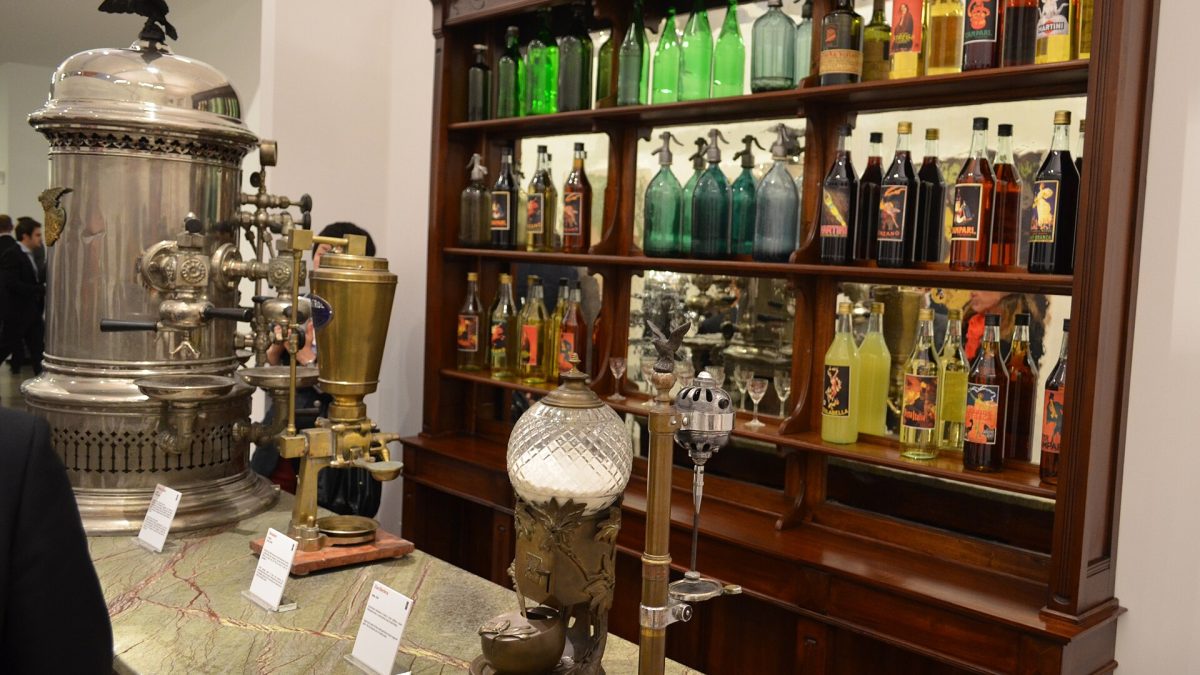
Walk into any bar in Italy at eight in the morning and you will see the same scene. People drink a tiny cup of coffee in about a minute. They stay on their feet. They pay and they leave. This habit sits at the heart of Italian coffee culture, and it surprises most visitors.
Here is why Italians drink standing up, and what it tells us about the way they treat coffee.
1. The counter is the real home of Italian coffee culture
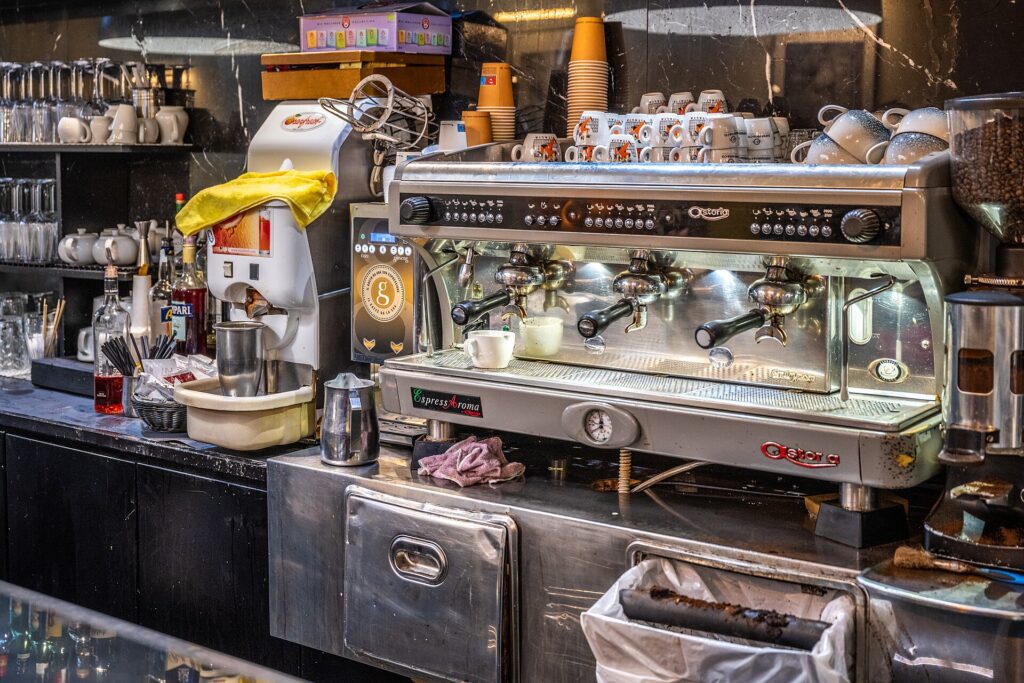
In Italy, a “bar” is not a pub. It is a small café where people eat a pastry, drink coffee and chat with the barista. The long counter, called the banco, is the heart of the room. Regulars often have a first-name bond with the person behind it.
Standing at the banco keeps coffee social and quick. You talk for a minute, then you get on with your day.
2. Standing is cheaper than sitting
Many bars post two prices: one for the counter (al banco) and one for a table (al tavolo). Sitting can cost double, or more, because table service adds staff time and takes up space. The espresso itself is the same.
The counter price has long stayed low, often close to one euro. Prices have risen in recent years, but the gap between counter and table remains. If you want to save money, do what locals do. Stand.
3. Espresso is made to be drunk fast
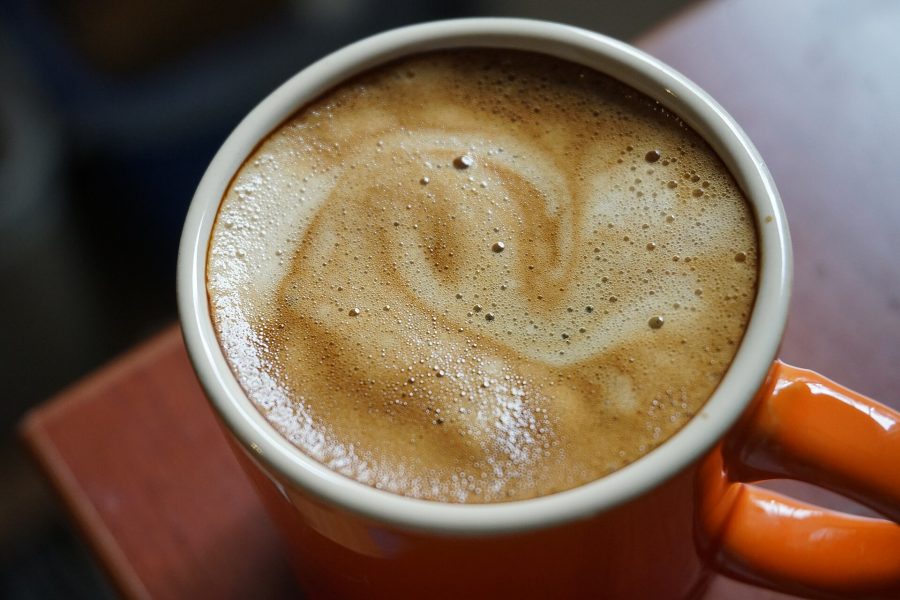
A classic espresso is small and hot. It is best in the first minute, while the crema (the golden foam on top) is still fresh. After that it cools and the flavor changes. You can read more about how the drink took shape in our history of espresso.
So the counter is practical. Drink it hot, drink it now, and move on.

4. A coffee is a pause, not an event
In many countries, coffee means a large cup you carry around for an hour. In Italy, it is a short break inside the day. Italians may have several during the day, and each one is small.
When an Italian asks for “un caffè”, they mean an espresso. No size, no extras. That simplicity is part of the charm.
5. Milk has its own timing
A cappuccino is a breakfast drink for most Italians. Many see it as heavy after a meal and prefer an espresso then. This is a custom, not a law, and nobody will arrest you for ordering one at four in the afternoon. Still, it explains why you will rarely see locals do it. Our guide to Italian coffee drinks covers these habits in more detail.
6. Sitting is for a different kind of moment
Italians do sit down for coffee. They just do it when time is the point: a long chat with friends, a Sunday after lunch, a slow afternoon. In those cases, they pay for the table gladly. The seat buys time, not a better cup.
How to order like a local
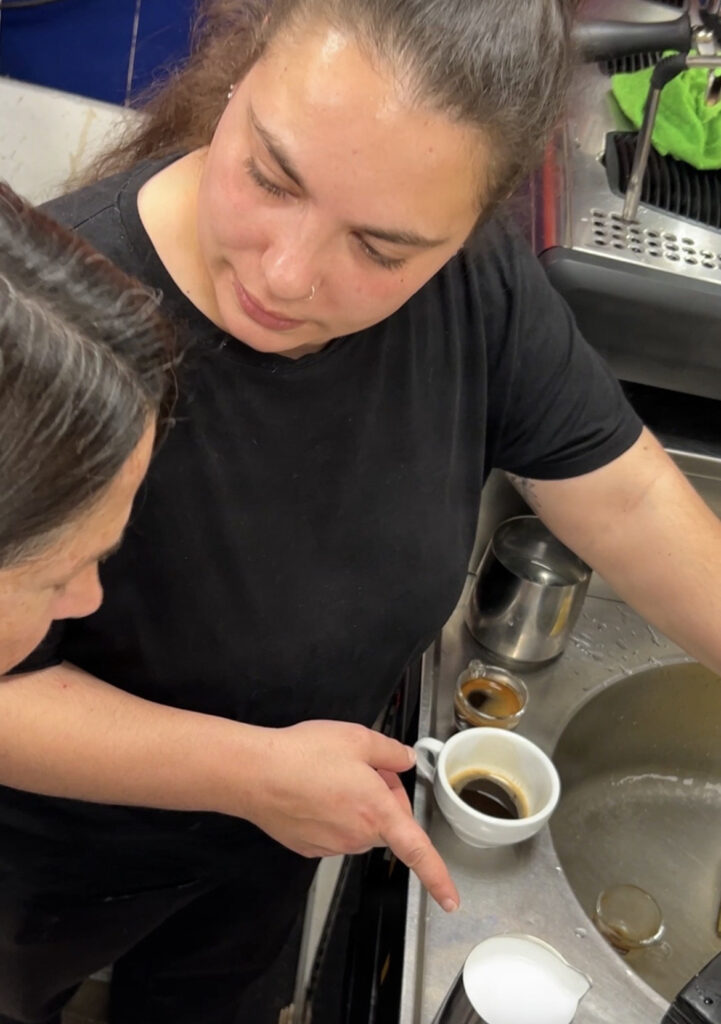
Say “un caffè, per favore” at the counter. In some busy bars you pay first at the cash desk and show your receipt to the barista. If you are not sure, watch what the person ahead of you does. A glass of water often comes with your coffee, and it is fine to drink it first.
For more background on coffee as a drink, see the Wikipedia entry on espresso.
How much does an espresso cost in Italy?
Less than in most of Europe, but more than it used to. In August 2026, consumer group Assoutenti put the national average for an espresso at the bar at €1.29, based on Ministry of Enterprise data. That is about 24% more than in 2021, as Teleborsa reported. Bolzano was the most expensive city at €1.51, and Messina the cheapest at €1.06.
Here are some big cities, from an Altroconsumo analysis of June 2026 prices:
| City | Espresso at the counter (June 2026) | In 2021 |
|---|---|---|
| Milan | €1.27 | €1.04 |
| Naples | €1.24 | €0.90 |
| Rome | €1.19 | €0.95 |
These are averages. A bar near a big landmark can charge more, and a small neighbourhood bar can charge less.
Counter or table: what you will pay
By law, Italian bars must display their prices where customers can see them. The rule comes from article 180 of the 1940 public safety regulation, and bars can be fined if the list is missing.
Bars are free to set a higher table price, and they often do. Sitting down can easily cost two or three times the counter price. In famous squares the gap can be huge. In 2018, a café in St Mark’s Square in Venice charged €11.50 for an espresso at a table, against €1.20 at the counter, according to Dissapore. Some historic cafés also add a music charge when the band is playing. If you want to visit one, our guide to historic cafes in Italy tells their stories.
Italian coffee orders: a quick glossary
Italian bars keep things short. These are the words you will hear at the counter:
| You say | You get |
|---|---|
| Un caffè | An espresso |
| Caffè macchiato | Espresso with a small spot of milk or foam |
| Caffè lungo | A slightly longer espresso, with more water |
| Caffè ristretto | A shorter, stronger espresso |
| Caffè corretto | Espresso with a splash of spirit, such as brandy or rum |
| Un deca | A decaf espresso |
| Caffè d’orzo | A caffeine-free drink made from roasted barley |
| Caffè al ginseng | A sweet, creamy coffee drink with ginseng extract |
| Latte macchiato | Hot milk in a tall glass, with espresso added on top |
| Al vetro | Your coffee served in a small glass instead of a cup |
Watch out for one trap: ask for a “latte” and you will get a glass of milk. Read more about the short shot in our ristretto guide, or try regional drinks like the marocchino and the bicerin.
Is Italian espresso on the UNESCO heritage list?
Not yet. Italy has tried for years. In 2022, two bids were merged into one: the ritual of traditional Italian espresso and the coffee culture of Naples. The national UNESCO commission chose to put forward Italian opera singing instead, as Comunicaffè reported.
Later dossiers in 2024 and 2025 were not sent on, and in 2026 the consortium behind the bid decided to pause and rethink its plan. For now, the espresso ritual lives on where it always has: at the counter. Naples also keeps its own customs, like the suspended coffee.
Why this matters for specialty coffee
The counter habit only works if the cup is good. A fast espresso has nowhere to hide, so small roasters care about every detail, from the green beans to the roast. That is the idea behind IndieRoastersItaly: we want to connect you with independent Italian roasters. Join the waitlist on our homepage.
Italian coffee culture: common questions
Why do Italians drink coffee standing up?
It is quick, social and cheaper. Espresso is best in its first minute, and the counter price is lower than the table price. Coffee is a short pause in the day, not a long sit-down.
Do you tip at a bar in Italy?
Tipping is not expected. Some people leave a few cents of change on the counter, which is a kind gesture but not a rule.
Can I order a cappuccino after lunch?
Yes. Nobody will refuse you. Most Italians just drink cappuccino in the morning and switch to espresso after meals. Learn where the drink came from in our history of cappuccino.
How many bars are there in Italy?
A lot. The Italian food-service federation FIPE counted 127,667 active bar businesses in 2024.
Do I pay before or after my coffee?
It depends on the bar. In busy city bars you often pay first at the till and hand your receipt to the barista. In smaller bars you usually pay on the way out. If in doubt, watch the person ahead of you.
Related reading: Trieste, Italy’s coffee capital · Italian coffee bar rules: why Italians drink al banco
This article was written with the support of artificial intelligence for content structuring, and was fully reviewed, verified, and refined by the author.