
This AeroPress Original review answers one question: is a plastic tube with a plunger really a good way to make coffee? Based on published specs and the feedback of long-time owners, yes, for most home brewers it is. It is cheap, tough, easy to clean and forgiving. It makes one cup at a time, and it will not suit people who want to brew for a crowd.
A quick note on how we wrote this. IndieRoastersItaly has not tested this brewer in a lab or on a bench. This review draws on the manufacturer’s specs, expert write-ups and what owners report after months of use. Where a detail is not verified, we say so. The product link below is an affiliate link, and it did not change our verdict.
What the AeroPress Original is
The AeroPress is a manual brewer made of two plastic tubes. You add ground coffee and hot water to the larger tube, stir, and press the plunger down. The coffee drips through a small paper filter into your mug. The whole process is quick, and the Amazon listing describes a brew time of about two minutes.
It sits somewhere between a French press and an espresso maker. Like a French press, the coffee steeps in water. Like espresso, you push it through a filter with pressure. The result is not true espresso. It is a clean, smooth, concentrated cup that you can drink as it is or top up with hot water.
The Original is the base model of a family that also includes a travel version and a larger one. Reviewers often call it the most affordable in the range, and its parts can be replaced one by one. It is made in the USA and is BPA-free, according to published reviews. If you want the full brewing tutorial, read our AeroPress coffee guide.
What you get and what you need
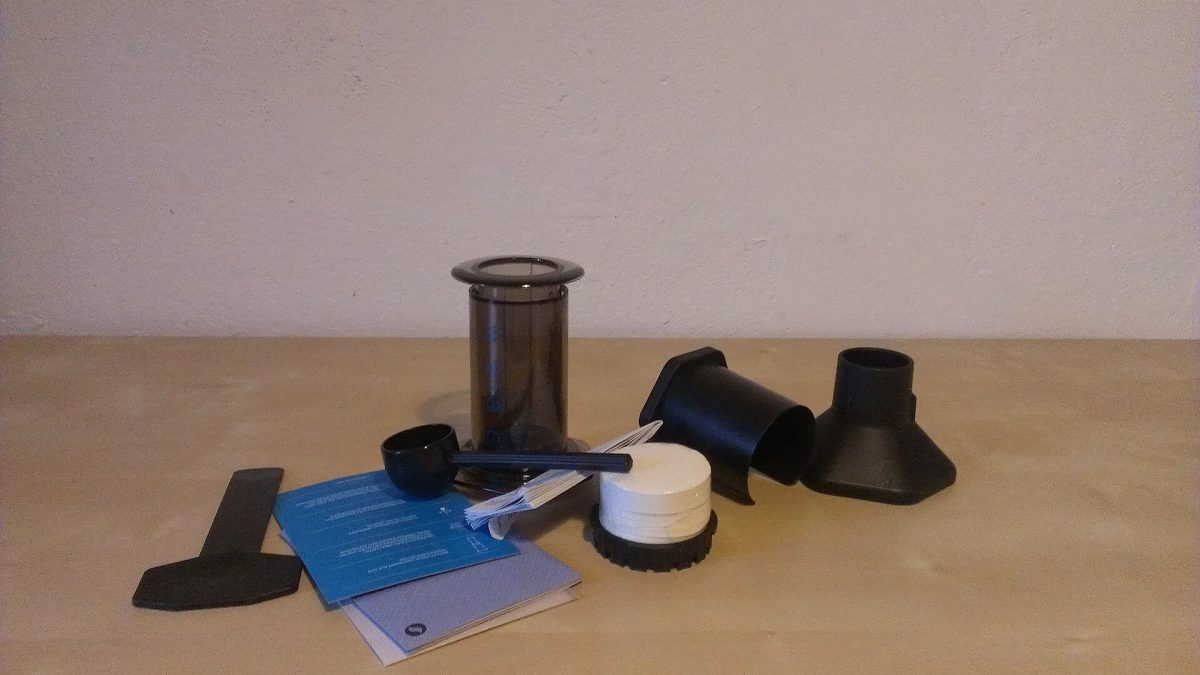
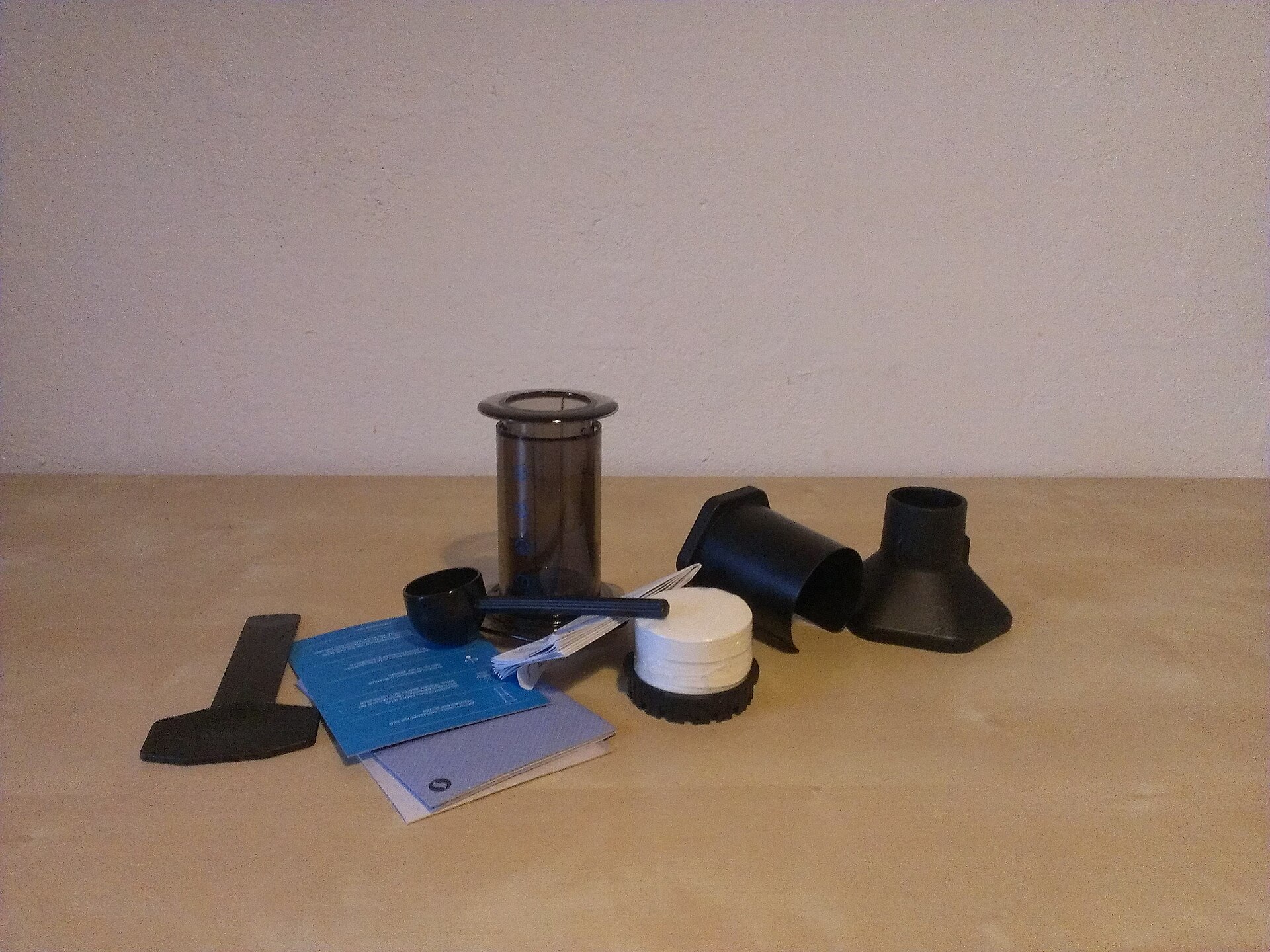
In the box you find the brewing chamber, the plunger, a filter cap, a stirrer, a scoop, a funnel and a pack of paper filters. Details can change between kits, so check the listing before you buy. Most owners then add a few extras to get the best from it.
- A burr grinder. Fresh grounds make a bigger difference than any gadget. Our list of the best manual coffee grinders will help you pick one.
- A scale. Weighing coffee and water makes cups repeatable. See our guide to the best coffee scales.
- A kettle. Any kettle works. A gooseneck gives more control, as we explain in the best gooseneck kettles guide.
- A mug or server. The brewer sits on top of a mug. Check that the base is not too wide for yours.
If you do not have the brewer yet, you can find the AeroPress Original on Amazon. At the time of writing it showed about 4.7 stars out of 5 from many thousands of ratings, which matches the praise in expert reviews. Ratings change, so check the latest.
How it brews
There are two common ways to use it, and both are easy to learn.
The standard method
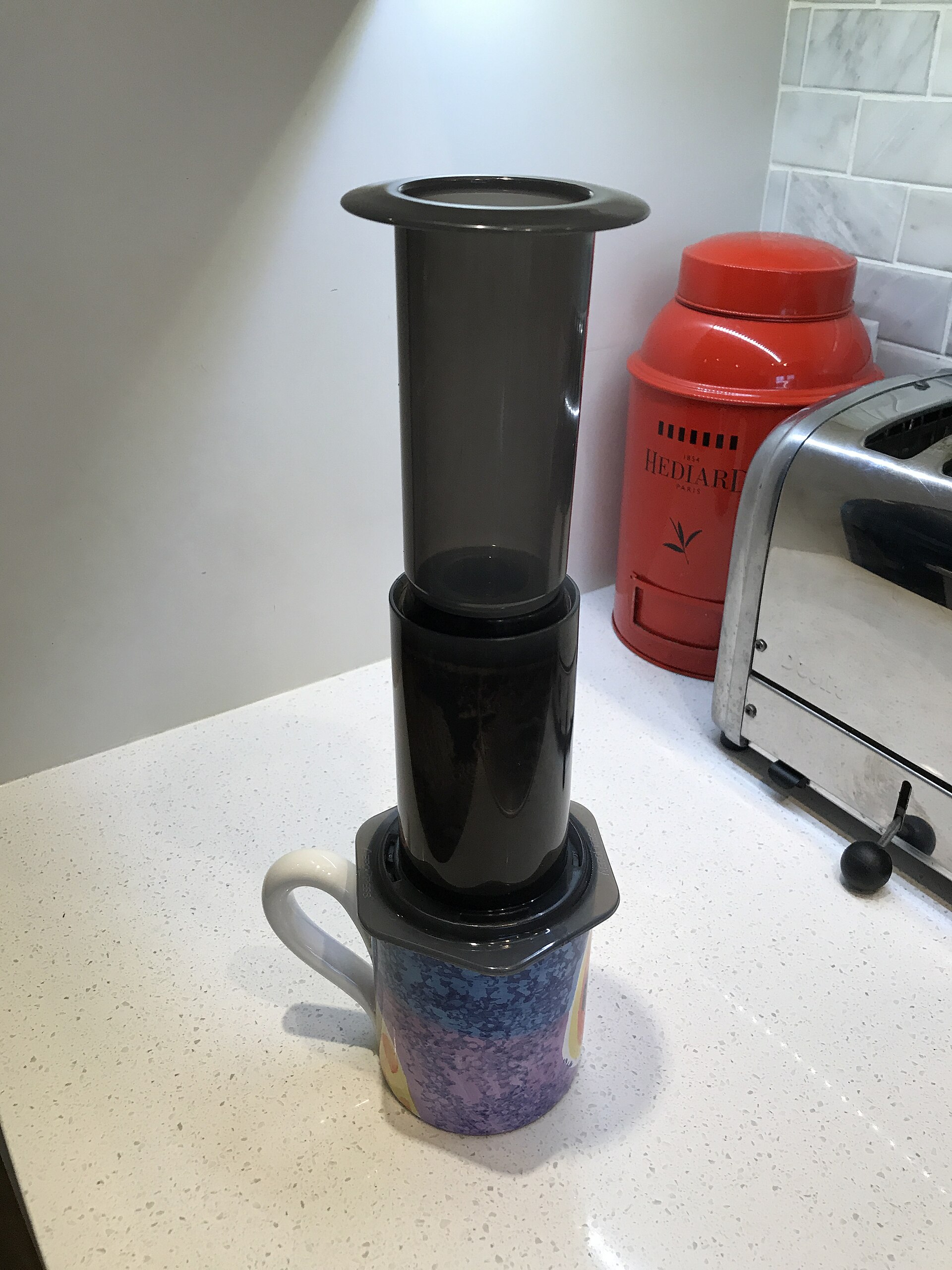
Place a wet paper filter in the cap and lock it onto the chamber. Set the chamber on your mug. Add coffee and water, stir for a few seconds, then press the plunger down slowly. This is simple and clean, and the water can start to drip when you pour. Some reviewers note you cannot see the brew in this setup.
The inverted method
Here you turn the brewer upside down with the plunger at the bottom. Water stays in until you are ready. You steep, attach the cap, flip it onto your mug and press. It gives you more control over steeping time, but it needs a steady hand. Flip carefully, because hot water can spill.
Recipes vary a lot. The AeroPress community has published a very large number of them, and that is one of its strengths. You can brew a bright, tea-like cup or a thick, strong one just by changing grind, time and ratio. For a starting point, use the ratios in our coffee to water ratio guide, then adjust to taste. The coffee grind size guide explains how finer or coarser grounds change the cup.
Pros and cons
| Pros | Cons |
|---|---|
| Low price compared with most brewers | Makes one cup per brew, about 240 to 270 ml depending on the source |
| Light, tough and easy to pack for travel | Mostly plastic, which some people dislike |
| Fast brew and quick clean-up | You cannot see the brew in the standard upright method |
| Flexible: many recipes and styles | Needs paper filters, so there is a small running cost |
| Replaceable parts | Needs manual effort every time, with no automation |
Owners often mention how forgiving it is. Because the coffee spends a short time in the water and then passes through a filter, small mistakes taste less harsh than they do with some other methods. That is why many baristas keep one at home even if they own an espresso machine.
How it compares
Compared with a French press, the AeroPress gives a cleaner cup with less sediment and much quicker clean-up. We go deeper in our AeroPress vs French press comparison. Compared with a V60 or other pour-over, it is simpler to learn, because the paper filter and the pressing do part of the work for you. Compared with a moka pot, it makes a softer, less intense cup, but it is also gentler on beginners.
| Brewer | Best for | Cup style |
|---|---|---|
| AeroPress Original | One cup, travel, experiments | Clean and smooth, easy to adjust |
| French press | Several cups with little effort | Full body, some sediment |
| Pour-over | Slow, careful brewing | Bright and delicate |
| Moka pot | A strong, stovetop cup | Intense and bold |
Tips for better cups
- Rinse the paper filter first. It removes a papery taste and warms the cup.
- Weigh your coffee and water instead of using scoops.
- If the cup tastes sour or thin, try a finer grind or a longer steep.
- If it tastes bitter or harsh, try a coarser grind or a shorter steep.
- Press slowly. Fighting the plunger is a sign that the grind is too fine.
- Pour a little hot water into the concentrate if the cup is too strong, like an Americano.
If you are still building your setup, a simple scale and kettle matter more than a fancy grinder at first. You can browse a range of coffee scales with a timer and gooseneck kettles on Amazon and compare features and prices for yourself.
Cleaning, care and running costs
Cleaning is where the AeroPress shines. When the brew is done, you push the plunger a little further and the used coffee leaves the chamber as a compact puck. Rinse the parts under the tap, and you are finished in under a minute. There are no mesh screens to scrub and no oily carafe to wash.
Running costs are small but real. You need paper filters, and you will use one per cup. Many owners also use a reusable metal filter, which is sold separately by several brands. Metal gives a fuller body and a little more oil in the cup. Paper gives a cleaner, brighter taste. Try both if you are curious, and keep whichever you prefer.
Because the plunger seal is rubber, it can wear after long use. The maker sells spare parts, and reviewers point to this as a strength: you can replace one piece instead of the whole brewer.
What owners complain about
- One cup only. If you often host guests, you will brew in rounds or reach for another method.
- The plastic feel. It is light and tough, but it does not look like a premium object. Some people want glass or steel.
- Learning curve for recipes. The huge number of recipes can feel overwhelming. Pick one and stick with it for a week.
- Slipping on small mugs. Some reviewers note it can sit unsteadily on certain cups. Use a mug with a wide, firm rim, or a small server.
- Hand strength. Pressing needs a little effort, especially with fine grounds. If you find it hard, use a coarser grind.
None of these is a deal-breaker for most buyers. They are worth knowing before you spend money, which is the whole point of a review.
A quick buying checklist
- Do you mostly drink one cup at a time? If yes, the Original fits.
- Do you already own a grinder? If not, budget for one.
- Do you want to travel with it? If yes, check its size and weight against the lighter travel model in the same range.
- Are you happy to buy paper filters? If not, look at a metal filter option.
- Do you enjoy tweaking recipes? If yes, you will love it.
Who should buy it, and who should not
Buy it if you drink one or two cups a day, travel often, or want to learn how grind and time change flavor. It is also a smart first brewer for someone leaving instant coffee behind.
Skip it if you need four cups at once, dislike plastic, or want a fully automatic machine. In those cases a French press, a large pour-over or an electric brewer fits better.
Verdict
The AeroPress Original earns its fame. Based on specs and owner feedback, it offers a low price, a clean cup, easy travel and room to experiment. Its limits are clear: one cup, plenty of plastic and some manual work. For many home brewers, those are fair trades. Pair it with fresh beans and a decent grinder, and it can make coffee that rivals far more expensive gear.
For more independent views, see these reviews at Home Grounds and Corner Coffee Store.
FAQ
Does the AeroPress make real espresso?
No. It does not reach the pressure of an espresso machine. It makes a strong, concentrated, espresso-style cup.
How much coffee does it make?
It brews a single serving. Sources list a capacity of roughly 240 to 295 ml, depending on whether they measure the brew or the full chamber.
Do I need special filters?
Yes, it uses small round paper filters that fit the cap. Many kits include a pack, and you can buy refills.
Is the AeroPress safe for hot water?
Published reviews say it is made from BPA-free plastic. Always follow the maker’s instructions for use and care.
What is the best grind size?
It depends on your recipe. Medium to fine is common for short brews, and coarser grounds suit longer steeps. Start in the middle and adjust.
Can I make iced coffee with it?
Yes. Brew a strong concentrate and pour it over ice. Our guide to Japanese iced coffee shows the same idea.
Your next step
Pick a simple recipe, weigh your beans, and brew three cups with one change each time: grind, time, then ratio. You will learn more from those three cups than from any review. And if you want to compare more brewers, our V60 vs Chemex guide is a good next read.
As an Amazon Associate, IndieRoastersItaly earns from qualifying purchases. This does not change the price you pay.
IndieRoastersItaly is building a coffee subscription with independent Italian roasters. If you love fresh, honest coffee, join the waitlist on our homepage.
Related reading: comparing quick home options? Our Lavazza Tabli review looks at capsule-free coffee tabs, their cost per cup and who they suit.
This article was written with the support of artificial intelligence for content structuring, and was fully reviewed, verified, and refined by the author.

One tip we wish we had known sooner: start with the standard method and only try the inverted one once you feel comfortable, always on a stable, dry surface. Begin with the recipe in this review, then change one thing at a time, grind first and steep time second, and write down what you did. Do you brew yours the standard way or inverted?