
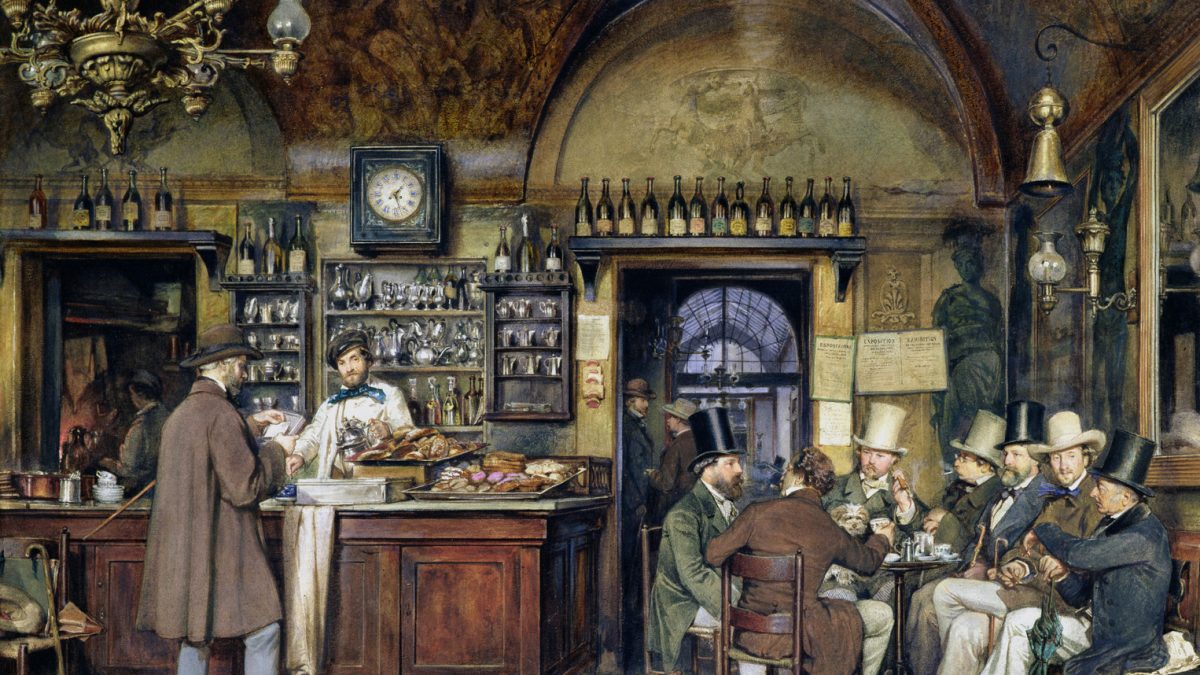
The Caffè Greco Rome history begins in 1760, on a street that is now one of the most expensive shopping streets in Italy. Antico Caffè Greco opened at Via dei Condotti 86 and became the oldest coffeehouse in Rome. For more than 260 years it was a meeting place for artists, writers and travelers. Then, in October 2025, it closed after a long legal fight. This is the full story, and what we know about its future.
Most of the facts here come from the Rome tourism office, Wikipedia and news reports. Where sources disagree, we say so. If you plan to visit, read the last section first, because the café’s status has changed.
Quick facts
| Question | Answer |
|---|---|
| Name | Antico Caffè Greco (“Old Greek Café”) |
| Opened | 1760 |
| Address | Via dei Condotti 86, Rome |
| Known for | Oldest coffeehouse in Rome; a famous meeting place for artists and writers |
| Art on the walls | More than 300 works, according to the Rome tourism office |
| Status (latest reports we found) | Closed since 8 October 2025. No confirmed reopening date |
How Caffè Greco began
Antico Caffè Greco opened in 1760. Sources agree on the date and the address. They differ a little on the founder. Wikipedia names Nicola della Maddalena, linked to the Greek community in Italy. The Rome tourism office describes him as a man from the Levant. Either way, that origin is the likely reason for the name “Greco”.
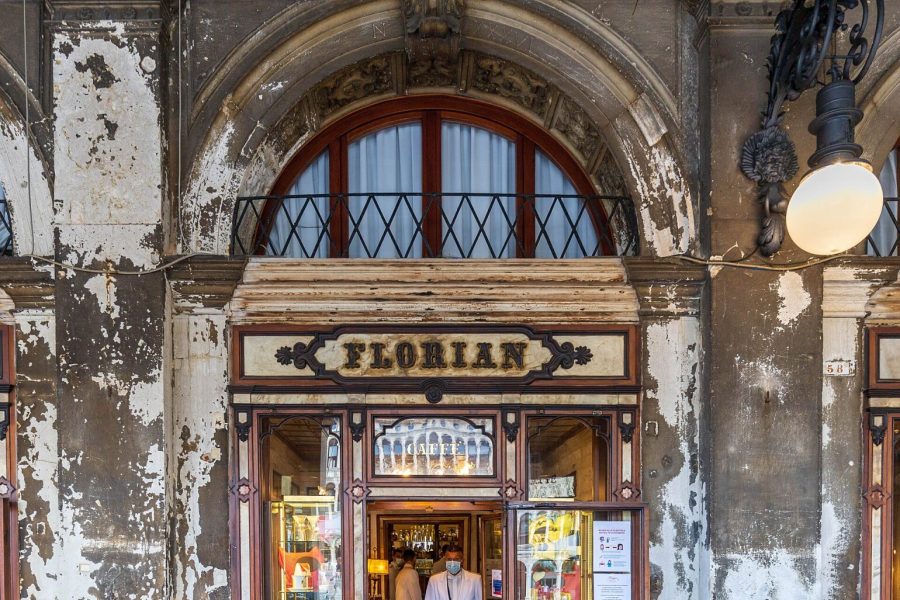
It is usually described as the oldest coffeehouse in Rome and the second oldest in Italy. The oldest is Caffè Florian in Venice. For the wider story of how coffeehouses spread, read our guide to the first coffee houses in Europe.
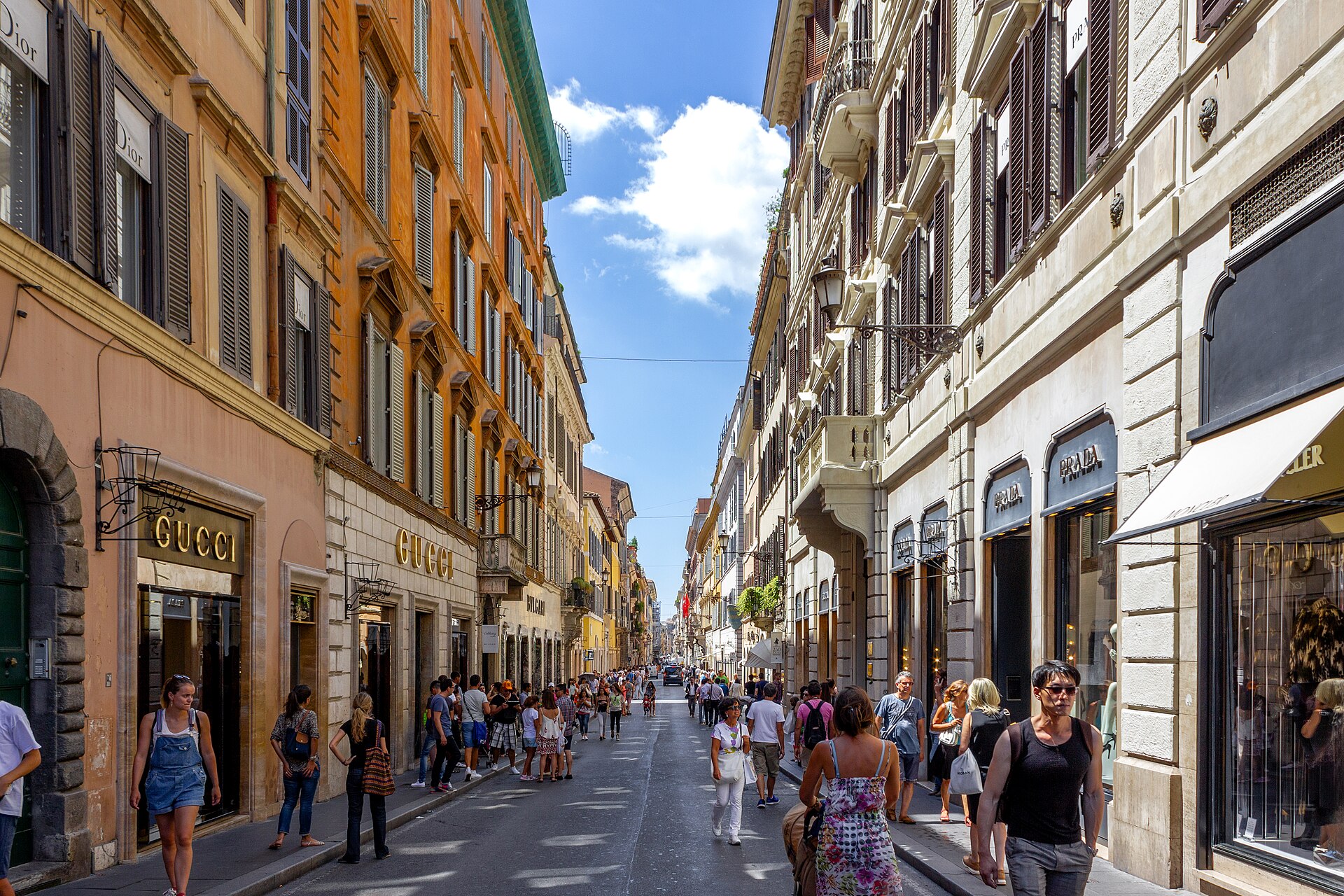
The location mattered. Via dei Condotti runs from the foot of the Spanish Steps. In the 18th and 19th centuries, many foreign artists and writers came to Rome and stayed in this area. A café on that street was an easy place for them to meet.
Who sat at its tables
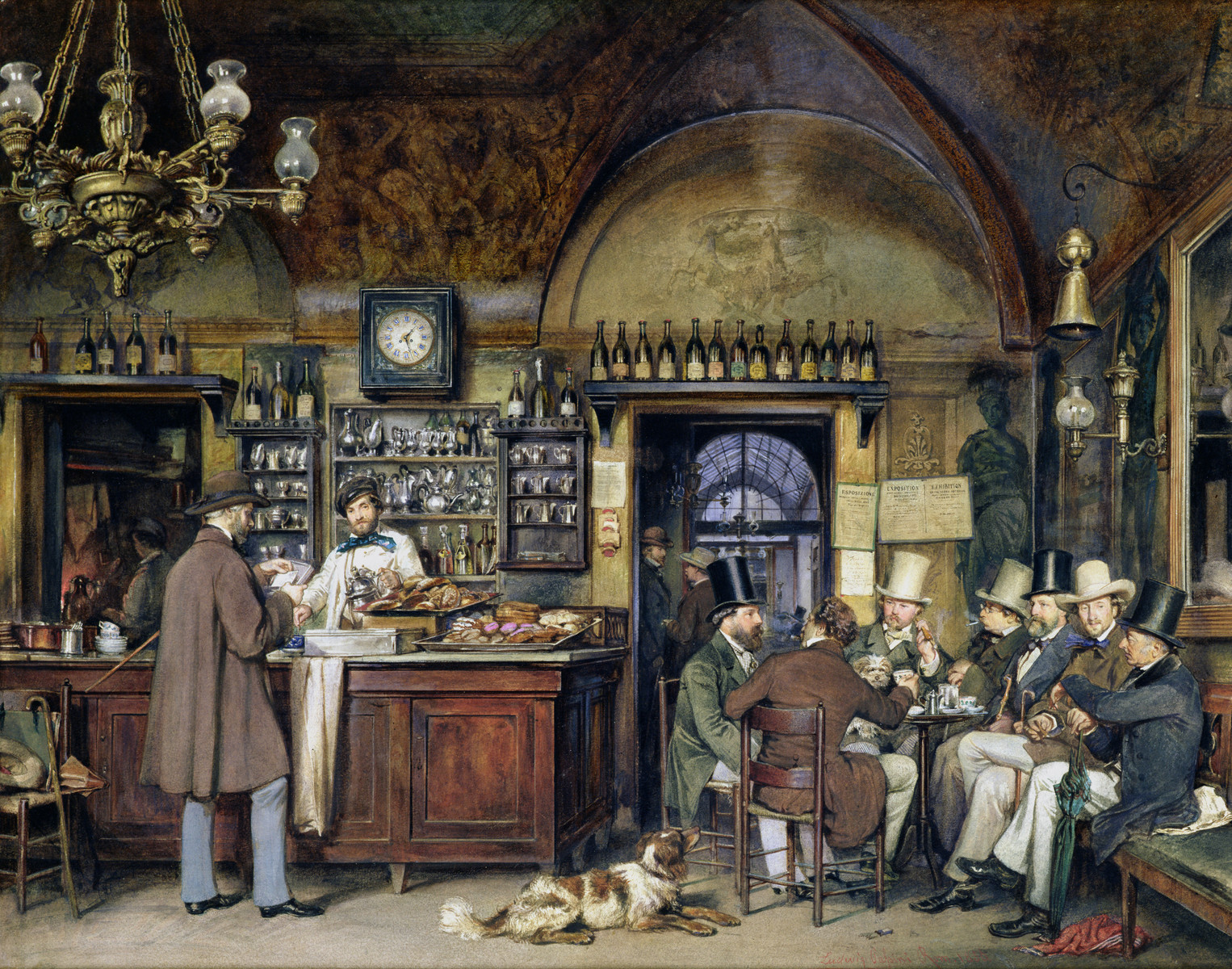
The guest list is the café’s biggest claim to fame. Lists differ from source to source, so treat them as reported, not proven. Names that often appear include Lord Byron, Percy Shelley, John Keats and Johann Wolfgang von Goethe. Other lists add Mark Twain, Richard Wagner, Hans Christian Andersen, Stendhal and Henrik Ibsen. For the twentieth century, writers such as Alberto Moravia and Pier Paolo Pasolini are mentioned.
One story is well documented in Russian cultural sources. The Tretyakov Gallery magazine writes that Nikolai Gogol worked on his novel Dead Souls while he lived in Rome, and that he met other Russian artists at Caffè Greco. You can read that piece here: A Roman Caffè of Culture.
A café that is also a gallery
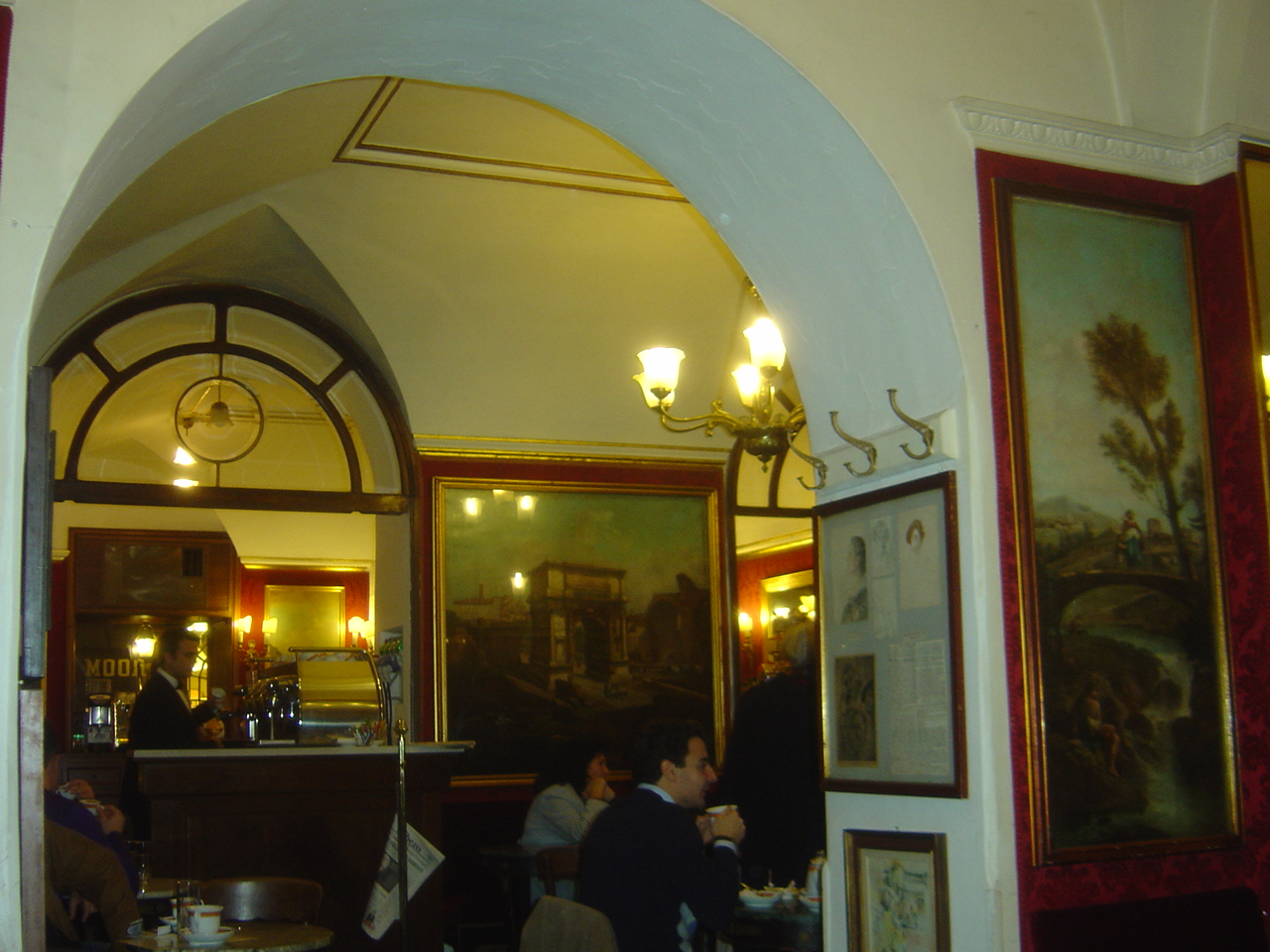
The rooms were known for their marble tables and walls covered with pictures. The Rome tourism office says more than 300 works were on display. It calls the café the largest private art gallery open to the public in the world. That is the office’s claim, so take it as a proud local description.
This mix of coffee and art is why the building matters beyond the drinks. Customers paid for an espresso and sat inside a museum. The Italian Ministry of Culture later declared the café’s furnishings and structure to be of cultural interest, which we cover below.
Rome, the Grand Tour and the café
To understand why Caffè Greco worked, think about who came to Rome. For many European travelers of the 18th and 19th centuries, a trip to Italy was a rite of passage. Rome was the main stop. Young painters came to study ancient ruins and Renaissance art. Writers came for the history and the art.
These visitors needed places to meet. A café with a hot drink and a table could work as a shared living room for people far from home. The Tretyakov article above mentions Russian painters such as Karl Bryullov and Alexander Ivanov among Gogol’s circle in Rome. Other nations had their own groups in the city too.
That is the real secret of the Caffè Greco Rome history. The coffee was good, but the café sold something rarer: company. A newcomer could walk in and meet other artists and writers, which is what the sources describe.
Why cafés like this mattered
In Italy, a historic café is more than a place to drink coffee. It is a stage for city life. Writers worked there, artists sold pictures there, and friends argued about politics there. In Italian this kind of place is sometimes called a caffè letterario, a literary café.
Caffè Greco was one of the best known. To see how it compares with others, read our guide to historic cafés in Italy and our look at Trieste, the coffee capital. If you want the bigger picture, our article on Italian coffee culture explains why the bar is the heart of daily life.
The long legal fight and the closure
The building belongs to the Ospedale Israelitico, a hospital in Rome. The café was run by a separate company. The trouble began when the lease expired in 2017. Reports say the landlord raised the monthly rent from about 17,000 euros to 120,000 euros. The operators resisted, and the dispute went through the courts for years.
| Date | What happened |
|---|---|
| 1760 | Antico Caffè Greco opens on Via dei Condotti |
| September 2017 | The lease expires and the rent dispute begins |
| 2018 | A court sets a deadline for the operators to leave |
| February 2025 | The Ministry of Culture declares the café to be of cultural interest |
| 8 October 2025 | Police seal the café and the keys go back to the owner |
| April 2026 | The owner’s creditor arrangement is approved, and bids for a new tenant open |
| June 2026 | Bids above one million euros a year are reported, and the old operating company contests the tender |
The news coverage is worth reading. See ANSA on the closure, CNN on the empty café, and Comunicaffè on the tender (in Italian). Police also seized around 300 furnishings, because prosecutors said they had been moved in breach of heritage rules.
The old operating company says the brand, licence, furniture and art collection are its own and should not be part of the tender. The owner says the priority is to reopen. These two views clash, and that is why the outcome is still open.
What is still unresolved
Even after the closure, several big questions remain open. They explain why no one can say for sure when, or in what form, the café will return.
- Who runs it. The owner wants a new tenant. The old operating company disputes the tender.
- Who owns the contents. The old company says the furniture, art and brand belong to it. The seized furnishings add another layer.
- What the state will allow. The Ministry of Culture has declared the café to be of cultural interest. That limits what can be changed or removed.
- What it will cost. Reports of bids above a million euros a year show how high the stakes are for any new operator.
Each of these questions needs a legal answer before the doors can open. So any date you read online should be treated as a guess until the owner or the city confirms it.
Can you visit today?
Not as a café, as far as we can tell. The latest reports we found, from mid-2026, still describe it as closed with no confirmed date. Some outlets mention reopening in 2026, but we found no confirmation. Before you plan a trip around it, check recent news.
You can still walk down Via dei Condotti and see the building from the street.
While you wait for it to reopen, you can enjoy a historic café elsewhere. In most Italian bars, coffee at the counter costs less than coffee at a table. Learn the rules in our guide to Italian coffee bar rules.
The story of Caffè Greco also carries a lesson for small, independent places. Heritage is fragile. A family, a lease and a landlord can decide the fate of a place that took 260 years to build. That is one reason we care about independent Italian roasters and the cafés that carry their coffee.
How to enjoy a historic café like a local
When Caffè Greco or any other historic café opens its doors to you, a few habits help. They are the same rules you will meet in most Italian bars.
- Order at the counter. Coffee is usually cheaper at the bar than at a table. Table service often adds a charge, and in famous cafés it can be much higher.
- Pay first if there is a till. In many busy bars you pay at the cash desk, then show the receipt to the barista.
- Keep it short. An espresso at the bar takes a minute. Locals stand, drink and go.
- Look up. The decoration is part of the experience. In a place like Caffè Greco, the walls tell the story.
For more detail, see our guide to Italian coffee bar rules.
FAQ
When was Caffè Greco founded?
Sources agree that it opened in 1760 at Via dei Condotti 86 in Rome.
Is Caffè Greco the oldest café in Italy?
It is usually called the oldest in Rome and the second oldest in Italy. Caffè Florian in Venice is older.
Who were the famous customers of Caffè Greco?
Reported guests include Byron, Shelley, Keats, Goethe and Gogol, and many artists. Lists vary by source, so treat the names as traditions that sources repeat.
Why did Caffè Greco close?
It closed on 8 October 2025 after a long dispute between the landlord and the operators. The fight began when the lease ended in 2017, and the sides disagreed about the rent and about who owned what.
Will Caffè Greco reopen?
The owner says reopening is the priority, and bids for a new tenant were reported in 2026. We found no confirmed reopening date. Check recent news before you visit.
Keep reading: Historic cafés in Italy · First coffee houses in Europe · Italian coffee bar rules · Italian coffee culture, Caffè Florian history.
IndieRoastersItaly is a project built around small Italian roasters and fresh coffee roasted to order. If you want to know when it opens, join the waitlist on our homepage.
This article was written with the support of artificial intelligence for content structuring, and was fully reviewed, verified, and refined by the author.
If you visit a historic café in Rome, try it the Italian way: pay at the till first, then drink your coffee standing at the counter. It is usually cheaper than sitting at a table, and it is how most locals use these places. Have you ever had a coffee at Caffè Greco or another historic café in Italy? What did you order?