
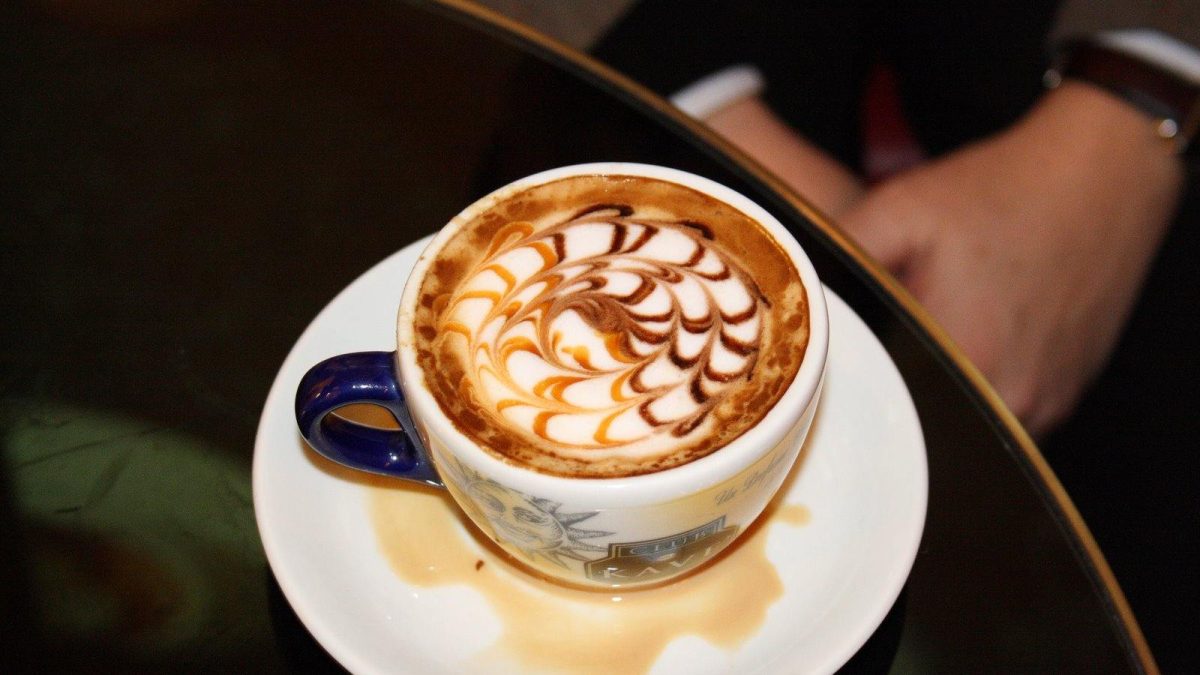
Cappuccino vs latte vs flat white is the question every coffee menu quietly asks. All three drinks start with espresso and steamed milk. They differ in how much milk goes in, how much foam sits on top, and how big the cup is. Get those three things straight and you can order, or make, exactly the drink you want.
This guide gives you the short answer first. Then it walks through each drink, shows how to steam milk at home, and explains how Italians order. Sizes vary from café to café, so treat the numbers as typical ranges, not strict rules.
The short answer
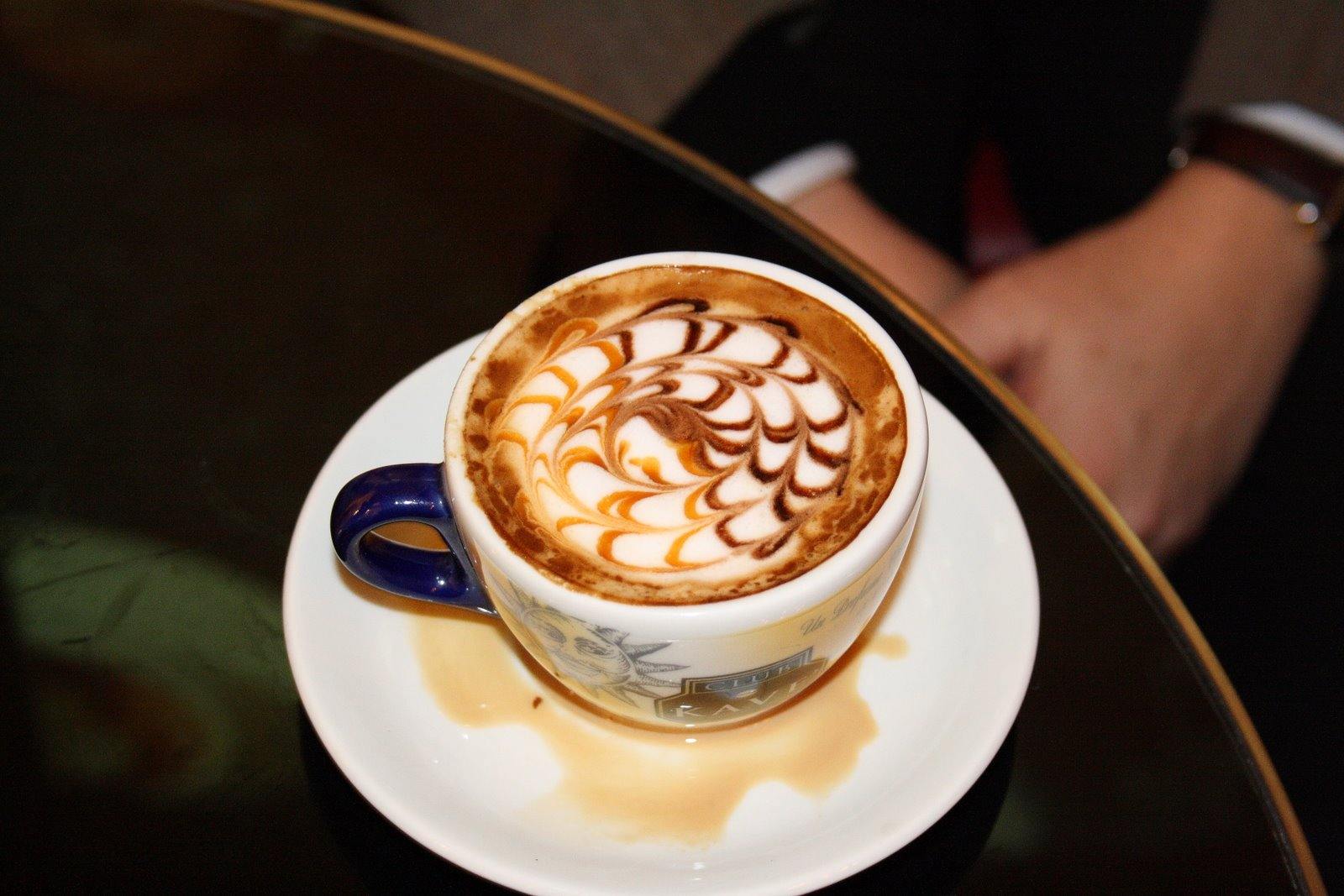
- Cappuccino: a small drink with the thickest layer of foam. Roughly equal parts espresso, steamed milk and foam.
- Latte: the milkiest of the three. About one part espresso to two or more parts steamed milk, with only a thin layer of foam.
- Flat white: small and strong. Less milk than a latte, and a smooth microfoam mixed through the whole drink instead of sitting on top.
In one line: a cappuccino is foamy, a latte is milky, and a flat white is velvety and coffee-forward.
Cappuccino vs latte vs flat white at a glance
The ranges below come from several sources, including Drinktrade, Lor Espresso and Dipacci. The sources do not agree on every figure, which is normal for these drinks.
| Cappuccino | Latte | Flat white | |
|---|---|---|---|
| Espresso : milk : foam | About 1 : 1 : 1 | About 1 : 2, thin foam | Less milk than a latte, microfoam throughout |
| Typical cup size | About 150 to 240 ml | About 225 to 340 ml | About 150 to 225 ml |
| Foam layer | Thickest, often over 2 cm | Thin, about 1 cm | A fine, flat layer, mixed into the drink |
| Coffee strength | Strong | Mild | Strongest taste of the three |
| Texture | Airy and light | Smooth and milky | Velvety and dense |
| Best for | Foam lovers, mornings | Milk lovers, long sips | People who want to taste the coffee |
Cappuccino
The cappuccino is the classic Italian milk coffee. The name comes from the color of the robes worn by Capuchin friars. If you like the story, read our history of the cappuccino.
A traditional cappuccino is small. It has a shot of espresso, a similar amount of steamed milk, and a thick cap of foam. That foam is the point. It makes the first sip light and airy, then the coffee shows through underneath.
Some guides say cappuccino milk is steamed a little hotter than flat white milk. Others keep all milk drinks near 60 to 65 °C. Either way, the foam should feel like soft clouds, not like stiff bubbles. For deeper background, see Cappuccino on Wikipedia.
Latte
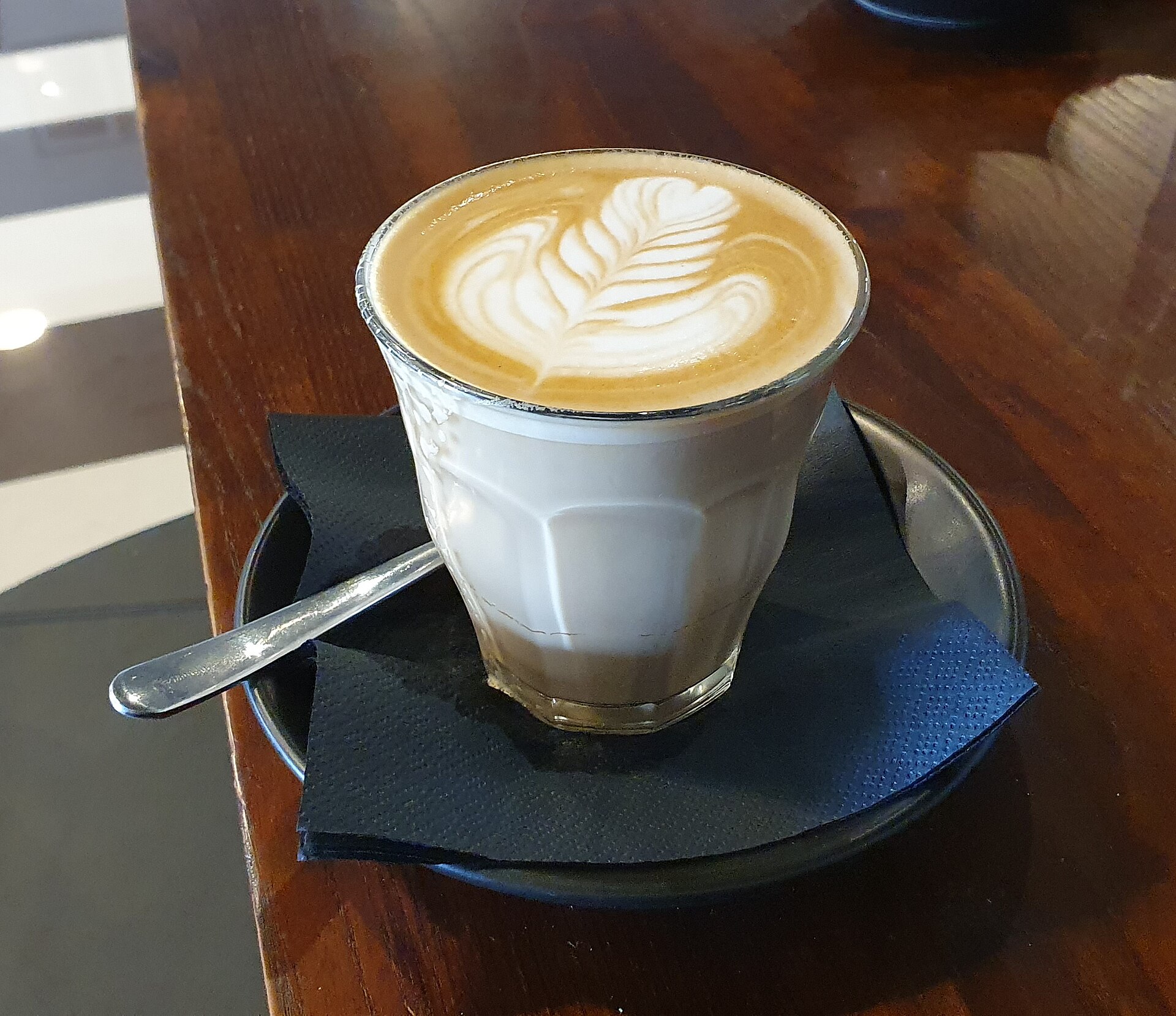
The latte is the gentle one. It uses one or two shots of espresso and a lot of steamed milk, with a thin layer of foam on top. Cups are larger, often 225 ml or more.
Because there is so much milk, the coffee taste is softer and sweeter. This is why many people start with a latte. It also takes flavored syrups well, and it is the usual canvas for latte art.
A word of warning if you travel. In Italy, “latte” simply means milk. If you ask for a “latte” at an Italian bar, you will get a glass of milk. The drink you want is a caffè latte. We explain more in the section on ordering below.
Flat white
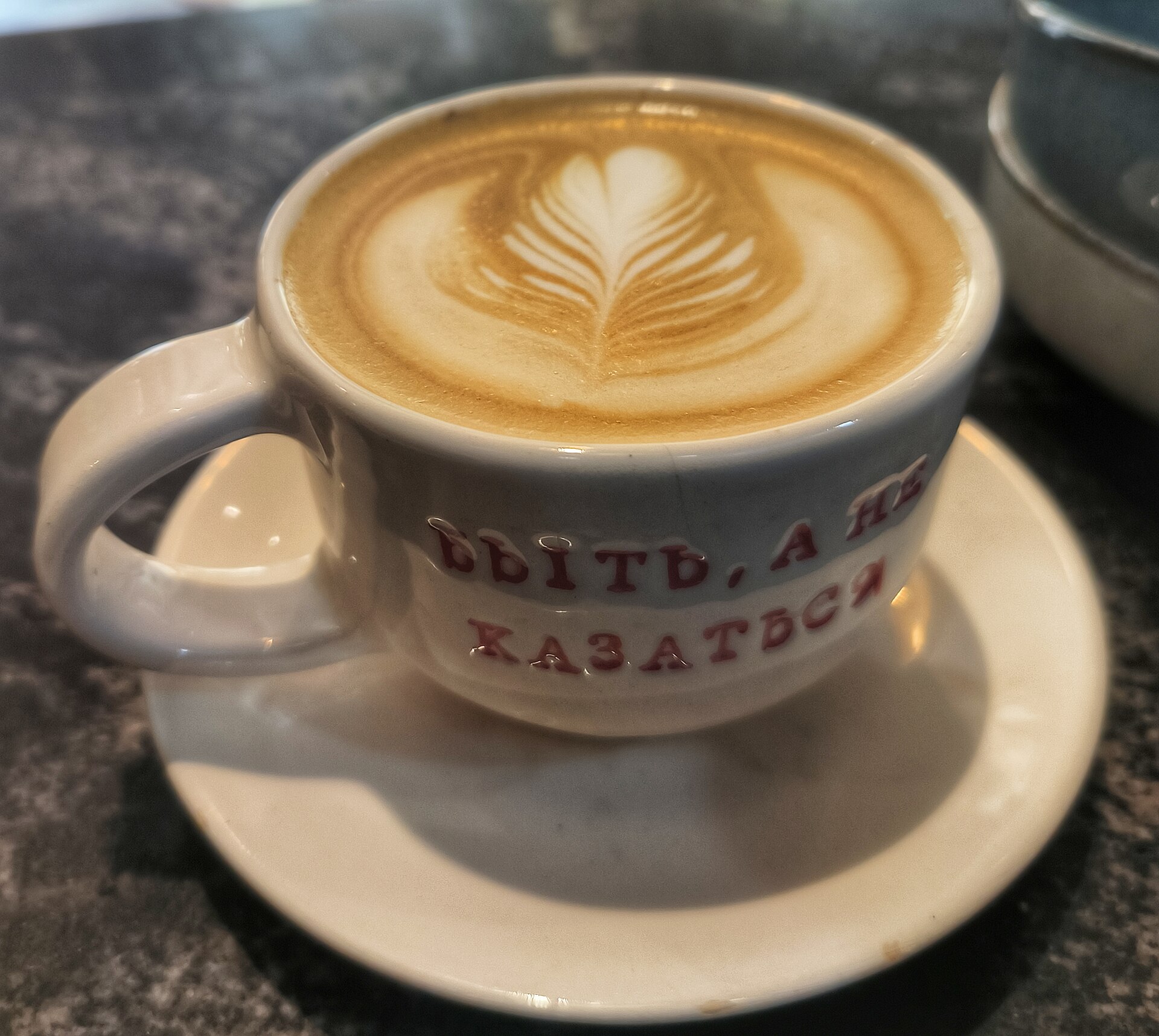
The flat white is small, strong and smooth. It uses the same espresso as the other two, but less milk. The milk is steamed into a fine microfoam, so there is no tall cap of foam. The milk and coffee blend into one velvety drink.
Australia and New Zealand both claim to have invented it, and the story is still debated. Read the background on Flat white on Wikipedia.
Breville and Sage both suggest steaming flat white milk to about 60 to 65 °C, and keeping the foam layer very thin. Their recipe is here: Breville flat white recipe. A flat white needs less air than a latte or a cappuccino. That is the main skill in making a good one.
How to order in Italy
Italian bars have their own rules. A cappuccino is mostly a morning drink. Many Italians avoid it after a meal, because they see milk as heavy. You can still order one whenever you like, but expect a raised eyebrow after lunch. Our guides to Italian coffee bar rules and Italian coffee drinks cover the details.
- Ask for a cappuccino and you get the classic drink with foam.
- Ask for a caffè latte to get espresso with a lot of hot milk. Never just “latte”.
- A flat white is not a traditional Italian drink. Many specialty cafés in big cities now offer it, but a standard bar may not.
- For something between a plain espresso and a cappuccino, try a caffè macchiato: espresso marked with a spoon of foam.
How to make them at home
You do not need a big machine. You need espresso (or strong coffee), hot milk, and a way to add air. If you have no espresso machine, our guide to making espresso without a machine shows what works. To froth, see how to froth milk.
- Make a strong base. Pull a shot of espresso, or brew a small cup of strong coffee.
- Heat cold milk. Fresh, cold milk gives you more time to build foam.
- Add air. For a cappuccino, introduce more air, about 4 to 6 seconds on a steam wand. For a latte, about 2 to 4 seconds. For a flat white, keep the air short and gentle. These timings come from Clive Coffee.
- Swirl. Spin the jug so the bubbles fold into a shiny, smooth microfoam.
- Stop at about 60 to 65 °C. Hotter than that, milk starts to taste scorched. Plant-based milks should stay cooler, near 55 °C, or they may split.
- Pour. Tap the jug, swirl again, then pour into the espresso.
Two pieces of gear help most. A steel jug makes it easier to swirl and pour, like the De’Longhi 12 oz milk frothing jug. If you have no steam wand, a handheld whisk such as the Zulay handheld milk frother gives a quick foam for a cappuccino-style drink. A whisk will not make true microfoam, so a flat white will be harder with it.
A simple home tasting test
The best way to learn the difference is to taste all three side by side. It takes ten minutes and one batch of coffee.
- Brew enough strong coffee or espresso for three small cups. Use the same coffee for all three, so the only change is the milk.
- Steam or froth a jug of milk. Pour about 60 ml into the first cup and top it with a thick spoonful of foam. This is your cappuccino.
- Pour about 150 ml of hot milk into the second cup, with only a thin layer of foam. This is your latte.
- Pour about 90 ml of silky, lightly foamed milk into the third cup and stir gently. This is your flat white.
- Taste them in the order flat white, cappuccino, latte. Notice how the coffee fades as the milk grows.
These volumes are only a guide for a small home test. Real cafés use different cup sizes. What matters is the pattern: more milk gives a softer cup, and more foam gives a lighter one. If a drink tastes weak, make the coffee base stronger, not the milk bigger. If it tastes bitter, try a coarser grind or a shorter shot. Our coffee to water ratio guide can help you set the base.
Common mistakes
| Mistake | What happens | Fix |
|---|---|---|
| Too much air | Big, dry bubbles, a stiff foam cap | Keep the steam tip just under the surface and stop adding air sooner |
| Milk too hot | Scorched, flat taste | Stop near 60 to 65 °C, or when the jug is too hot to hold |
| Weak coffee base | The drink tastes like warm milk | Use a short, strong shot or a concentrated brew |
| Skipping the swirl | Foam and milk separate in the cup | Swirl the jug and tap it before you pour |
| Stale beans | Flat, dull coffee under the milk | Use fresh coffee, ideally roasted within the last few weeks |
Which one should you order?
- Choose a cappuccino if you love light foam and a balanced, traditional drink.
- Choose a latte if you like mild, milky coffee, or you want something to sip slowly.
- Choose a flat white if you want to taste the coffee, with smooth milk to soften it.
Good beans make a difference in all three. For milk drinks, many roasters suggest a medium to medium-dark roast with chocolate and nut notes. The milk will cover bright, fruity flavors. Tune your shot with our dial-in guide for espresso.
FAQ
Is a flat white stronger than a latte?
It tastes stronger because it has less milk in a smaller cup. The caffeine depends on how many shots go in, not on the drink name. Many cafés use a double shot for both.
What is the difference between a cappuccino and a latte?
A cappuccino has a thick layer of foam and less milk. A latte has more milk and only a thin layer of foam. A cappuccino is airy. A latte is smooth.
Can I make a flat white without an espresso machine?
You can make a close version. Brew a strong coffee, such as a moka pot or AeroPress brew, and add warm milk with fine foam. Without a steam wand, true microfoam is hard to reach.
Which drink has the most milk?
The latte. Cups are the largest and the milk makes up most of the drink.
Why do Italians not drink cappuccino after a meal?
It is a custom, not a law. Many Italians see milk drinks as breakfast, and think milk and a heavy meal do not mix. After a meal they usually order an espresso.
Keep reading: History of the cappuccino · How to froth milk · Italian coffee bar rules · Marocchino coffee history, Macchiato history
As an Amazon Associate, IndieRoastersItaly earns from qualifying purchases. This does not change the price you pay.
IndieRoastersItaly is a project built around small Italian roasters and fresh coffee roasted to order. If you want to know when it opens, join the waitlist on our homepage.
This article was written with the support of artificial intelligence for content structuring, and was fully reviewed, verified, and refined by the author.

Quick home test: make all three drinks with the same espresso and taste them side by side. Keep the milk warm rather than scalding; very hot milk tastes flat and loses its natural sweetness. You will notice the difference in texture more than in flavour. Which one is your everyday order, and does it change when you are in Italy?