
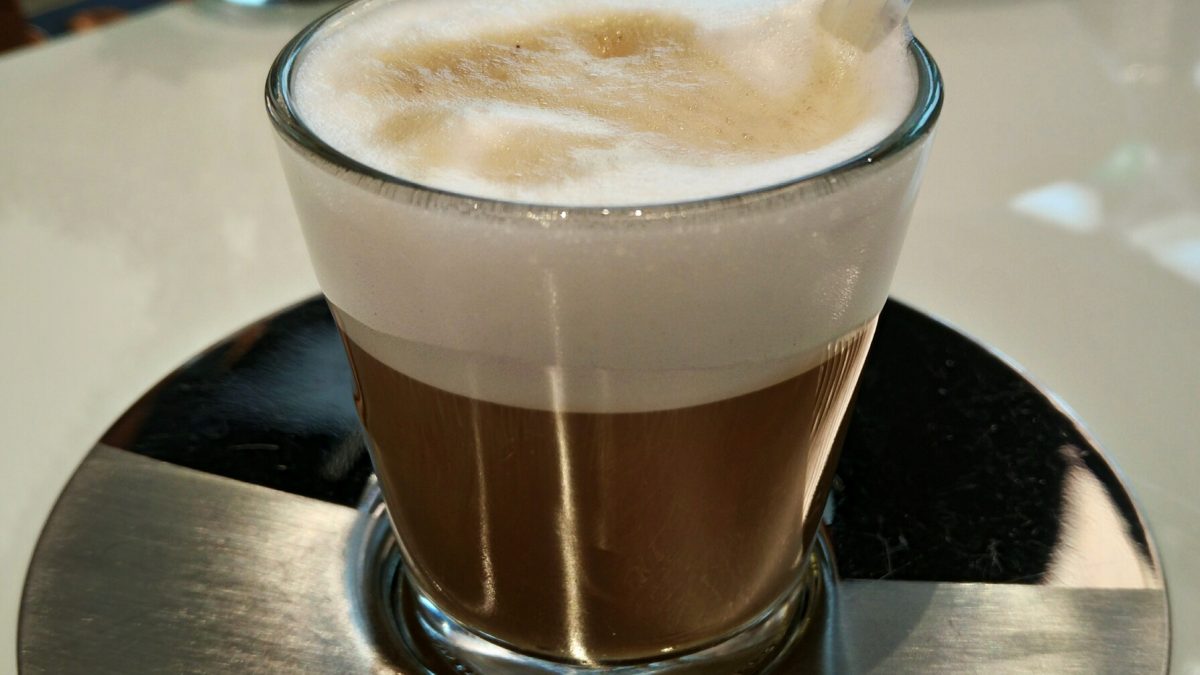
Quick answer: macchiato is Italian for “stained” or “marked.” A caffè macchiato is an espresso “marked” with a small spot of milk or milk foam. The macchiato history is not well documented, so we cannot say who first made it. Sources point to Italy, but they disagree on the date, so treat any exact year with care. A latte macchiato is the opposite drink: a glass of milk “marked” with a little espresso.
The macchiato history is a good example of how one word can mean three different drinks. In Rome it is a small espresso. In a tall glass it is layered milk. In many coffee chains it is a sweet, caramel-topped latte. This guide separates the three and explains how to order each one like an Italian.
What the word macchiato means
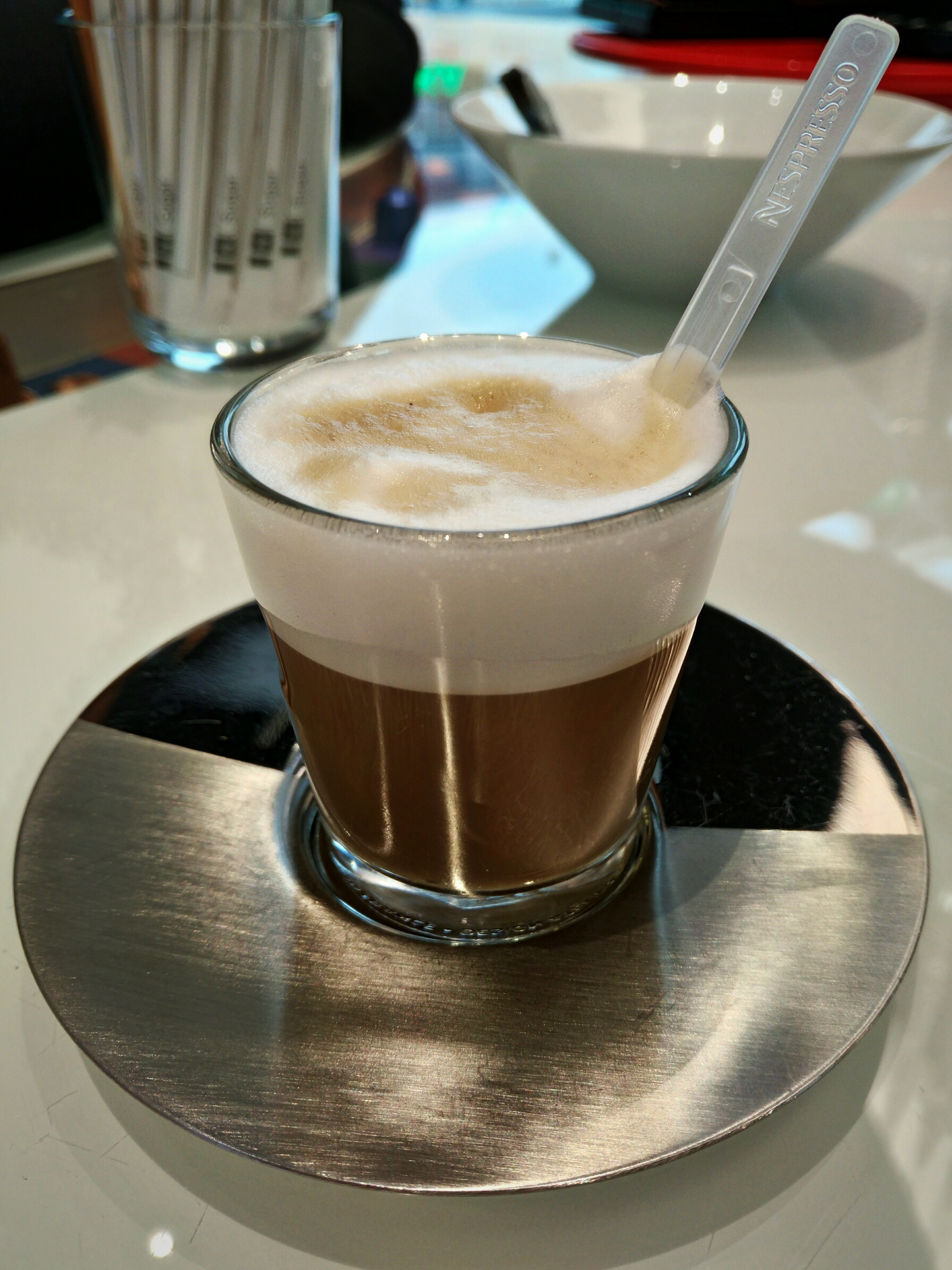
In Italian, macchiare means to stain or to spot. A macchia is a stain. So a macchiato is something that has been stained. The word is used for many things in Italian, not only coffee.
Applied to a drink, it means one ingredient has a small mark of another. In a caffè macchiato, the espresso is the main drink and the milk is the mark. In a latte macchiato, the milk is the main drink and the espresso is the mark. The name tells you which one leads.
This is the key to the whole subject. Once you know which ingredient is “stained,” you know what you will get.
Macchiato history: what we know and what we do not
A common story says baristas needed a way to tell plain espresso from espresso with a little milk. A spot of foam on top “marked” the cup, so the waiter or customer could tell them apart. The idea is simple and plausible. But no primary source we could find proves who did it first.
Dates differ from source to source. Some popular articles place the drink in the 19th century. Others link it to later decades of the 20th century, after espresso machines became common in Italian bars. These are mostly blog accounts, not scholarly research. We cannot confirm either date, so we do not give one.
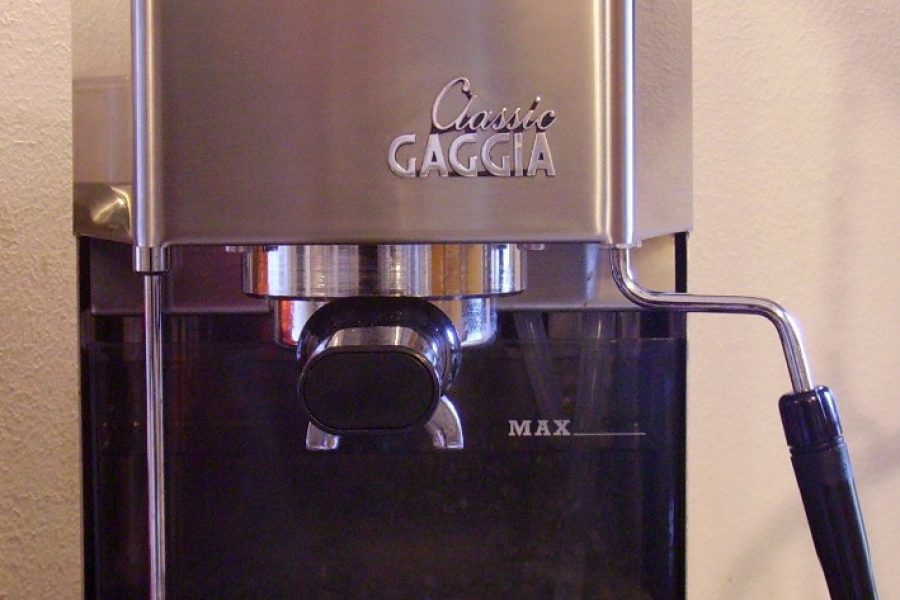
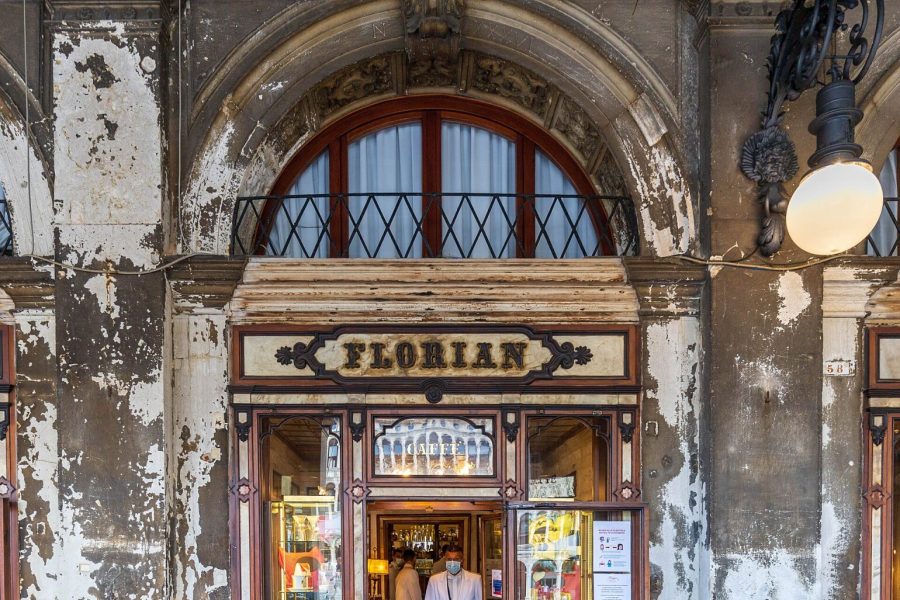
What we can say with more confidence is the setting. The macchiato belongs to the Italian espresso bar. Espresso itself grew with the machines described in our history of espresso. A drink that needs one shot and a spoon of foam is a natural fit for a fast bar, where people drink standing at the counter. For the rules of that world, see our guide to Italian coffee bar rules.
The latte macchiato is even less documented. It is usually described as a home or breakfast drink, built in a glass so that the layers show. Sources do not agree on its origin, and the Wikipedia page on the latte macchiato is a fair starting point for more reading.
Three drinks, one name
| Drink | What it is | Size | Where you find it |
|---|---|---|---|
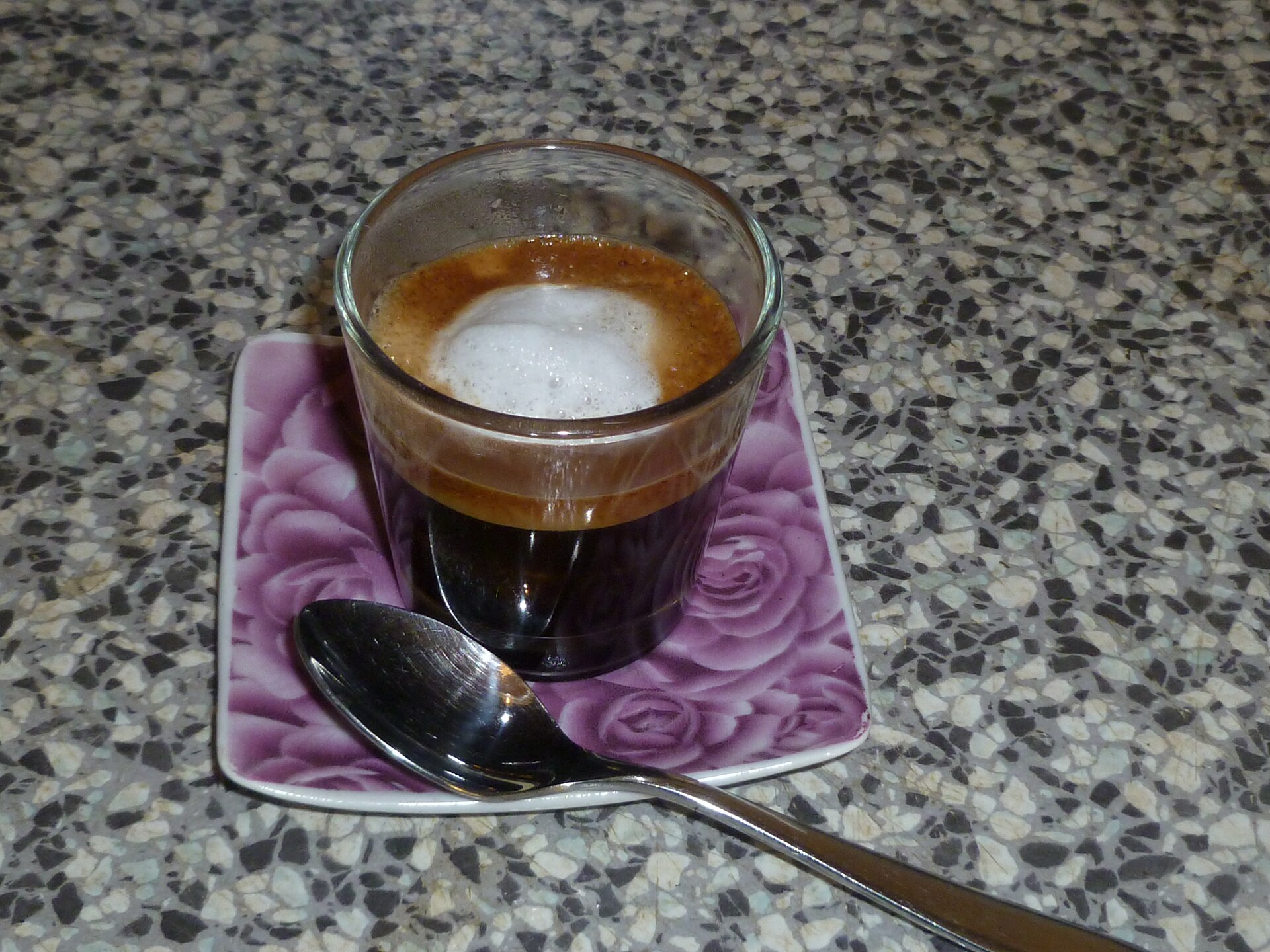
| Caffè macchiato (espresso macchiato) | One espresso with a spoon of milk foam or a splash of milk | About 40 to 60 ml | Italian bars, worldwide cafes |
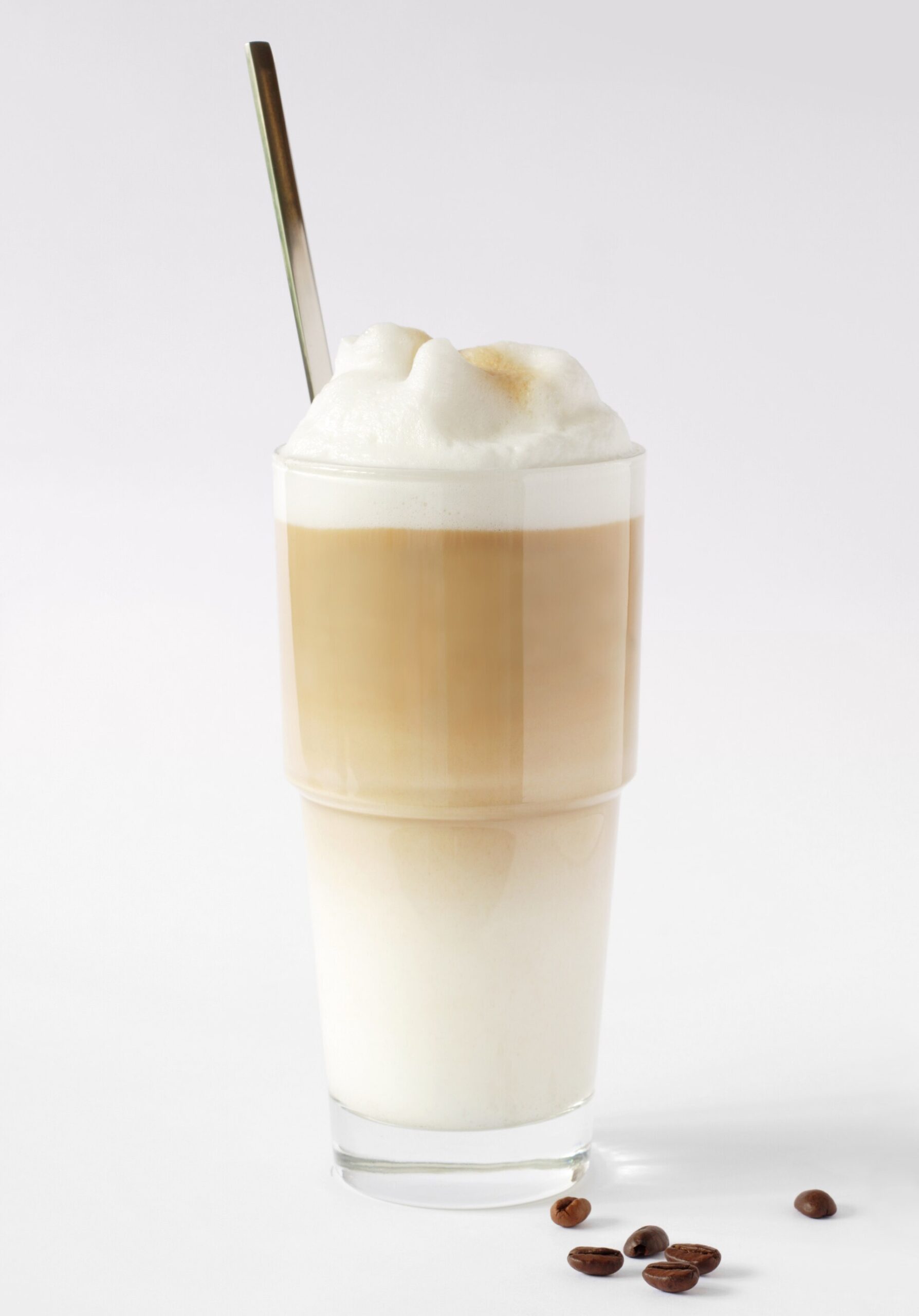
| Latte macchiato | Steamed milk with a shot of espresso poured in, often layered | 200 to 300 ml, in a glass | Home, cafes, Germany and Austria |
| Caramel macchiato (chain style) | Vanilla latte with espresso on top and caramel drizzle | 350 ml and up | Coffee chains |
The third drink is not Italian. The caramel macchiato is widely reported to have been launched by Starbucks in 1996. It is built like a latte, with sweet syrup, so it has little in common with the Italian original. This is not a criticism. It is simply a different drink with a borrowed name.
How Italians order a macchiato
In Italy, the easiest order is “un caffè macchiato, per favore.” Italians usually pay at the till first, then show the receipt at the counter. Some bars skip the till and you pay after. Watch the room and follow the locals.
There is one more choice. Ask for a macchiato caldo if you want the milk hot and foamed. Ask for a macchiato freddo if you want a splash of cold milk. Many bars will give you foam without asking.
If you want the milk drink, say “latte macchiato.” Be clear about it. If you only ask for “un latte” in Italy, you will usually get a glass of plain milk. That surprises many visitors.
- Espresso with a spot of milk: caffè macchiato.
- Glass of milk with a shot of coffee: latte macchiato.
- Espresso with cocoa and foam: see our story of the marocchino.
- Espresso with a splash of grappa: see caffè corretto.
Read next: History of the cappuccino, cappuccino vs latte vs flat white, Italian coffee culture and espresso prices in Italy.
Macchiato vs cortado vs flat white
The macchiato sits in a family of small espresso-and-milk drinks. They look alike, but the ratios differ.
- Macchiato: mostly espresso, a small mark of milk.
- Cortado: a Spanish drink, with roughly equal parts espresso and warm milk. Cortado means “cut.”
- Cappuccino: espresso, steamed milk and a thick layer of foam, in a larger cup.
- Flat white: a milk-forward drink with smooth, thin microfoam.
If you like the strength of espresso but want a little softness, the macchiato is the best first step. It keeps the bite of the coffee, and the milk rounds the sharp edges.
How to make a good macchiato at home
You do not need a barista machine to get close. You need a strong shot and a little foam.
- Make a short, strong coffee. A shot of espresso, or a moka pot coffee, works well.
- Warm a small amount of milk, about two tablespoons. Whisk or froth it until it has some foam. Our guide on how to froth milk at home shows simple ways.
- Spoon a small dot of foam on top of the coffee. Do not fill the cup.
- Drink it right away, while the foam is warm.
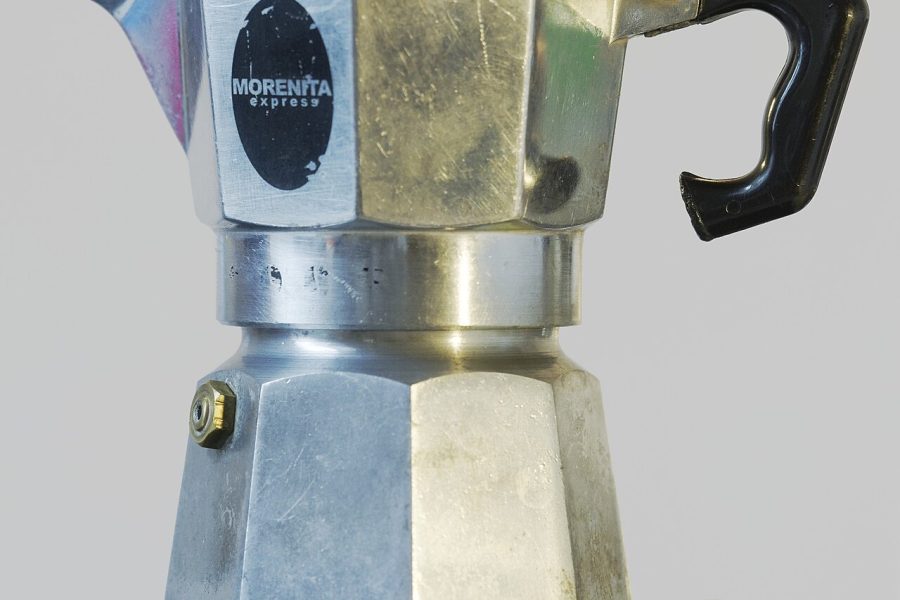
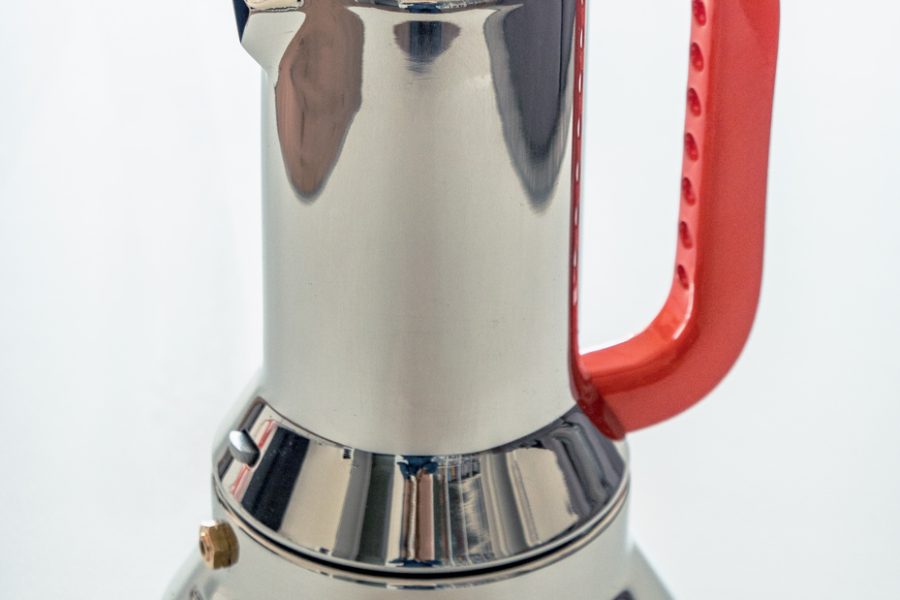
A moka pot gives a rich, strong coffee that suits this drink. It is not true espresso, but it makes a very good home macchiato. See our perfect moka pot guide for the method.
Common mistakes with the macchiato
- Adding too much milk. It stops being a macchiato and becomes a small latte.
- Using a big cup. The drink should be small. A large cup makes the milk spot look lost.
- Expecting sweetness. The Italian macchiato has no syrup. The sweetness is only from the milk.
- Mixing up the two names. Say “caffè macchiato” or “latte macchiato,” not only “macchiato,” when you travel in places that use the word differently.
When Italians drink it
Italians have a loose code about milk and time. Milky drinks such as cappuccino are mostly for the morning. After a meal, most people ask for a plain espresso. The caffè macchiato is the flexible one. Because it holds so little milk, it is accepted at almost any hour, including mid-afternoon.
That is one reason the drink is a favorite with workers who take a quick coffee at the counter. It feels like an espresso, but it is a little kinder on an empty stomach. This is a habit, not a law, and every bar and every region has its own tone.
Which coffee suits a macchiato
A small drink hides nothing. The coffee you use decides the whole flavor, because the milk is only a spot.
Traditional Italian blends are often a medium to dark roast, with some Robusta for body and crema. They give a bold, chocolate-and-nut taste, and the milk softens the bitterness. Many specialty roasters now use lighter roasts, which taste fruity and bright. With a light roast, use less milk, so the fruit is not lost.
If you drink your macchiato with a lot of sugar, you may be covering a weak or stale coffee. Fresh beans help more than extra sugar. Our guide to oily coffee beans explains how roast level changes what you see and taste.
The macchiato around the world
The word has traveled far, and it has changed on the way. In many English-speaking cafes, a macchiato means a small espresso with a dollop of foam, close to the Italian drink. Some cafes serve it in a small glass, and some serve a “long macchiato” with a double shot.
In other places, the word on a menu points to the layered milk drink. In German-speaking countries, the latte macchiato is a common cafe order. At coffee chains, the word has moved toward flavored, sweet drinks. When you see “macchiato” on a menu, check the size and the description before you order.
The best habit is the simple one. Ask the barista what is in it. A good barista will tell you in a few words, and you will avoid a surprise.
Frequently asked questions
What does macchiato mean in coffee?
It means “stained” or “marked.” In an espresso macchiato, the espresso is marked with a spot of milk. In a latte macchiato, the milk is marked with espresso.
Is a macchiato stronger than a latte?
Yes, in general. A caffè macchiato is mostly espresso, with very little milk. A latte is mostly milk, so the coffee flavor is softer.
How much milk goes in a macchiato?
Very little. A spoonful or two of foamed milk is typical. The goal is a small mark, not a mix.
Is the caramel macchiato Italian?
No. It is a coffee chain drink that borrows the name. It is built like a vanilla latte with caramel, and it is not served in Italian bars.
Who invented the macchiato?
No one knows for sure. The idea of marking espresso with milk is widely credited to Italian bars, but the exact date and person are not documented in reliable sources.
What is the difference between a macchiato and a cortado?
A macchiato has only a small mark of milk. A cortado, from Spain, has about equal parts espresso and warm milk, so it is milder.
Your next step
Next time you stand at an Italian bar, order a caffè macchiato and watch how little milk goes in. Then try making one at home with the steps above, and compare it with your usual latte.
IndieRoastersItaly is building a map of independent Italian roasters, with specialty coffee delivered fresh. Join the waitlist on our home page to hear when it opens.
This article was written with the support of artificial intelligence for content structuring, and was fully reviewed, verified, and refined by the author.
A tip from Italy: if you order “un macchiato” at the bar counter, it comes in a small espresso cup, not a tall glass. That tall layered drink is closer to a latte macchiato. Do you take yours caldo (with hot milk) or freddo (with a drop of cold milk)?