
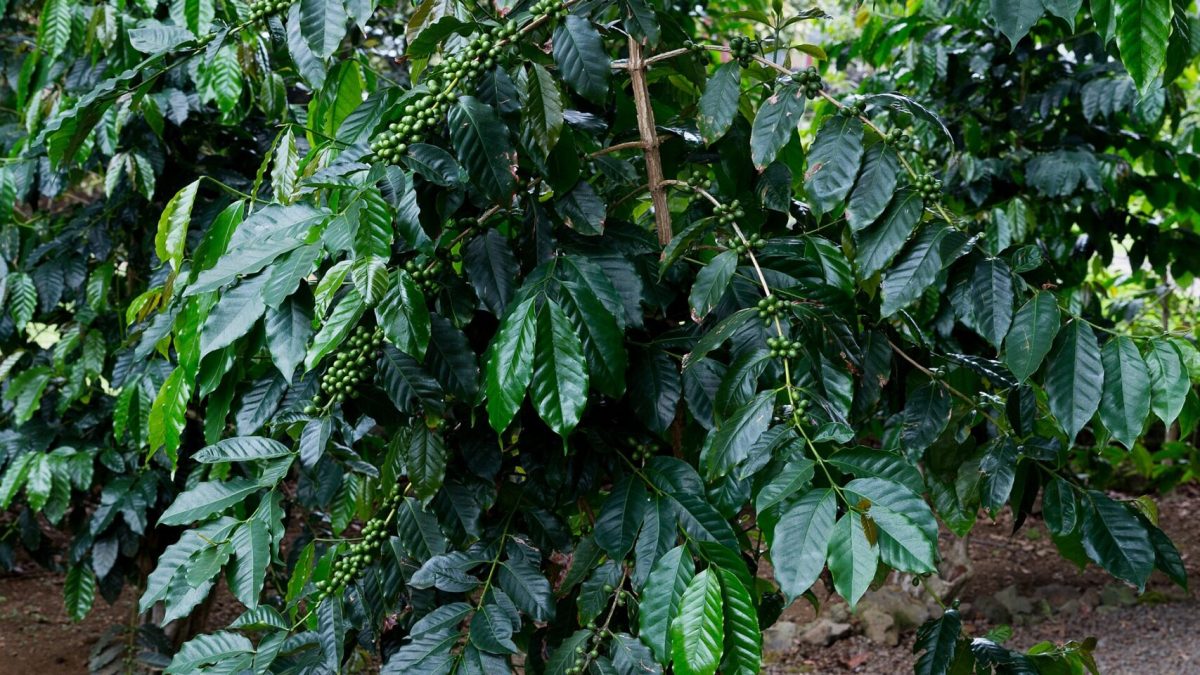
Quick answer: Kona coffee is coffee grown on the slopes of Hualālai and Mauna Loa, on the west side of Hawaii’s Big Island. Real “100% Kona” is rare and costs more than most specialty coffee. A “Kona blend,” by contrast, can legally hold as little as 10% Kona beans when sold in Hawaii. So the label matters more than the name.
Most people meet Kona coffee as a gift-shop bag or a line on a café menu. Few know what they are really buying. This guide explains where Kona coffee grows, how it tastes, why the price is high, and how to spot a bag that is mostly something else. We have not tasted every farm. What follows is based on public sources, farm and trade information, and published labeling rules.
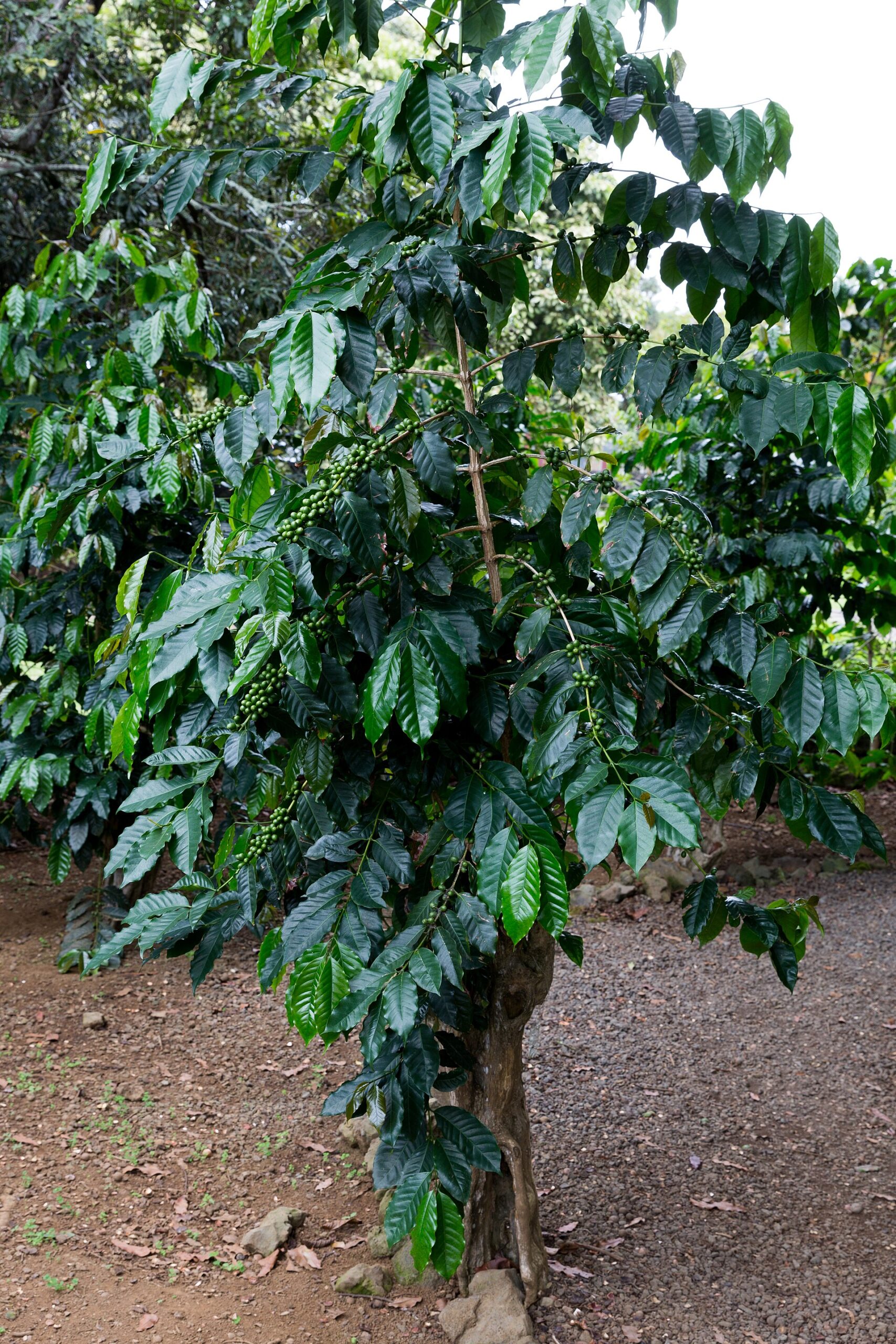
Where Kona coffee grows
The name points to the Kona districts of Hawaii’s Big Island. Growers farm a narrow strip on the slopes of two volcanoes, Hualālai and Mauna Loa. Sources describe this “Kona Coffee Belt” as roughly 500 to 3,200 feet above sea level. It is only a few miles wide, which is why total volume stays small.
Coffee reached Hawaii in the early 1800s. Accounts differ on exact dates and names, so we avoid a firm claim here. The Kona coffee article on Wikipedia gives a good timeline and cites its sources. What is clear is that small family farms, often a few acres each, have shaped Kona for generations.
Why the place matters
Growers usually point to the same ingredients. The soil is volcanic. Mornings are sunny. Clouds roll in during the afternoon and shade the trees. Nights stay mild. This pattern helps cherries ripen slowly, and slow ripening is what specialty buyers look for in any origin.
Is this unique? Not entirely. Other high-elevation, volcanic origins have similar traits. For example, Jamaica Blue Mountain also relies on altitude and cloud cover. The difference is that Kona is one of the few places in the United States where coffee is grown commercially at this scale. That makes it a rare, named origin for American buyers.
How Kona coffee tastes
Roasters and reviewers often describe Kona as smooth and mellow. Common notes include nuts, brown sugar, and a soft fruit sweetness. It is usually called balanced rather than loud. Medium roasts tend to suit it best, because a dark roast hides what you paid for.
Taste depends on the farm, the processing, and the roast. Read any single description as a general guide, not a promise. If you want to understand why the same coffee can taste so different, our guide to coffee processing methods explains how washing, drying and fermentation change the cup.
What “Kona blend” really means
This is the part that costs shoppers the most money. Under a Hawaii rule, a product sold in Hawaii as a “Kona blend” must contain at least 10% Kona coffee. The other 90% can come from anywhere. The state’s authority stops at its borders, and one source notes there is no matching federal rule. So the same bag can look very different once it leaves Hawaii.
Lawmakers have tried to tighten this for years. A 2024 bill passed the legislature, according to Daily Coffee News, with enforcement slated for 2027. We could not confirm the final text, so check the current rules before you rely on any one percentage.
How to read the label
| Label wording | What it usually means | Our take |
|---|---|---|
| 100% Kona coffee | All beans from the Kona districts, if the seller is honest | The only version that matches the name |
| Kona blend | Minimum 10% Kona when sold in Hawaii; the rest is other coffee | Fine as a mild coffee, poor value as “Kona” |
| Kona-style, Kona flavored, Kona roast | Often no Kona beans at all, or a flavor added | Treat as a marketing phrase |
| Hawaiian coffee | Grown somewhere in Hawaii, not necessarily Kona | Can be good, but a different origin |
Read the full bag, not only the front. Look for a percentage and a farm or mill name. If the bag says “Kona” but hides the percentage, assume the low end.
Read next: Arabica varieties explained · Panama Geisha coffee · Single origin coffee myths · Why coffee blooms
Why Kona coffee costs more
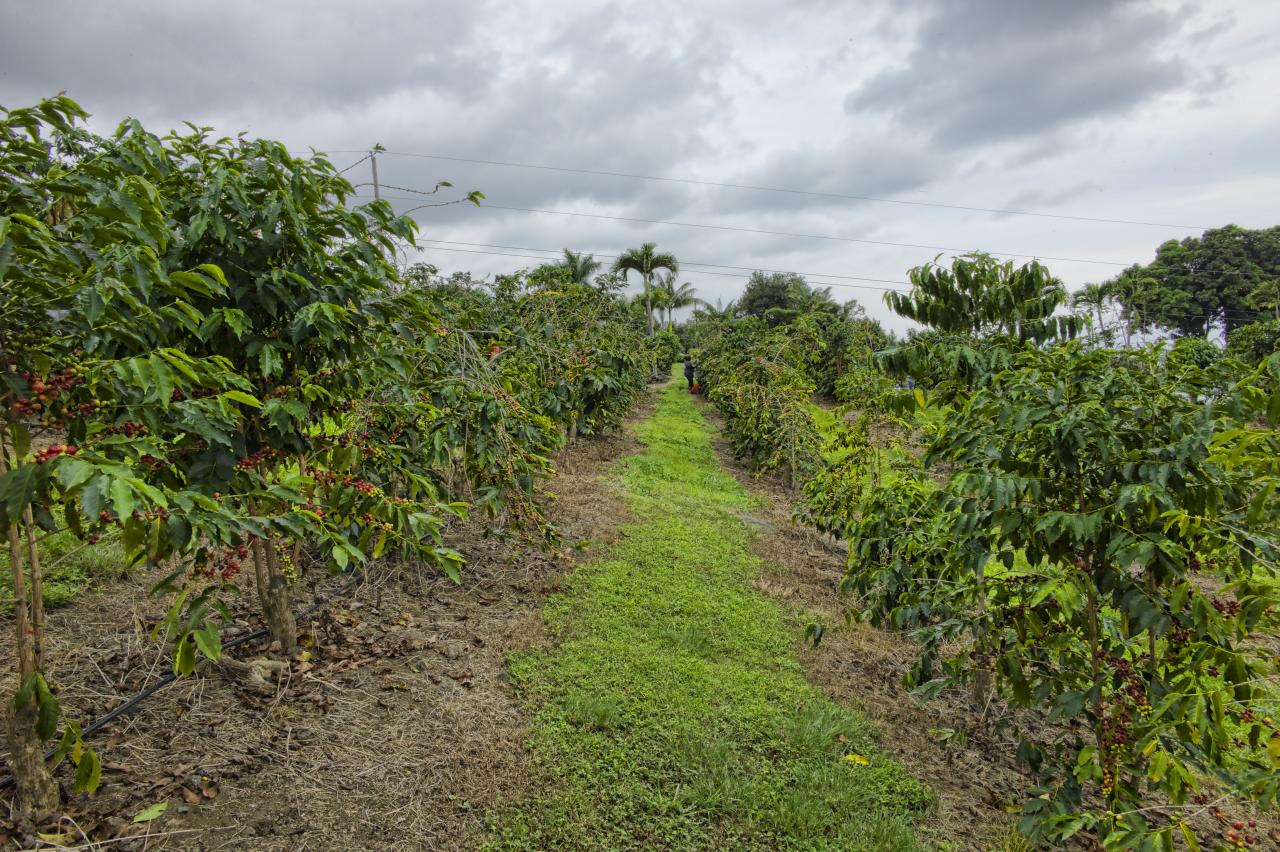
Several forces push the price up. Volume is small. Hawaii labor and land costs are high. Farms are small, and much of the harvest is picked by hand, cherry by cherry, because ripeness varies on the same branch. Demand is strong, and counterfeits crowd the market, which makes honest sellers charge for proof.
Farms also face real pressure. Reports describe the coffee berry borer, an insect pest, reaching Hawaii in 2010. Coffee leaf rust, a fungal disease, was later found on the islands as well. Both raise costs for growers. We recommend checking recent news from Hawaii’s farm bodies for current numbers, since these change each season.
How to buy real Kona coffee
- Look for “100% Kona.” A percentage is a better clue than a pretty label.
- Buy from a farm or a roaster that names the farm. Traceable coffee is harder to fake.
- Choose whole beans with a roast date. Fresh beans matter more than a famous name. See our notes on degassing for what freshness really means.
- Be wary of very low prices. If a “100% Kona” bag costs the same as a supermarket blend, ask why.
- Start small. Buy one small bag before you commit to a pound.
How to brew Kona coffee
Keep the method simple so the coffee can speak. A pour-over or a drip brewer suits a mellow cup. If you love Italian-style coffee, a moka pot also works with a medium roast. Use a good grinder and a clean pot, and never press the beans too fine. Our guides to the best grinder for a moka pot and cleaning a moka pot cover the basics.
A rough starting point for a pour-over is 1 part coffee to 16 parts water, with water just off the boil. Adjust to taste. If the cup tastes sour, grind finer. If it tastes bitter, grind coarser.
Peaberry, “Extra Fancy” and other words on the bag
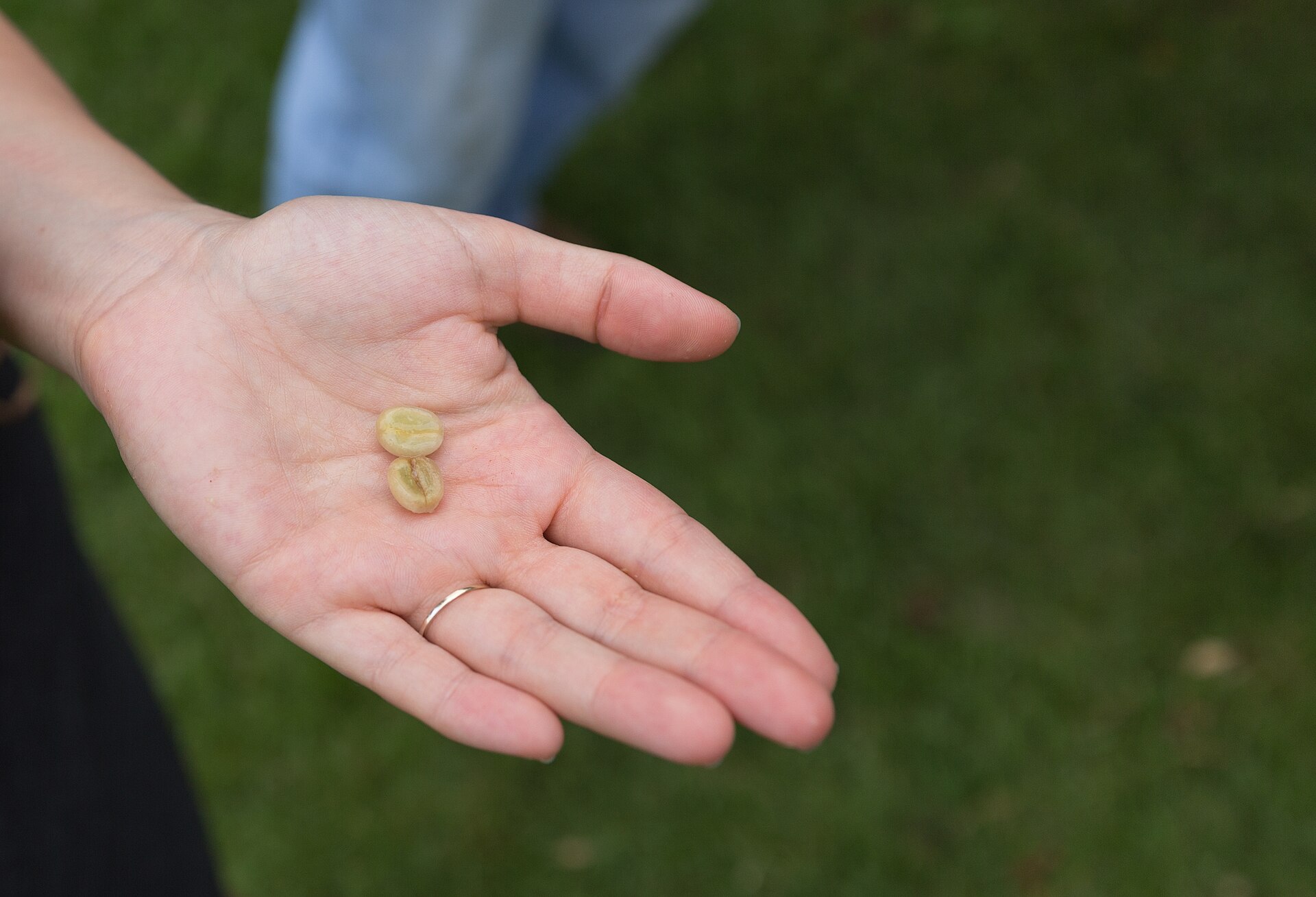
Sellers add many extra words to Kona bags. Some are real trade terms. Others are decoration. A peaberry is a natural mutation where a cherry holds one round bean instead of the usual two flat ones. It can occur in any coffee origin. Some Kona farms sort peaberries and sell them separately. Fans say they roast evenly, but taste claims vary, so treat that as opinion, not fact.
Kona also has size and defect grades, with names such as “Extra Fancy” and “Fancy.” These describe bean size and sorting, not flavor. A top grade means a cleaner, more even lot. It does not guarantee a better cup. We could not verify the full grading table for this guide, so check the state’s published standards before you rely on any one grade.
Kona compared with other premium origins
| Origin | Style in the cup (commonly described) | Why people buy it |
|---|---|---|
| Kona, Hawaii | Smooth, mellow, nutty, soft sweetness | Rarity and a U.S. origin story |
| Jamaica Blue Mountain | Mild, clean, low bitterness | Name recognition and a protected origin |
| Panama Geisha | Floral, tea-like, bright | Aroma and competition fame |
| Colombia Huila | Caramel, red fruit, balanced | Value and consistency |
This table is a guide, not a ranking. Each origin has many farms and many roast styles. If you want a floral cup, read our guide to the Geisha variety instead.
Common mistakes with Kona coffee
- Roasting or buying it too dark. A dark roast tastes like roast, not like Kona. Choose a light-to-medium roast.
- Buying pre-ground coffee. Ground coffee loses aroma fast. Grind just before you brew.
- Storing it in the fridge. Moisture and odors get in. Keep beans in a sealed container, away from heat and light. See our guide to coffee storage myths.
- Using boiling water straight from the kettle. Let it rest for 30 seconds. Water that is too hot can make a mellow coffee taste harsh.
- Trusting a gift-shop label. Tourist shops often sell blends. Ask for the percentage.
Treat Kona like any fine coffee. Fresh beans, a clean brewer, and a good grind will do more for your cup than the name on the bag.
Is Kona coffee worth it?
It depends on what you want. If you want a rare, farm-traceable, mellow coffee, and you can verify “100% Kona,” it can be a good treat. If you want the best cup per dollar, several other origins offer more value. Our readers can compare El Salvador, Costa Rica or Colombia Huila at lower prices. A good coffee does not need a famous name.
Our verdict is simple. Buy Kona for the story and the rarity, not because the label says so. Never pay Kona prices for a blend.
Kona coffee FAQ
Is Kona coffee the same as Hawaiian coffee?
No. Kona is one growing region on the Big Island. Hawaiian coffee can come from other islands and districts.
What does “10% Kona blend” mean?
It means the bag may contain only 10% Kona beans. The rest can be other coffee. Check current rules, since lawmakers have worked on changing them.
Why is Kona coffee so expensive?
Small farms, hand picking, high local costs, limited land, and strong demand all play a part.
Does Kona coffee taste better than other coffee?
Not by default. Many people find it smooth and balanced. But taste is personal, and other origins can match it for less.
How can I avoid fake Kona coffee?
Buy “100% Kona,” prefer named farms, and distrust “Kona-style” wording or very low prices.
For standards on how specialty coffee is graded and scored, see the Specialty Coffee Association.
We are building IndieRoastersItaly, a coffee subscription with independent Italian roasters who roast to order. If you want to know when it opens, join the waitlist on our home page.
This article was written with the support of artificial intelligence for content structuring, and was fully reviewed, verified, and refined by the author.
A quick tip from us: always check the percentage on the bag. Many “Kona blends” contain as little as 10% Kona coffee, and the rest is cheaper beans from elsewhere. If you want to taste what makes Kona special, look for “100% Kona” on the label. Have you ever tried a 100% Kona? What did you think?