
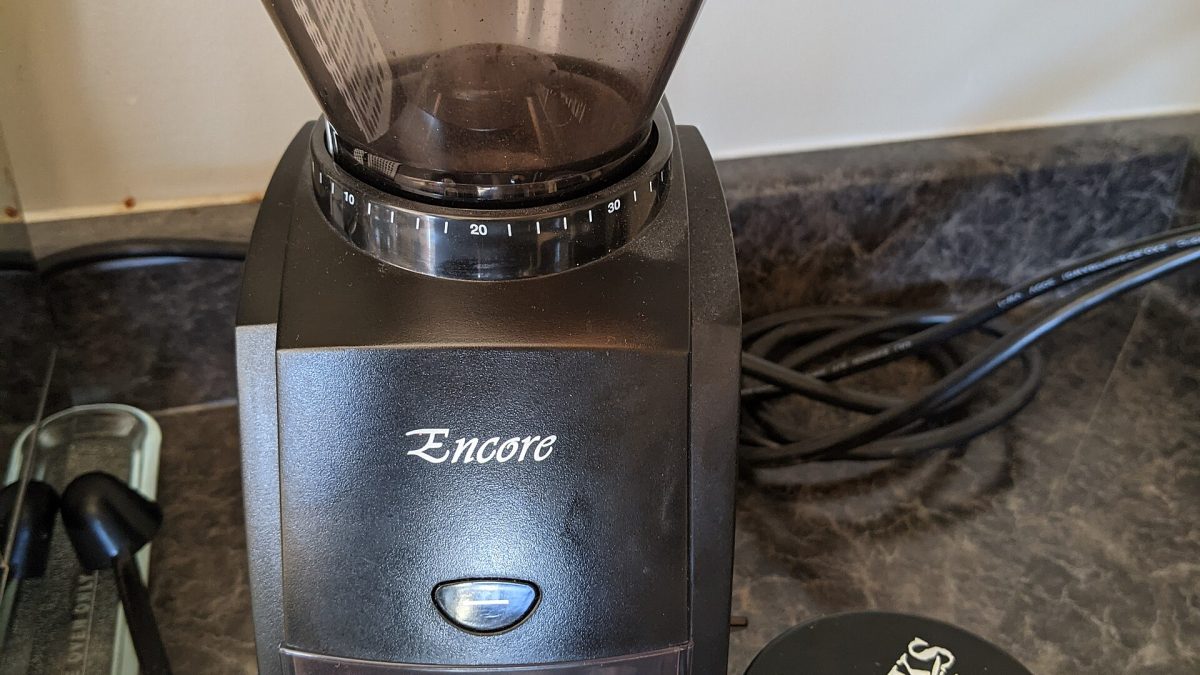
Quick answer: the best grinder for a moka pot is a burr grinder that can make a medium-fine, even grind. For most people that means the OXO Brew Conical Burr Grinder or the Baratza Encore. If you brew one pot a day, a good hand grinder also works well. Skip blade grinders. They make a mix of dust and chunks, and a moka pot punishes that mix.
Here is the short version of why. A moka pot pushes hot water through coffee with low pressure, far below an espresso machine. If the grind is uneven, water rushes through the coarse bits and chokes on the fine ones. You get a cup that is sour and bitter at the same time. A best grinder for moka pot setup fixes that by making particles that are close in size. Below you will find two electric picks, one manual option, and a simple way to dial in the grind.
A quick honesty note. IndieRoastersItaly has not tested these grinders in a lab or in a kitchen. This guide is based on the published specs, the product listings, and what a large number of owners report. Where a detail is not verifiable, we say so.
What a moka pot needs from a grinder
The moka pot is usually credited to the Italian engineer Luigi De Ponti, who designed it for Alfonso Bialetti, and the design dates to 1933, according to Wikipedia. Sources differ on some details. It heats water in the base. Steam pressure then pushes the water up through the coffee bed. That pressure is low, often described as around 1 to 2 bar, while espresso uses about 9 bar.
That low pressure sets the rules for grind size:
- Medium-fine, not espresso-fine. Think a little coarser than table salt in feel. A grind that is too fine clogs the filter and stalls the flow.
- Even particles. Fewer fines means less bitterness and a cleaner cup.
- Small steps between settings. A moka pot is sensitive. One notch can change the taste, so fine adjustments matter.
- Fresh grind each time. Ground coffee loses aroma fast. Grinding just before brewing is the biggest upgrade you can make. Our coffee grind size guide shows how the sizes compare.
Our quick picks
The table uses specs from the Amazon.com listings at the time of writing. Ratings change, so check the current page before you buy.
| Grinder | Type | Settings | Best for |
|---|---|---|---|
| OXO Brew Conical Burr | 40 mm stainless conical burrs | 15 settings plus 43 micro-adjustments | Fine tuning a moka pot |
| Baratza Encore | Conical burrs | 40 settings | A long-lived, repairable all-rounder |
| Hand grinder (for example Timemore C3) | Manual burr | Varies by model | One or two cups a day, small budget |
OXO Brew Conical Burr Grinder: best for fine control
The OXO Brew Conical Burr Grinder uses 40 mm stainless steel conical burrs. The listing says it offers 15 grind settings, with 43 micro-adjustments between them. For a moka pot this is the key feature. You can nudge the grind in tiny steps until the cup tastes right.
Other details from the listing: a hopper that holds up to 12 ounces of beans, and a one-touch start that remembers your last setting. That memory is handy. Once you find your moka setting, you can leave it there and press one button each morning.
On Amazon.com it has a 4.3 out of 5 rating from roughly 23,500 ratings at the time of writing. That is a large sample. It suggests the grinder works for many households, though a star score cannot tell you how it will taste in your pot.
- Pros: very fine adjustment steps, large hopper, simple one-touch use.
- Trade-offs: it is a plastic-bodied countertop machine, and a few users mention static and mess. Those are common with electric grinders. We could not verify how it ages over years.
Read next: the best moka pots, moka pot myths and how to clean a moka pot.
Baratza Encore: best for a long-lived all-rounder
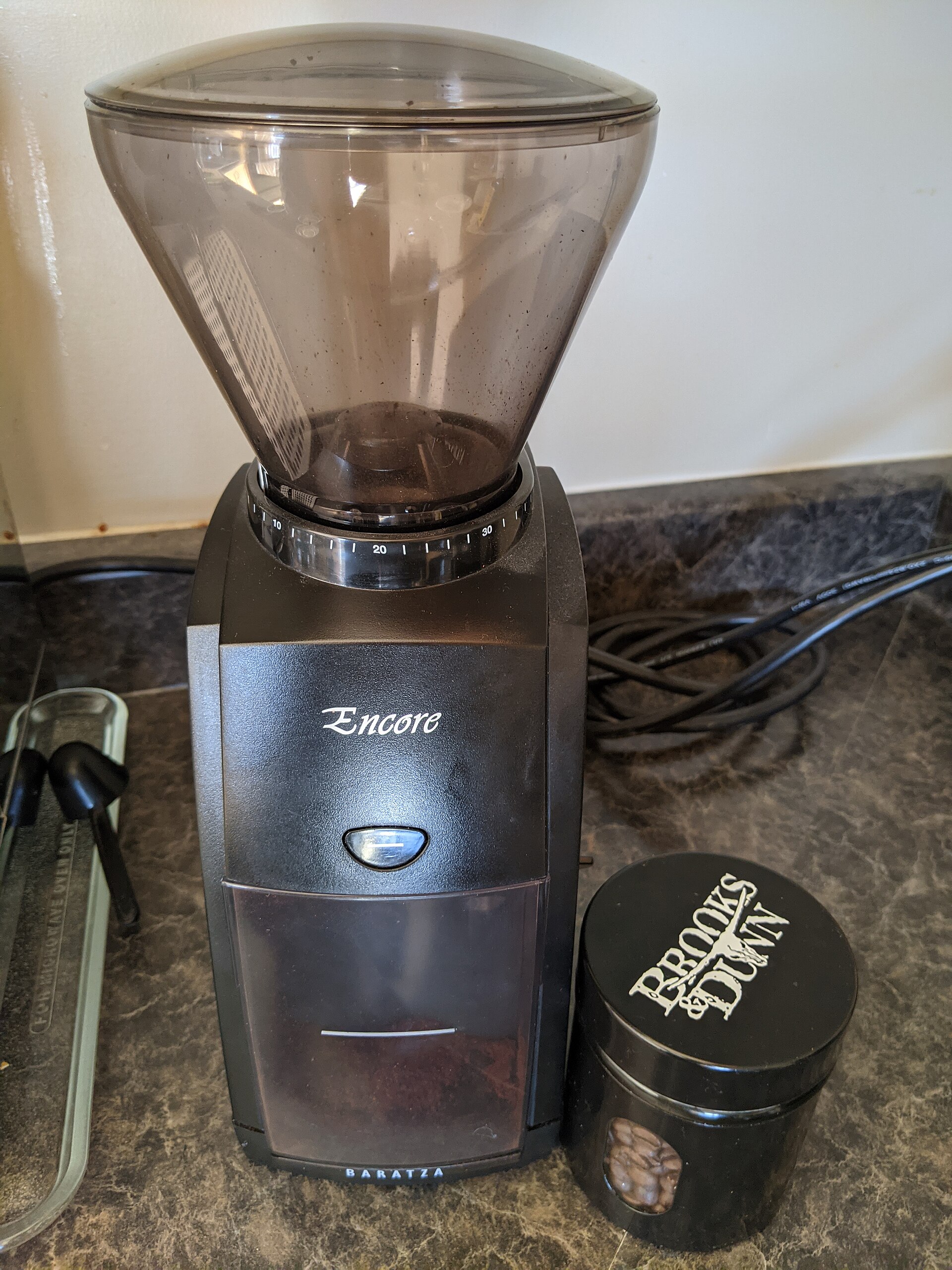
The Baratza Encore is one of the best-known entry-level burr grinders. The listing describes commercial-grade conical burrs, a front-mounted pulse button, and 40 grind settings. It is aimed at filter coffee but covers a wide range, which includes the medium-fine zone a moka pot likes.
The Encore is rated 4.1 out of 5 on Amazon.com from about 16,600 ratings at the time of writing. Baratza also sells replacement parts, which matters if you want to keep a grinder for years. Check the current parts and warranty details on the Baratza site, since we have not verified them here.
- Pros: small footprint, wide range of settings, simple controls, strong reputation among home brewers.
- Trade-offs: steps between settings are larger than on the OXO, so you may land between two ideal grinds. It is also not built for true espresso.
The hand grinder option
If you make one or two moka pots a day, you do not need a motor. A good hand grinder gives you an even grind for less money and takes up little space. We cover this in our guides to the best manual coffee grinders and the Comandante vs Timemore debate. The Timemore C3 review is a good starting point for a budget model.
The price you pay is effort. Grinding enough beans for a six-cup moka pot by hand takes a couple of minutes. If that sounds like a chore, choose an electric model.
Why not a blade grinder?
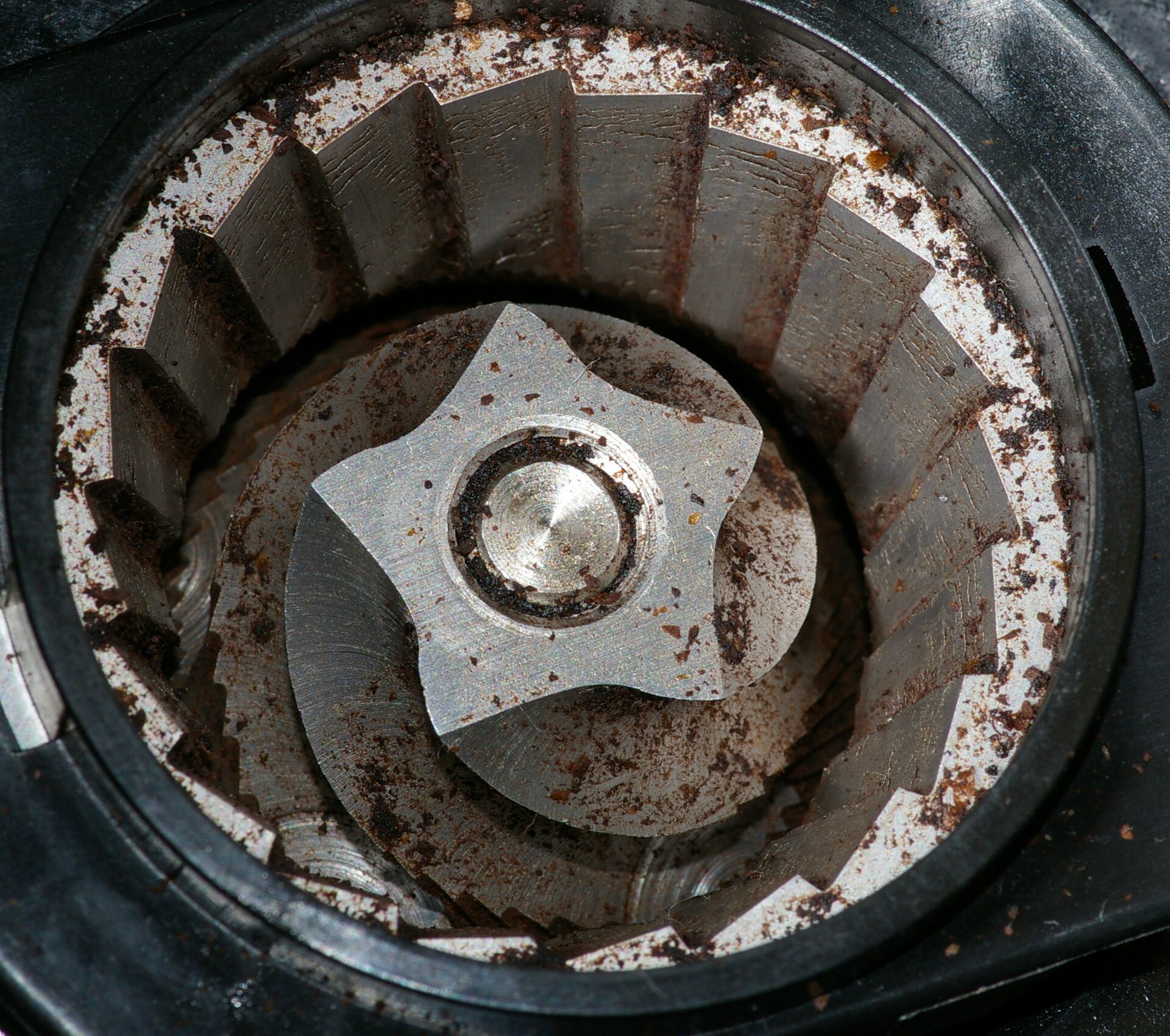
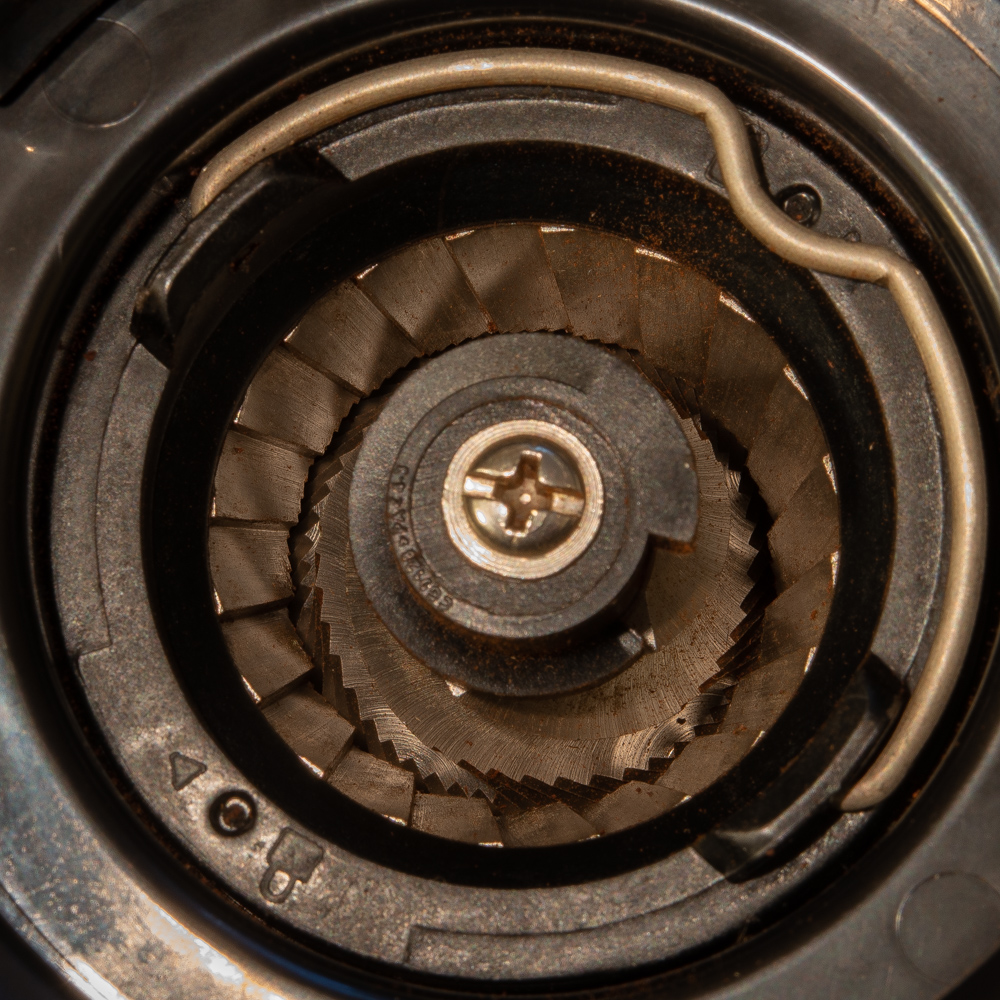
A blade grinder chops beans with a spinning blade, like a small blender. It cannot control particle size. A burr mill crushes beans between two abrasive surfaces set a fixed distance apart, so the output is far more uniform. For a moka pot, uniform particles matter more than almost any other grinder feature.
If a blade grinder is all you have today, you can still make coffee. Pulse in short bursts, shake the grinder, and sift out the finest dust. It is not ideal, but it beats pre-ground coffee that is a month old.
How to dial in your grind for a moka pot
- Start in the medium-fine range. On the OXO, try a setting a little finer than your filter-coffee setting. On the Encore, start lower than your drip setting.
- Fill the basket level. Do not tamp. Wipe stray grounds from the rim so the pot seals well.
- Brew on medium-low heat with the lid open, and watch the flow.
- Taste and adjust. If the stream sputters and the cup is bitter, the grind is too fine or the heat too high. If it gushes fast and tastes thin or sour, go finer.
- Change one thing at a time. Move one step, brew again, and keep notes.
Fresh beans help too. Very fresh roasts release a lot of gas, which is why our piece on coffee degassing myths is worth a read.
Moka pot troubleshooting: is it the grinder?
Not every bad cup is a grind problem. Use this table to tell the cause apart before you change settings.
| What you notice | Likely cause | Try this |
|---|---|---|
| Sputtering, harsh, bitter | Grind too fine or heat too high | Go one step coarser and lower the heat |
| Fast flow, thin, sour | Grind too coarse | Go one step finer |
| Mix of bitter and sour | Uneven particles | Use a burr grinder, not a blade |
| Metallic or flat taste | Dirty pot or old coffee | Clean the pot and use fresher beans |
| Water leaks at the seam | Grounds on the rim or worn gasket | Wipe the rim and check the seal |
The pattern is simple. If the taste changes when you move the grinder by one step, the grind was the issue. If it does not, look at heat, freshness and cleaning. Many people blame the pot when the fault is a stale bag or a basket that is overfilled. Taking the heat down a notch costs nothing and often helps more than a new gadget.
Common mistakes and easy fixes
- Grinding too fine. The pot hisses, spits and tastes harsh. Go coarser by one step.
- Tamping the coffee. Packing it down blocks flow. Level it and leave it.
- Using pre-ground espresso coffee. It is usually too fine for a moka pot. Grind fresh instead.
- Never cleaning the grinder. Old oils and dust turn rancid and affect the taste. Brush it out regularly and follow the maker’s instructions.
- Changing beans and grind together. You will not know what caused the change. Adjust one variable.
Which one should you buy?
- Choose the OXO Brew Conical Burr if you want the finest control and a simple one-touch routine.
- Choose the Baratza Encore if you want a proven all-rounder from a brand known for supporting its machines.
- Choose a hand grinder if you brew one or two cups a day and want to spend less.
None of these will rescue stale beans. Buy freshly roasted coffee from a small roaster, grind it just before brewing, and the grinder will do its job.
FAQ
What grind size is best for a moka pot?
Medium-fine. It should feel finer than drip coffee but clearly coarser than espresso.
Can I use an espresso grind in a moka pot?
Usually it is too fine. It can clog the filter and cause a harsh, bitter cup. Go a little coarser than espresso.
Do I need an expensive grinder for a moka pot?
No. You need a burr grinder with even output and fine adjustment. A mid-priced electric model or a good hand grinder is enough.
Is a blade grinder bad for moka pot coffee?
It is the weakest option because it makes uneven particles. A burr grinder is a better choice if you can afford one.
How often should I clean my grinder?
Brush out the burr chamber every week or two, and follow the maker’s instructions for deeper cleaning. Oils build up and can taste stale.
Your next step
Pick one grinder, set it to a medium-fine grind, and brew three pots, changing one step each time. Write down what you taste. You will find your sweet spot faster than any chart can tell you. Then explore the best moka pots to match your new grinder.
As an Amazon Associate, IndieRoastersItaly earns from qualifying purchases. This does not change the price you pay.
IndieRoastersItaly is building a map of Italy’s independent roasters, so fresh, carefully roasted coffee is easier to find. Join the waitlist on our home page.
This article was written with the support of artificial intelligence for content structuring, and was fully reviewed, verified, and refined by the author.

Whichever grinder you choose, aim for a grind slightly coarser than espresso, roughly like fine table salt, and never tamp the basket: just level it with a finger. Which moka size are you grinding for, the 3-cup or the 6-cup?