
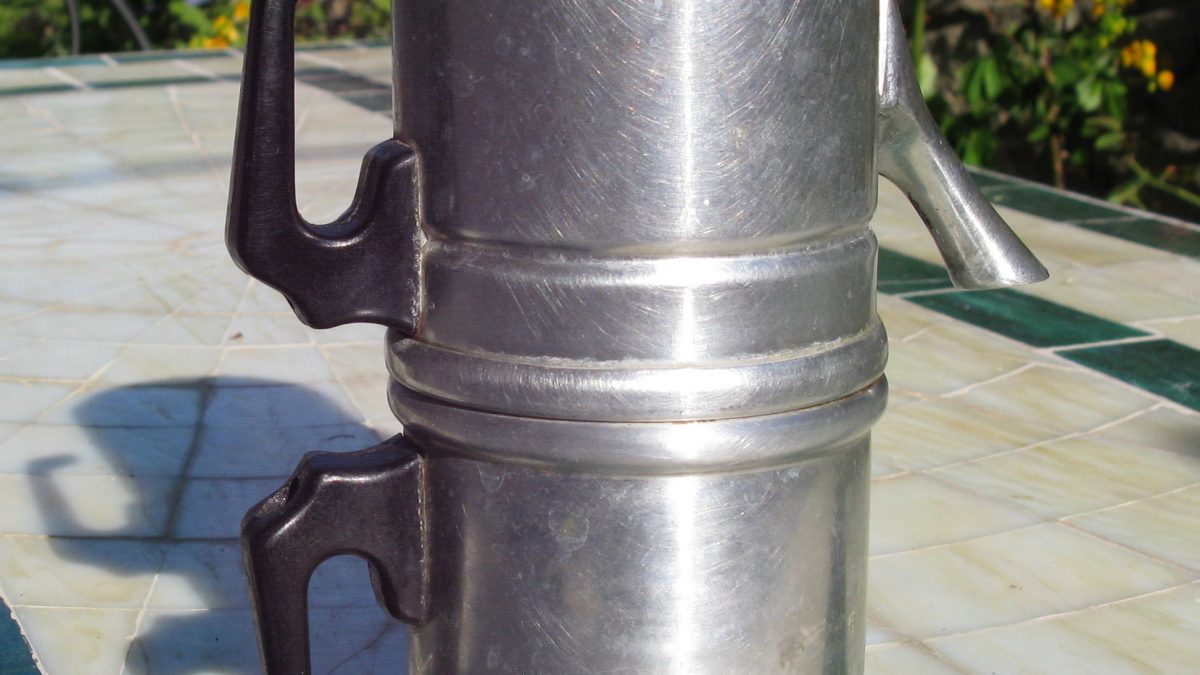
Quick answer: the Neapolitan flip coffee pot is a stovetop drip brewer that you flip upside down when the water is hot. In Italy it is called caffettiera napoletana or cuccumella. Despite the name, sources trace its design to France in the early 1800s, not to Naples. It brews by gravity, not by pressure, so the coffee tastes cleaner and lighter than moka pot coffee.
Most people think the moka pot was the first Italian home coffee maker. It was not. For generations before 1933, many Italian kitchens had a tall pot with a long handle and a little paper cone on its spout. This is the story of that pot, why Naples took it as its own, and how to brew with it today.
What is a Neapolitan flip coffee pot?
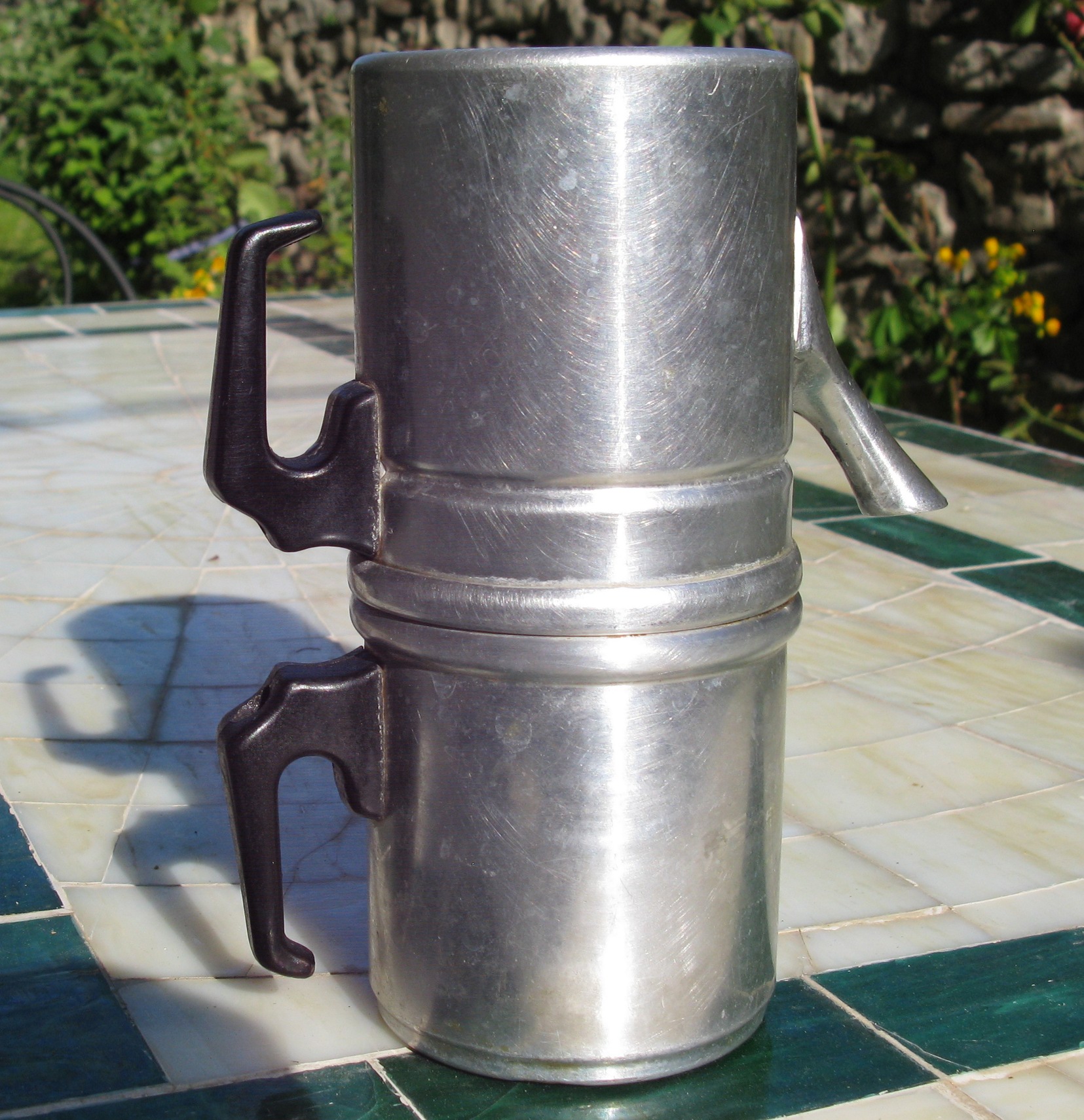
The Neapolitan flip coffee pot is a drip coffee maker for the stove top. According to Wikipedia, it was very popular in Italy and France until the 20th century. Unlike a moka pot, it does not use steam pressure to push water through the coffee. It relies on gravity.
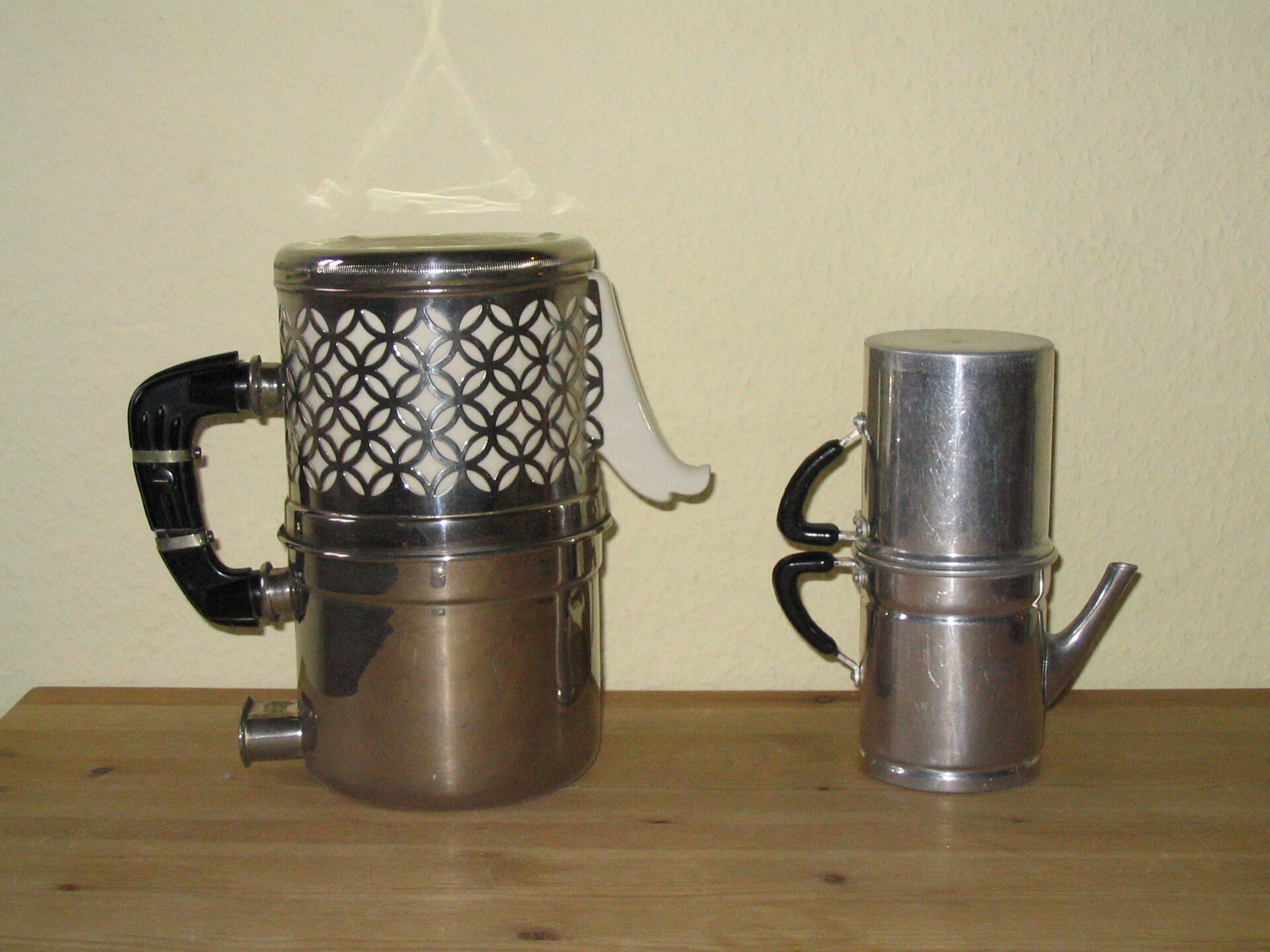
The pot has two main chambers that stack together. The lower one is the boiler, called the caldaietta in Italian. It has a wooden handle. A perforated filter basket with the coffee sits above the water. The upper chamber has the spout and the lid. You heat the pot upright, then flip it over. The hot water now drips down through the grounds and collects in the chamber that was on top.
The name changes with the speaker. In Naples you will hear cuccumella. The word comes from cuccuma, which Wikipedia glosses as a copper or terracotta vase. Elsewhere it is simply la napoletana, and Perfect Daily Grind notes that some people just call it la macchinetta, “the little machine.”
Who invented it? The sources disagree
This is where the story gets interesting, because the name “Neapolitan” misleads. Wikipedia credits the pot to Jean-Louis Morize, a tinsmith and lampmaker from Paris, in 1819. It cites William Ukers’ 1922 book All About Coffee for this. The same article says the reason the English name points to Naples is unknown.
Other writers link the design to the older French drip pot of Jean-Baptiste de Belloy, a Paris archbishop. Perfect Daily Grind says the cuccuma is a reinvention of that pot, and quotes Ukers saying the original French drip pot was never patented. Wikipedia treats the du Belloy pot as a related but different pot.
So what can we say with confidence? The flip-over drip method came out of France in the early 19th century. It then became a household object in Italy. Who exactly built the first one is uncertain, and the sources do not agree. If you see a confident single answer online, treat it with care.
A short timeline
| Period | What happened | Source |
|---|---|---|
| Early 1800s | The French drip pot appears; a flip pot is credited to Morize in 1819 | Wikipedia, citing Ukers |
| Through the 1800s | The pot spreads to Italian homes; Naples makes it part of daily life | Perfect Daily Grind |
| 1886 | Makers switch from copper to aluminum | Wikipedia |
| 1933 | Alfonso Bialetti patents the moka pot, which later replaces the flip pot at home | Perfect Daily Grind (quoting a barista) |
| 1979 to 1987 | Riccardo Dalisi redesigns the pot for Alessi; it enters production in 1987 | Wikipedia |
The Alessi project is a nice detail. It shows how a humble kitchen tool can become a design object. Our story of the history of the moka pot picks up where this timeline ends.
Why Naples made it its own
Naples has long treated coffee as a ritual, not just a drink. Our guide to coffee in Naples and the tradition of the suspended coffee show how deep that goes. The flip pot fits that culture well. It is slow, it is shared, and it fills the room with the smell of coffee.
Perfect Daily Grind says that in Naples and the wider Campania region the pot is a symbol of the city’s coffee culture. In the 1800s, the same source says, Naples was a major trade center, and coffee was already part of high-society gatherings, though it stayed mostly out of reach for poorer families at first.
The little paper cone
One detail makes the napoletana special. The cuppetiello is a small paper cone that sits over the spout. Wikipedia explains that it keeps the aroma in while the coffee drips, which can take ten minutes or more. The same article points to the playwright and actor Eduardo De Filippo, who described the cuppetiello and the weight of coffee in Naples.

The broken spout and good luck
Perfect Daily Grind reports that the horn-shaped spout is often broken, by accident or on purpose, and that this is seen as a sign of good luck. We could not trace the origin of this belief, so we present it as a local custom rather than a proven fact.
Read next: History of the moka pot · Suspended coffee in Naples · Coffee in Naples: secrets · Italian coffee culture
Flip pot vs moka pot: how they differ
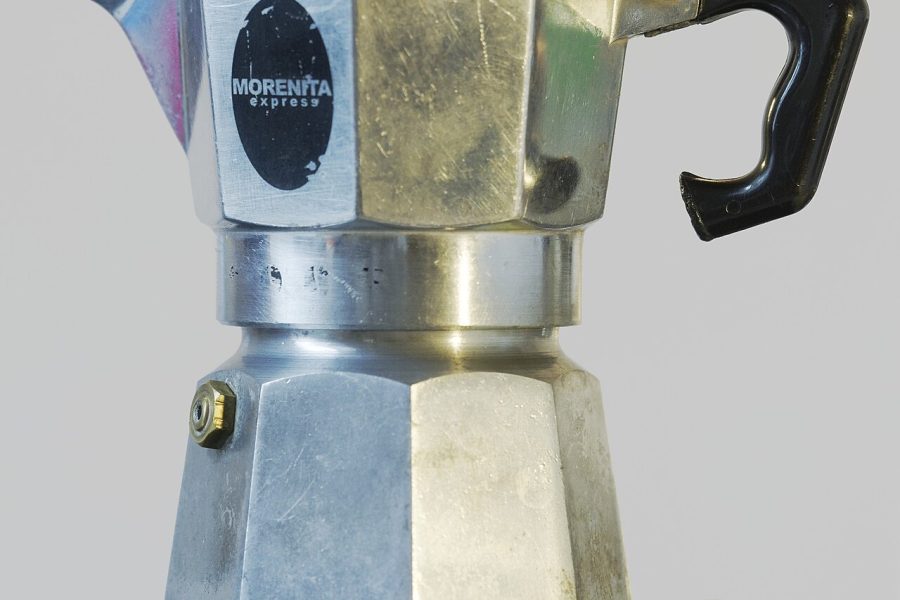
The two pots look alike, but they work in different ways. In the flip pot, hot water drips through the coffee under gravity. In a moka pot, boiling water in the lower chamber builds pressure and pushes up through the coffee. Barista Simone Amenini of Ditta Artigianale tells Perfect Daily Grind that the moka’s pressurized extraction gives a heavier cup with more body.
| Neapolitan flip pot | Moka pot | |
|---|---|---|
| Method | Gravity drip | Steam pressure |
| Body | Lighter, cleaner | Heavier, closer to espresso |
| Brew time | Slow; a few minutes or longer | A few minutes on the stove |
| Flip needed | Yes | No |
| Typical story | Early 1800s France to Italian homes | 1933, Alfonso Bialetti |
If you own a moka pot already, our moka pot brewing guide covers that method in detail.
How to brew with a Neapolitan flip pot
This method follows the steps described by Perfect Daily Grind, with a ratio suggested by Simone Amenini of 18 g of coffee to 200 ml of water. Treat it as a starting point and adjust to taste.
- Fill the boiler about three-quarters full with filtered water.
- Put the filter basket in the boiler and add medium to medium-fine ground coffee. About 18 g per 200 ml is a good start.
- Close the screw cap and attach the upper section with the spout. Make sure the spout points down.
- Heat on low to medium heat so the coffee does not burn.
- Turn off the heat when the pot starts to steam.
- Carefully flip the pot upside down. Use the handle and a cloth. Let the water drip through for roughly two to three minutes. Larger pots take longer.
- Pour and serve. Place a paper cone over the spout if you want to follow the Neapolitan custom.
Amenini also says the finer you grind, the more intense and bitter the cup. He mentions that he sometimes skips the stove, flips the pot at once, and pours 94 °C water from an electric kettle straight into the filter. This is one barista’s habit, not a rule, but it shows how flexible the pot is.
Common mistakes (and how to fix them)
- Bitter coffee. The grind may be too fine, or the heat too high. Coarsen the grind slightly and lower the flame.
- Weak coffee. Use more coffee per 200 ml, or grind a bit finer.
- Water leaks while flipping. The cap was not tight. Close it firmly before you turn the pot.
- Burnt fingers. The metal handle parts get hot. Use a cloth and flip away from your body.
- Dull flavor. Old coffee gives flat results. Use fresh beans and grind just before brewing. See our grind size guide.
Is the flip pot worth buying today?
Wikipedia notes that the pot has regained some popularity and that one maker now sells it in stainless steel. It is not a quick method, and you will not get espresso-like body. If you like clean, gentle filter-style coffee and a bit of ritual, it is a lovely tool. It also makes a good gift for anyone who loves the story behind their coffee.
Because the pot is slow and gentle, it also forgives different roast levels. Perfect Daily Grind says Neapolitan blends are often dark, with a chocolate note and some bitterness, but that lighter roasts also work. If you are curious about how roast level changes flavor, read our guide to light vs dark roast.
Why the flip pot faded, and why it is back
Simone Amenini says that until the moka pot arrived in 1933, the cuccuma was the favorite way to make coffee at home in Italy. He gives two reasons: it was easy to use, and it was not expensive. The moka pot kept both qualities and added speed and a stronger cup. Over the following decades it took the place of the flip pot in most kitchens.
The materials tell a similar story. The pot began in copper, moved to aluminum in 1886 because aluminum was cheaper and easier to make, and now appears again in stainless steel and copper. Amenini notes that this return to older materials reflects a new interest in slow, hands-on brewing.
This matters for buyers. A modern flip pot is not a museum piece. It is a working tool with a simple design, and a long handle that keeps your hand away from the heat.
The parts of the pot, in plain words
- Caldaietta (boiler): the bottom chamber that holds the water. It carries the wooden handle.
- Filter canister: a cylinder with a perforated microfilter that holds the ground coffee and slots into the boiler.
- Upper section: the chamber with the spout and the lid. It becomes the serving pot after the flip.
- Cuppetiello: the optional paper cone over the spout that keeps the aroma in.
Knowing the parts helps you spot mistakes. If the pot drips slowly, the filter holes may be clogged. If it leaks, the seal between the sections is the first place to check.
Frequently asked questions
Is the Neapolitan flip coffee pot from Naples?
Not clearly. Wikipedia says it was invented in 1819 by Jean-Louis Morize in Paris, and the reason for the “Neapolitan” name is unknown. The pot did become a symbol of Naples.
How is it different from a moka pot?
It brews by gravity, while a moka pot uses steam pressure. The flip pot is gentler and lighter in body.
What does cuccumella mean?
It is the Neapolitan word for the pot. It comes from cuccuma, a word for a copper or terracotta vase.
What grind should I use?
Medium to medium-fine. A finer grind makes the cup more intense and more bitter.
Why do people break the spout?
Perfect Daily Grind reports that a broken spout is seen as good luck. We could not verify where the belief started.
Can I use it on induction?
Only if the base is magnetic. Many flip pots are aluminum. See our guide to using a moka pot on induction for the magnet test, which works for any stovetop pot.
Want to taste coffee from independent Italian roasters? IndieRoastersItaly is building a subscription for fresh, roast-to-order specialty coffee. Join the waitlist on our home page.
This article was written with the support of artificial intelligence for content structuring, and was fully reviewed, verified, and refined by the author.

If you try a cuccumella, start with water that is already hot in the base and flip the pot as soon as a little steam escapes from the small hole. Then be patient: the slow drip is part of the ritual. Have you ever brewed with one, or seen one in a Neapolitan kitchen?