Quick answer: To use a Bialetti Brikka, fill the lower chamber with cold water using the measuring cup in the box, add medium-fine coffee without tamping, screw the pot shut, and heat it gently. Remove it from the heat when the coffee turns pale or starts to sputter. The Brikka has a special valve on the spout, so a wrong water level or grind is the most common reason it fails.
This guide explains how to use a Bialetti Brikka step by step, what the valve does, and how to fix the six most common problems. It is based on the maker’s manual guidance as repeated in published guides, plus user reports. Always follow the manual that came with your pot if it differs.
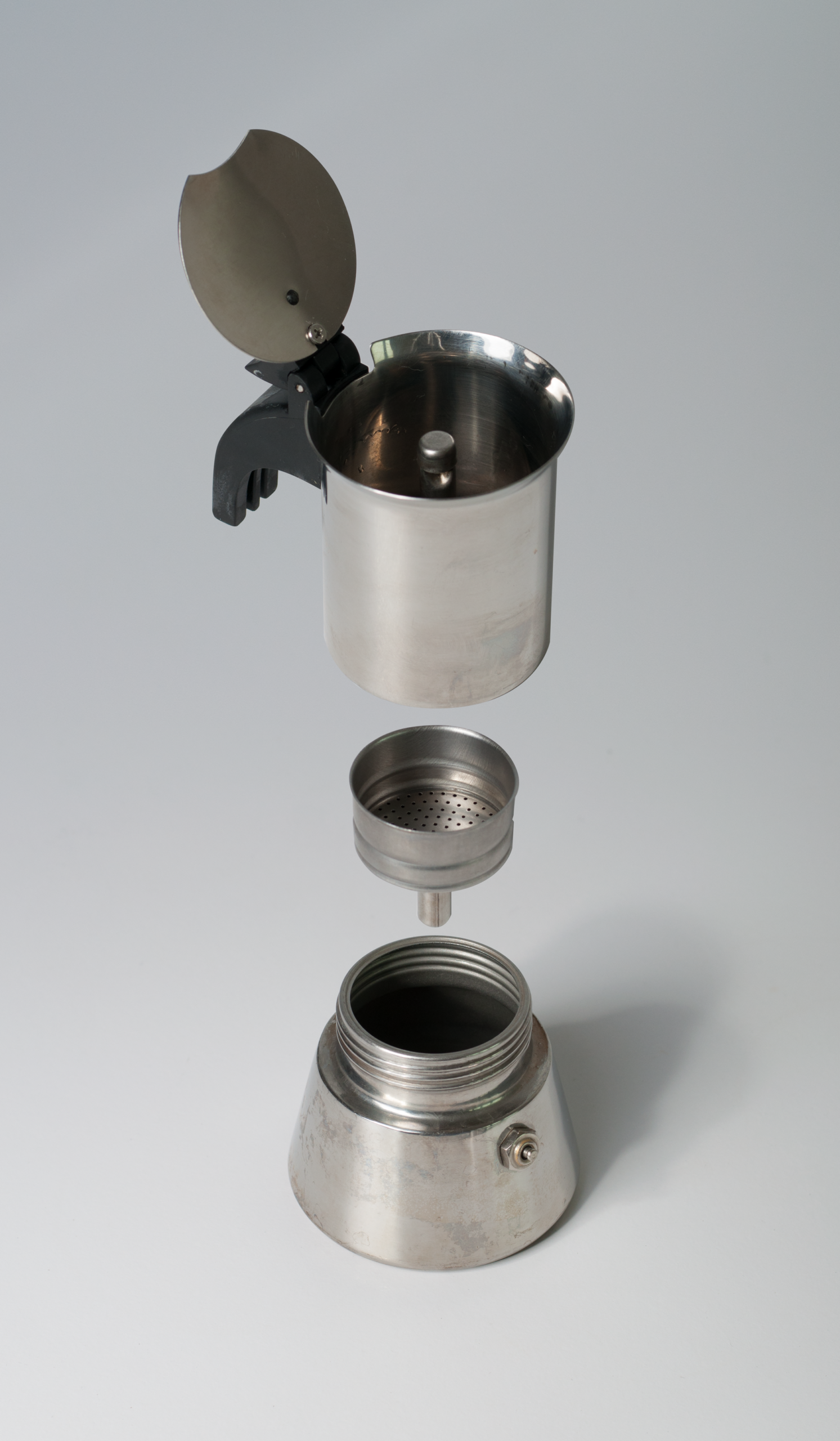
What makes the Brikka different from a normal moka pot?
A classic moka pot lets steam pressure push water through the coffee. The Brikka adds a small weighted valve on the spout. The idea is to hold back the flow until more pressure builds, which is meant to give a thicker, foamier cup. Whether this makes real crema is debated. We discuss that in our Bialetti Brikka review.
The valve is also why the Brikka is less forgiving. Too little heat, too coarse a grind, or a clogged valve can stop the coffee from flowing. The steps below help you avoid that.
What you need
- A Brikka in 2-cup or 4-cup size. Guides note that Bialetti does not make a 6-cup Brikka, and that the 4-cup basket matches a 6-cup Moka Express basket.
- The measuring cup that comes with the pot.
- Freshly roasted coffee, ground medium-fine. See our grinder guide for moka pots.
- A stove: gas or electric. On induction you need an adapter plate. See our induction guide.
How to use a Bialetti Brikka: step by step
- Measure cold water. Use the measuring cup. One guide, quoting the 2-cup manual, gives about 120 ml as an example. Do not fill above the safety valve in the lower chamber. Cold water helps the valve build pressure.
- Add the coffee. Fill the funnel basket with medium-fine grounds. Level the top with a finger. Do not tamp or press down.
- Close the pot. Wipe any grounds off the rim. Screw the top on firmly, but do not force it. Hold the bottom with a cloth.
- Heat gently. Use medium heat. Keep the flame under the base and not up the sides. On induction, use the adapter plate.
- Watch the spout. Coffee should start to appear after a few minutes. Listen for the gurgle.
- Stop on time. Take the pot off the heat when the coffee turns pale or sputters. Cool the base under cold water to stop the brew.
- Pour and serve. Stir the coffee before you pour, since the first part is stronger than the last.
Some details depend on your model, so check the manual. The main point is the same: gentle heat, cold water, and no tamping.
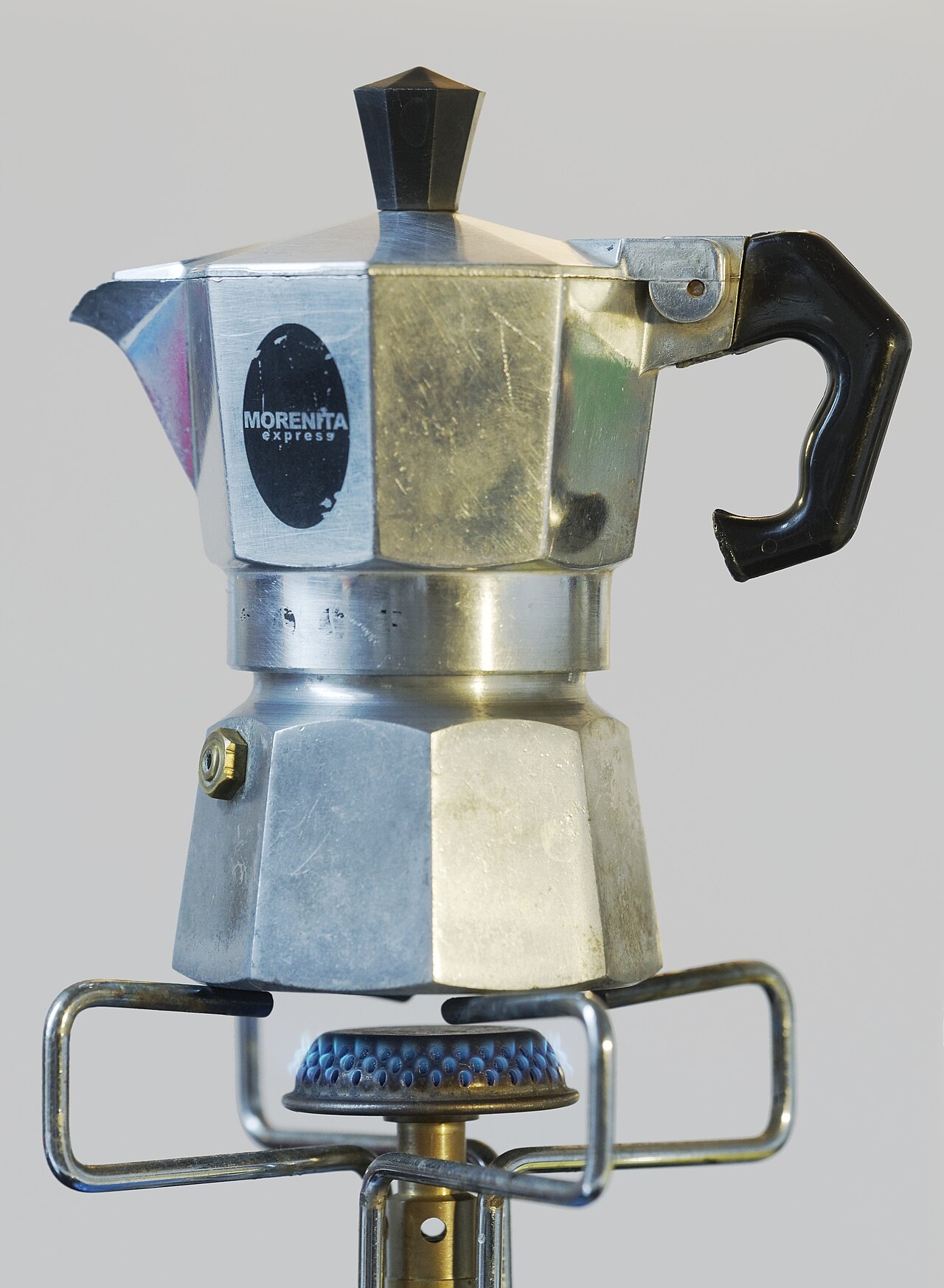
Which grind and dose work best?
Sources agree on medium-fine. It is finer than for a drip brewer and coarser than for a true espresso machine. If the grind is too fine, water struggles to pass and the pot may sputter. If it is too coarse, the coffee comes out fast, weak and sour.
| Symptom | Likely cause | Try this |
|---|---|---|
| Coffee flows very slowly or not at all | Grind too fine, grounds packed, or valve clogged | Use a slightly coarser grind. Do not tamp. Clean the valve |
| Weak, sour coffee | Grind too coarse or too little heat | Grind finer and use medium heat |
| Bitter, burnt taste | Heat too high or pot left on the stove | Lower the heat. Remove the pot when it sputters |
| Spitting from the spout | Heat too high | Lower the flame at once |
| Leaks at the join | Worn gasket or grounds on the rim | Wipe the rim. Replace the gasket if it is old |
| No foam on the cup | Stale coffee or wrong grind | Use fresher beans, and adjust the grind |
This table gathers advice from several published guides and from the usual moka pot logic. Treat it as a starting point and change one thing at a time.
Read next: Bialetti Brikka review, Brikka vs Moka Express, moka pot sizes, and how to clean a moka pot.
2-cup or 4-cup Brikka: which size?
The 2-cup Brikka is listed by one retailer as a 60 ml pot. That is about one small espresso-style serving, or a little more. The 4-cup size makes about double. Bialetti “cups” are small, so a 4-cup pot is closer to one or two mugs of strong coffee.
Pick the size you will brew most often, and fill the basket every time. Our moka pot size guide explains how cup sizes work across brands. If you live alone and drink one coffee a day, the 2-cup is enough. If you share with a partner, the 4-cup is the better fit.
Gas, electric or induction: tips for each
- Gas. Keep the flame small and under the base. A flame that licks up the sides can overheat the handle and the gasket.
- Electric coil or ceramic. Use a burner about the size of the base. These stoves hold heat, so remove the pot a little early.
- Induction. You need an adapter plate, sold separately. Heat will lag, so be patient and watch the spout.
A five-minute troubleshooting routine
If your Brikka does not work, do not change everything at once. Follow this order. It saves time and tells you what the real cause is.
- Empty the pot and check the valve. Rinse it and make sure it moves freely.
- Check the water level against the safety valve and the measuring cup.
- Rebuild the basket with a fresh, level dose. Do not tamp.
- Grind a notch coarser if the pot struggles, or a notch finer if the coffee is weak.
- Brew again on medium heat and write down the result.
Using Brikka coffee in milk drinks
Brikka coffee is strong and a little thick, so it suits a small cappuccino or a macchiato. Warm the milk separately and pour it over the coffee. If you want to know more about how Italians order small milky drinks, read about the macchiato and the history of cappuccino. Remember that a moka pot does not make true espresso, so the drink will taste different from a bar coffee.
Spare parts and when to replace them
The rubber gasket is the part that wears out first. Replace it when it hardens, cracks or starts to leak at the join. Keep a spare gasket for your size. Always match the part to your pot’s size, and check the product page or the maker’s guide before you buy.
Which coffee suits a Brikka?
The Brikka rewards fresh coffee. Stale beans give little foam and flat taste. A medium or medium-dark roast tends to suit stovetop brewing, according to common moka advice, because very light roasts can taste sharp at these temperatures. But taste is personal, so try a few.
Roast date matters too. Coffee is at its best some days after roasting and fades after a few weeks. This is why we are building IndieRoastersItaly around fresh coffee from independent Italian roasters.
How to clean and care for a Brikka
- Let the pot cool fully before you take it apart.
- Rinse with warm water only. Guides say not to use the dishwasher, because it can damage the aluminum and alter taste.
- Check that the valve is clean and free of coffee oil. A clogged valve is a top cause of slow flow.
- Dry all parts before you store it, with the pot open.
- Replace the rubber gasket when it hardens or leaks.
For more on cleaning, read our moka pot cleaning guide.
Brikka or Moka Express?
If you want the easiest, most forgiving pot, a classic Bialetti Moka Express is simpler and cheaper, and it has no valve to clog. If you like to experiment and want a thicker cup, the Brikka is worth a try. We compare them in detail in Brikka vs Moka Express.
Common mistakes
- Filling water above the valve. This is a safety issue and can ruin the brew.
- Tamping the coffee. It blocks the flow and can make the pot sputter.
- Using hot water. It can start the brew too early.
- Using high heat. It burns the coffee and stresses the gasket.
- Skipping valve cleaning. Old coffee oil can block it.
FAQ: Bialetti Brikka
How much water do I put in a Brikka?
Use the measuring cup that comes with the pot. A guide quoting the 2-cup manual gives about 120 ml as an example. Do not go above the safety valve.
Should I tamp the coffee in a Brikka?
No. Level the grounds gently and do not press them. Tamping can block the flow.
Why is my Brikka not making coffee?
Common causes are a grind that is too fine, packed grounds, a clogged valve, or too little heat. Check these in order.
Can I use a Brikka on induction?
Not directly, since it is aluminum. A Bialetti adapter plate, sold separately, is needed, according to published guides.
Is there a 6-cup Brikka?
Guides say no. The common sizes are 2-cup and 4-cup.
Is a Brikka better than a Moka Express?
It depends. It is more fiddly, and many owners like the thicker cup. The Moka Express is simpler. See our comparison guide.
Your next step
Tomorrow morning, brew one Brikka with the steps above. Weigh your coffee, keep the heat medium, and write down what you did. If the cup is sour, grind a little finer. If it is bitter, lower the heat. One change at a time gets you to a good cup fast.
As an Amazon Associate, IndieRoastersItaly earns from qualifying purchases. This does not change the price you pay.
IndieRoastersItaly is building a map of independent Italian roasters, with specialty coffee delivered fresh. Join the waitlist on our home page to hear when it opens.
This article was written with the support of artificial intelligence for content structuring, and was fully reviewed, verified, and refined by the author.