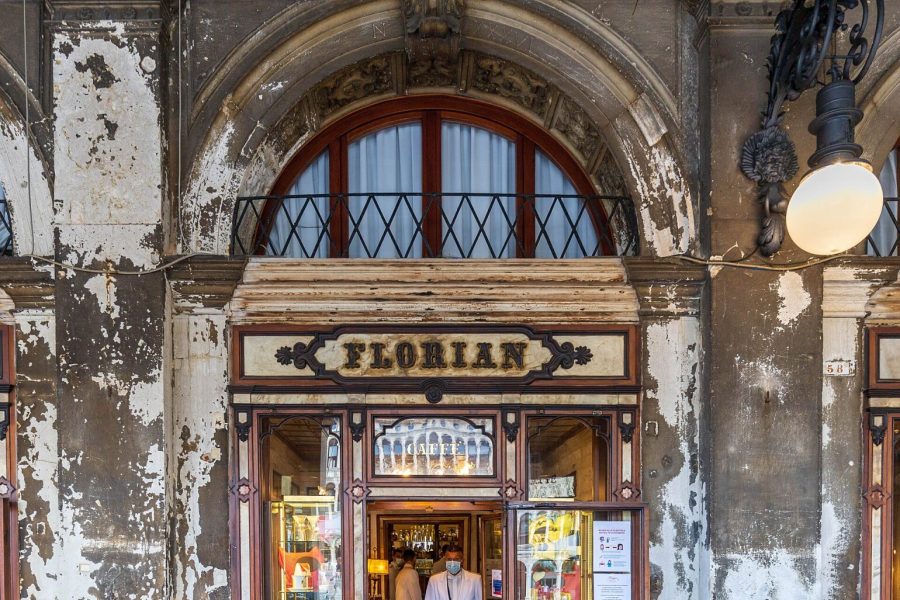
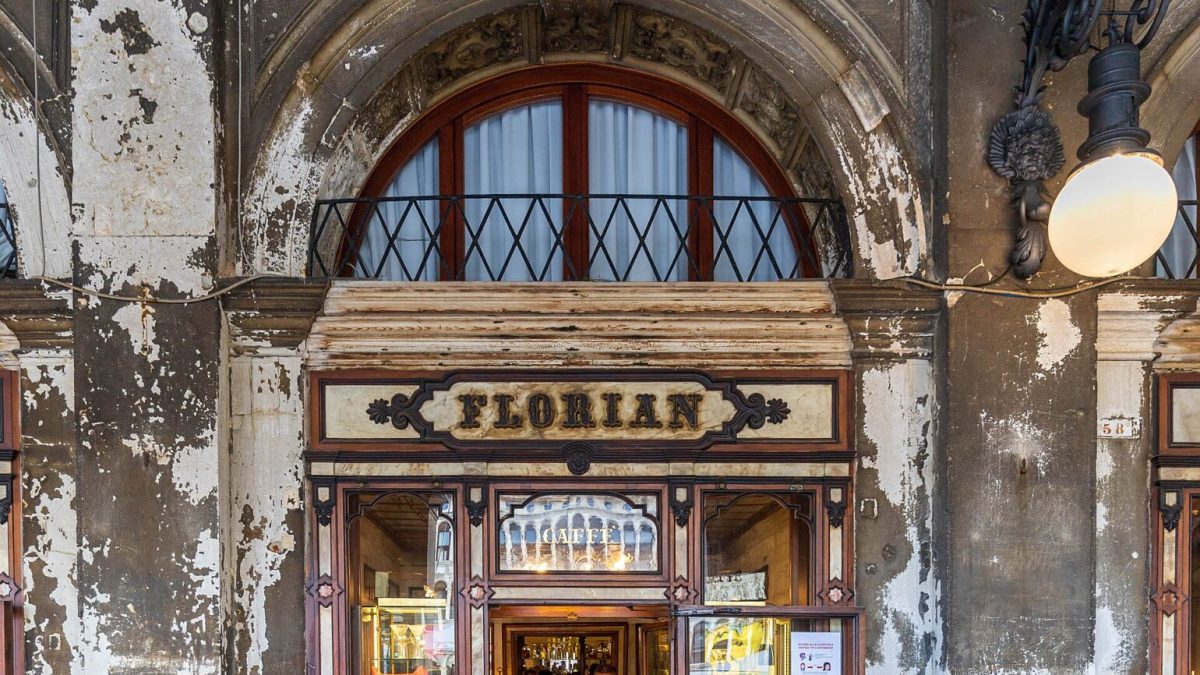
Quick answer: Caffè Florian opened on 29 December 1720 in Venice’s Piazza San Marco, and according to Wikipedia it is the oldest coffee house in continuous operation in Italy. It started as “Alla Venezia Trionfante” and took the name of its first owner, Floriano Francesconi. Sources disagree on some early details, so treat exact dates before 1800 with care.
The Caffè Florian history is also the story of how coffee became a social habit in Europe. This café saw the end of the Venetian Republic, two revolutions, and the first Venice art shows. Below you will find the facts, a timeline, and what to know before you sit down at one of its tables.
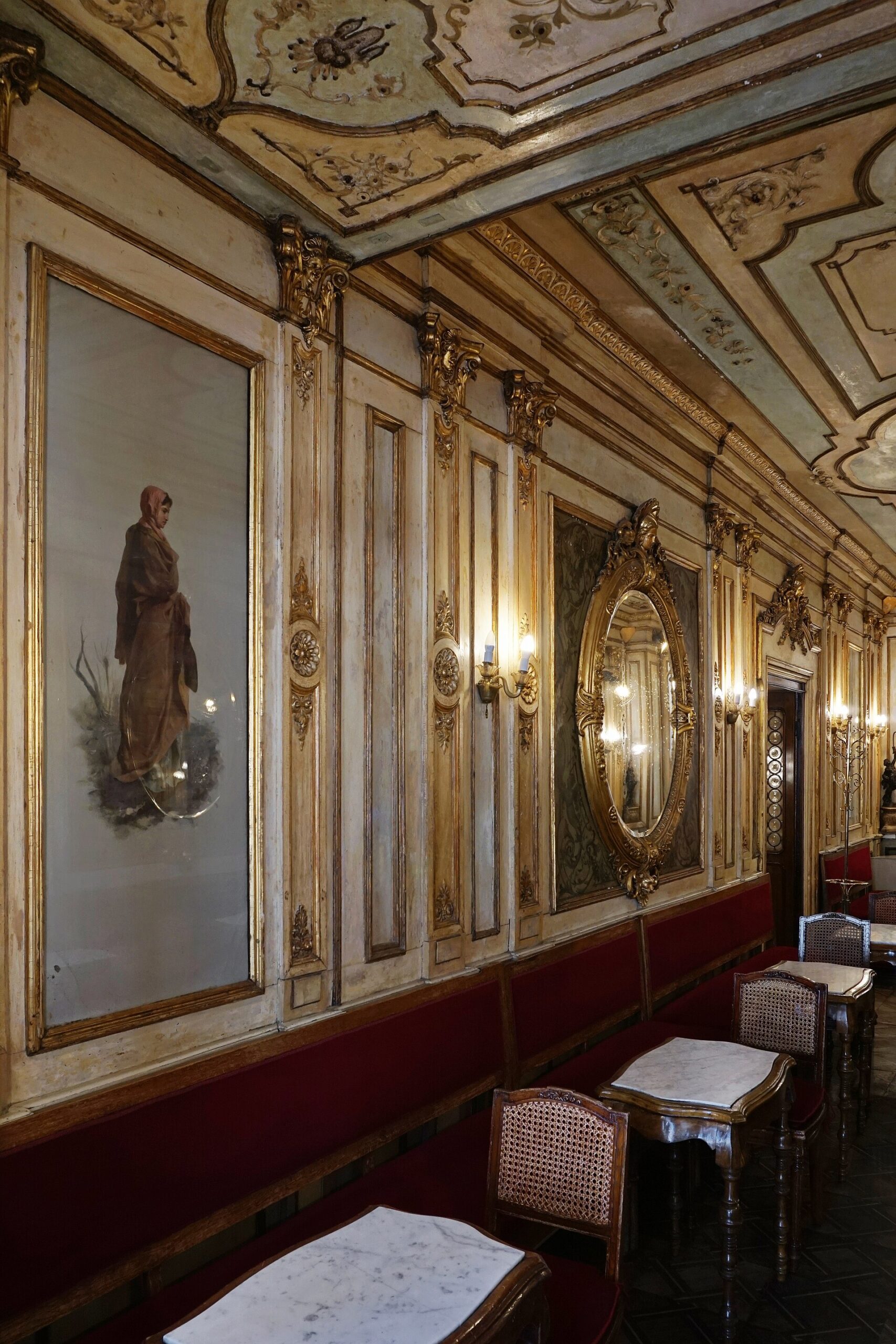
Why Venice got a coffee house so early
Venice was a trading port with long links to the Ottoman world. Coffee reached Europe through such ports, and Venice is often named among the first European cities to know it. Exact dates differ between sources, so we avoid giving one year. For the wider picture, see our guide to the first coffee houses in Europe.
By the early 1700s, coffee houses were meeting places across Italy. People went there to read, talk, and hear the news. Florian opened into that world. It did not invent the idea. It became the best-known example of it.
1720: from “Venice the Triumphant” to Florian
According to Wikipedia, the café opened on 29 December 1720 with two simply furnished rooms. Its first name was Alla Venezia Trionfante, which means “Venice the Triumphant.”
Customers soon used the owner’s first name instead. Floriano Francesconi ran the place, so people said “let’s go to Florian’s.” The short name stuck. That is a common pattern in Italian bars, where the owner’s name often becomes the name of the place.
An early detail is worth noting. Wikipedia says Florian was the only coffee house of its time that allowed women. It adds that Casanova, Goethe and Carlo Goldoni were among the early visitors. These claims are repeated in many guides, but we could not check them against a primary source. We pass them on as reported, not as proven.
The café also sold the Gazzetta Veneta, an early newspaper by Gasparo Gozzi, in the mid-1700s. A coffee house was a place to read the news. In 1750 Florian grew from two rooms to four.
The 1796 closure and the return of the old name
In 1773 the café passed to Valentino Francesconi, a grandson of the founder. In 1796 the Venetian authorities worried about ideas from the French Revolution. Florian had an international clientele, and French Jacobins met there. The State Inquisitors ordered Valentino to close the café.
In May 1797 French armies entered Venice, and the Republic ended. Valentino took down the old “Venice the Triumphant” sign, which now sounded out of date. He replaced it with a sign that carried only his uncle’s name, “Florian.” The first name was gone, and the nickname became the official one.
Source note: dates and family ties in the Francesconi line come from Wikipedia, which cites a Venetian history of the café. Some guides give slightly different family details. We follow Wikipedia and flag the uncertainty.
Read next: Caffè Greco in Rome, historic cafés in Italy, Trieste, Italy’s coffee capital, and the unwritten rules of the Italian coffee bar.
The rooms: art, politics and a 1858 makeover
In 1858 the owners hired Lodovico Cadorin to restore and redecorate the interior. The rooms were not much changed since the 1700s. The project brought in many Venetian artists and craftspeople. The result is the set of halls visitors see today.
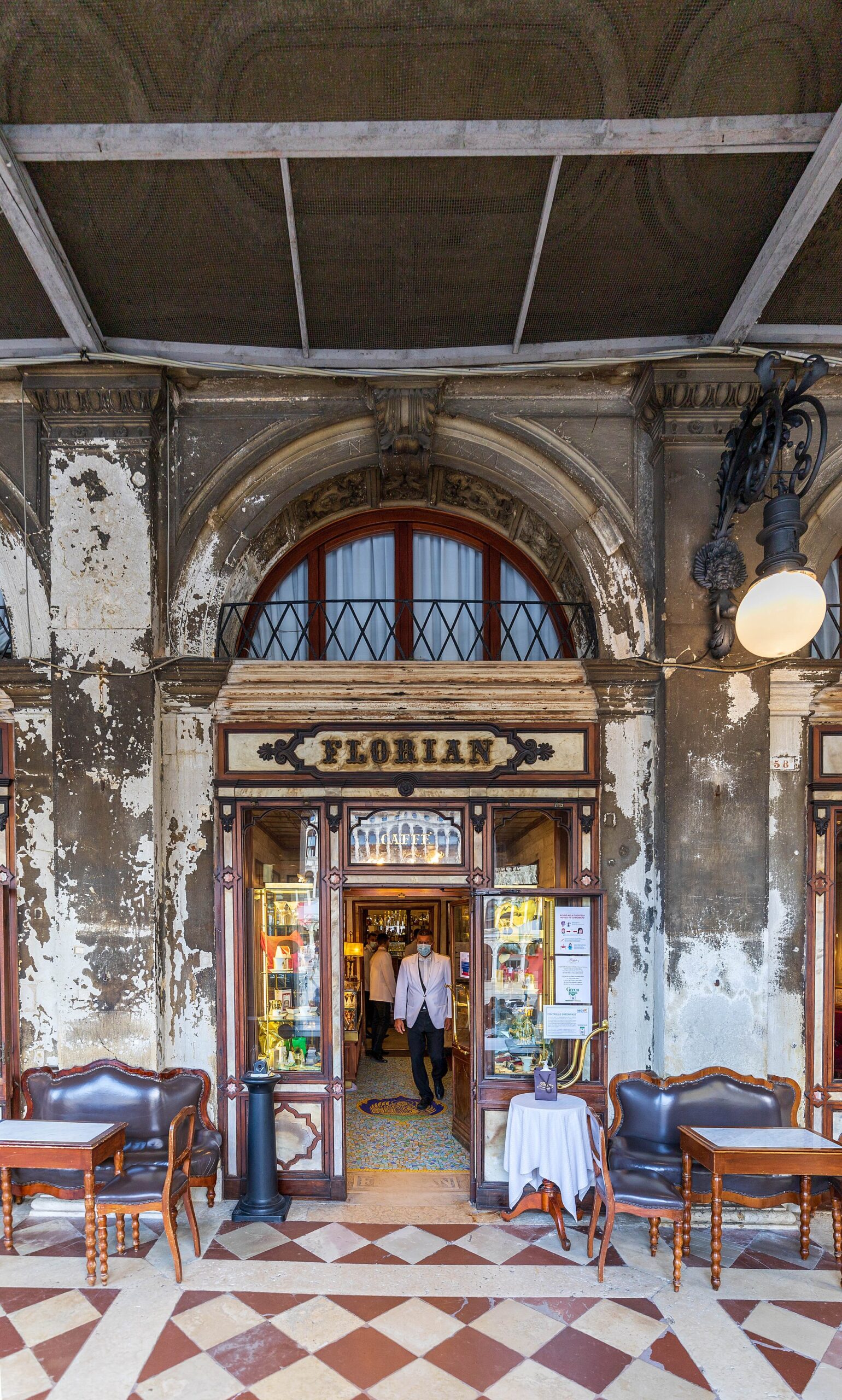
Each room has its own name and style. Here are the main ones, as listed on Wikipedia:
- Sala del Senato (Senate Room): painted by Giacomo Casa with scenes about progress and the arts.
- Sala Cinese and Sala Orientale: inspired by the Far East, with paintings by Antonio Pascuti.
- Sala degli Uomini Illustri: ten famous Venetians, including Marco Polo, Titian and Goldoni.
- Sala delle Stagioni: a mirrored hall with figures of the four seasons.
- Sala Liberty: added in 1920 in art nouveau style.
In the 1800s the Senate Room also served political life. Wikipedia says Venetian patriots met there before the 1848 revolution, when Venice briefly became independent from Austria. During the fighting the café sheltered wounded patriots and worked as a temporary hospital.
From café table to Biennale
In 1893 an idea at a Florian table led to a landmark event. Wikipedia says Riccardo Selvatico, while dining in the Senate Room, helped start the International Exhibition of Contemporary Art. That show is known today as the Venice Biennale.
The café still has an art link. Since 1988 it has hosted a contemporary art show, called Temporanea, every two years during the Biennale. Artists reinterpret the halls with installations. So Florian is not only a place to drink coffee. It has been a small cultural stage for three centuries.
Caffè Florian timeline
| Year | Event |
|---|---|
| 1720 | Opens on 29 December as “Alla Venezia Trionfante” |
| 1750 | Grows from two rooms to four |
| 1773 | Valentino Francesconi takes over |
| 1796 | Closed by the State Inquisitors |
| 1797 | Sign changed to “Florian” after the fall of the Republic |
| 1848 | Patriots meet in the Senate Room; café helps the wounded |
| 1858 | Restoration led by Lodovico Cadorin |
| 1893 | Idea for the art exhibition later called the Venice Biennale |
| 1920 | Sala Liberty added |
| 1988 | Temporanea art shows begin |
Florian, Quadri and the other Venetian cafés
Florian sits in the Procuratie Nuove. Across the square, in the Procuratie Vecchie, is Caffè Quadri, which Wikipedia says was established in 1775. Both are tourist landmarks today. For history, Florian is the older of the two. For a real local bar, Venetians usually go elsewhere. Look for a small bacaro or a bar where people drink their espresso standing up.
Italy has other old cafés too. In Rome, read about Caffè Greco. In Turin, the local drink is the bicerin. Each place shows a different side of Italian coffee culture. For the bigger picture, start with our guide to Italian coffee culture.
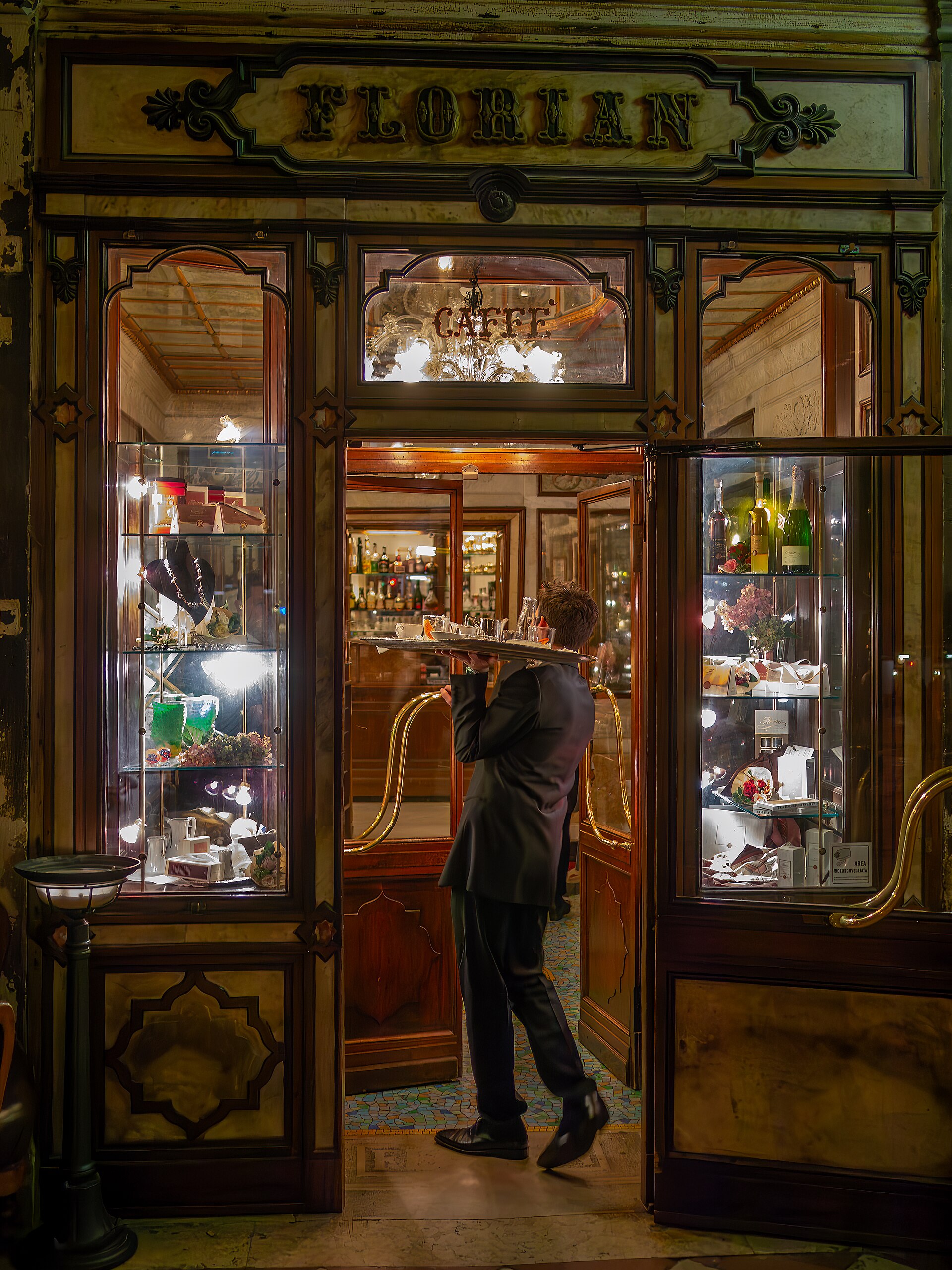
How to visit without a nasty surprise
Prices in Piazza San Marco are high, and that is true for most cafés on the square. We cannot quote current prices, because they change. So follow these steps:
- Read the menu before you sit. Check for any table or music charge.
- Compare standing at the bar with sitting at a table. In Italy the bar price is often lower.
- Look at the rooms inside, even if you only order one coffee.
- Check opening hours on the official website before you go.
If you want to learn the local habits first, our guide to Italian coffee bar rules explains why standing and sitting cost different amounts.
Common mistakes when reading about Florian
- Calling it the oldest café in the world. Wikipedia says it is the oldest in continuous operation in Italy, and names a coffee house in Oxford (1654) as older, though that claim needs a better source.
- Repeating celebrity visits as fact. Many are reported, few are documented in detail.
- Mixing up Florian and Quadri. They face each other across the square, but they have separate histories.
What “oldest in continuous operation” really means
Many cafés claim to be “the oldest.” The claim only works if you add a condition. A café can be old but have closed for years. Another can be the same business in a new building. Florian’s claim is about continuous operation: the business has served coffee in the same place since 1720, apart from short breaks such as the 1796 closure order.
That is why careful writers add three words: “according to Wikipedia,” “in Italy,” and “in continuous operation.” Without them the claim is easy to challenge. Wikipedia itself names a coffee house in Oxford founded in 1654 as older, though it marks that claim as needing a citation.
| Café | City | Opened (per Wikipedia) |
|---|---|---|
| Caffè Florian | Venice | 1720 |
| Antico Caffè Greco | Rome | 1760 (see our Caffè Greco guide) |
| Caffè Quadri | Venice | 1775 |
Why this café matters to coffee lovers
Specialty coffee talks a lot about origin, roast and brew method. Florian reminds us that coffee was social long before it was technical. People came for the talk, the news, and the company. The cup was the ticket.
That idea still shapes Italy. The bar is a daily stop, not a place to linger with a laptop. If you want to taste how far Italian coffee has moved from that old model, look for independent roasters who treat the bean with the same care as the café treats the room. That is the project behind IndieRoastersItaly.
FAQ: Caffè Florian history
When was Caffè Florian founded?
It opened on 29 December 1720, according to Wikipedia.
Who founded Caffè Florian?
The café took its name from its first owner, Floriano Francesconi. It first opened as “Alla Venezia Trionfante.”
Is Caffè Florian the oldest café in Italy?
Wikipedia calls it the oldest coffee house in continuous operation in Italy. Always say “in continuous operation” and attribute the claim.
Did the café ever close?
Yes. In 1796 the State Inquisitors ordered it closed because of the French revolutionary crowd that met there. It reopened as the Republic fell in 1797.
What is the link between Florian and the Venice Biennale?
Wikipedia says the 1893 exhibition idea came from a meal in the Senate Room, and the café has hosted its own art show every two years since 1988.
Is it worth visiting?
For the rooms and the history, many visitors say yes. Check the menu first, and decide whether you want a table or a quick standing espresso elsewhere.
Your next step
Planning a trip to Venice? Pick one historic café, read its menu online, and then find a standing bar for your daily espresso. Compare the two experiences. You will understand Italian coffee culture better than any guidebook can teach you.
IndieRoastersItaly is building a map of independent Italian roasters, with specialty coffee delivered fresh. Join the waitlist on our home page to hear when it opens.
This article was written with the support of artificial intelligence for content structuring, and was fully reviewed, verified, and refined by the author.