
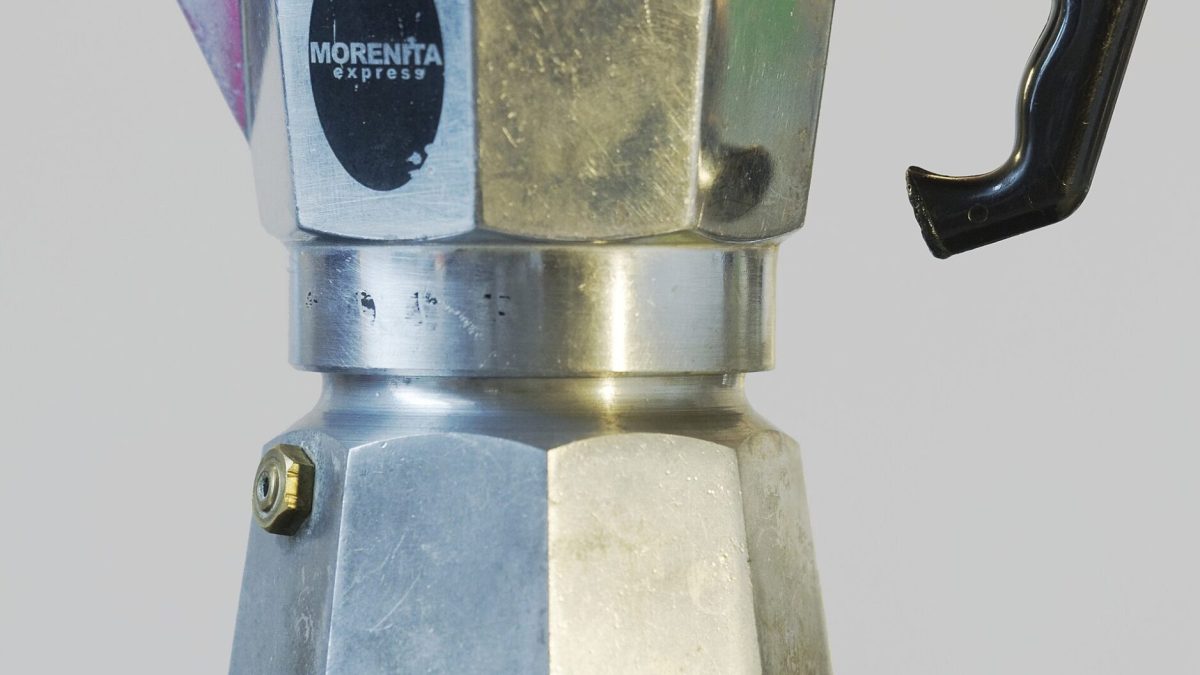
Quick answer: in this Bialetti Moka Express review, the verdict is yes: it is still worth buying. It is cheap, simple and almost unbreakable, and it makes strong, rich stovetop coffee. It is not espresso, and it will not replace a machine. But for a low price, nothing else gives you so much coffee culture per dollar. The 6-cup size suits most people. It works on gas and electric stoves, but not on induction.
A quick note before we start. IndieRoastersItaly has not tested this pot ourselves. This review is based on published specs, the history of the design and what thousands of owners report. We say so wherever a point cannot be verified.
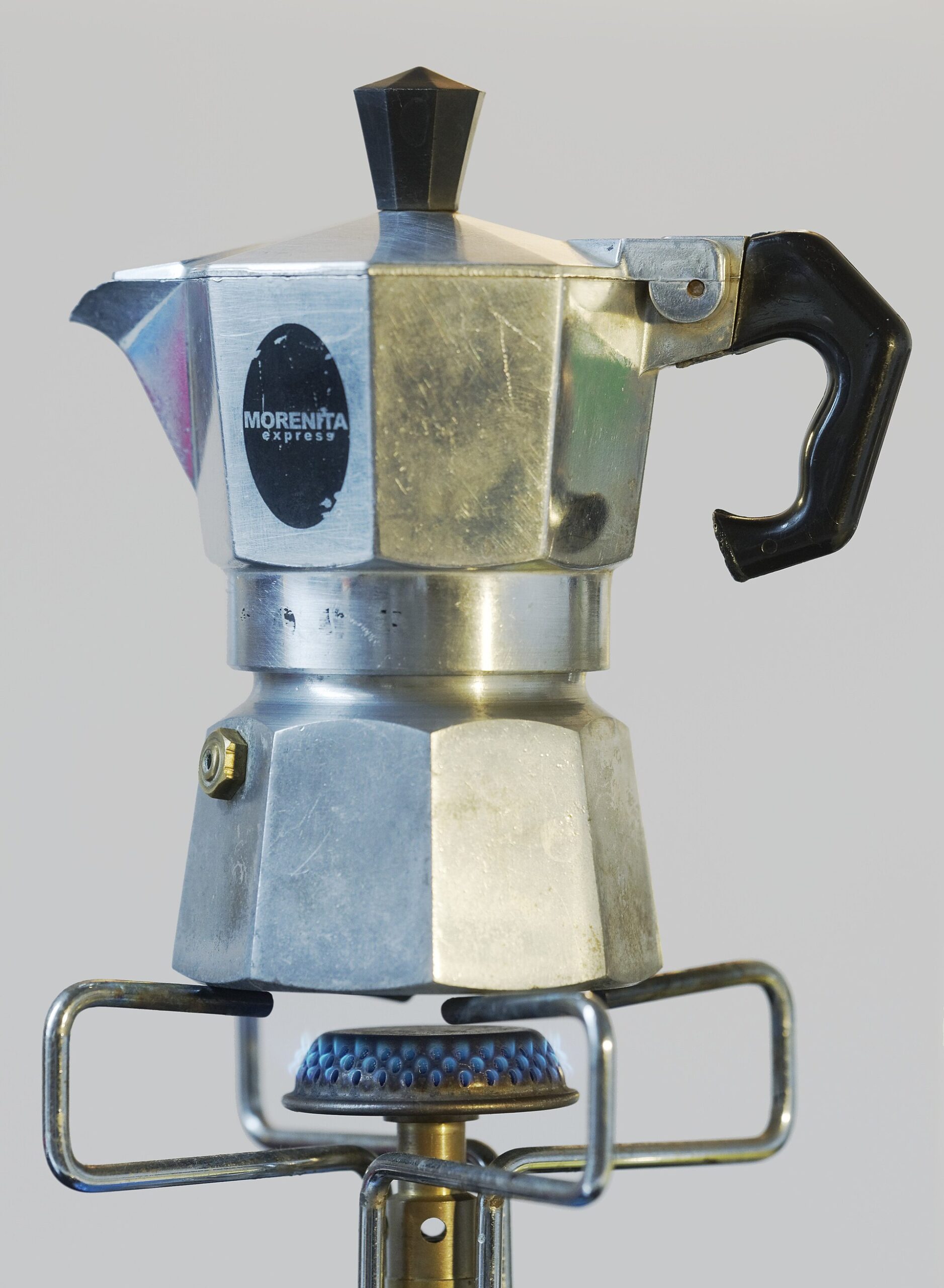
Bialetti Moka Express review: what is it?
The Moka Express is the original Italian stovetop coffee maker. Alfonso Bialetti began selling it in 1933. His son Renato later built the brand with a big marketing push in the 1940s. According to the company, the design of the original has not changed since its debut, as noted in the moka pot overview.
A 2010 study reported in the press claimed that 90% of Italian families own a Bialetti moka pot. Treat that as a rough figure, but it shows how common the pot is. In many Italian homes, this is simply how coffee is made. You can read more in our history of the moka pot.
Specs and sizes
Bialetti sizes its pots by “cups”. A cup here means a small demitasse of about 40–60 ml, not an American mug. Published figures for the aluminium Moka Express range look like this:
| Size | Volume | Height | Base |
|---|---|---|---|
| 3 cup | 130 ml (4.5 US fl oz) | 160 mm | 90 mm |
| 4 cup | 185 ml (6.5 US fl oz) | 180 mm | 95 mm |
| 6 cup | 250 ml (8.5 US fl oz) | 215 mm | 105 mm |
| 9 cup | 410 ml (14 US fl oz) | 245 mm | 115 mm |
| 12 cup | 595 ml (20 US fl oz) | 285 mm | 135 mm |
Source: figures listed in the Moka pot article on Wikipedia. Amazon listings may round the numbers differently.
- Material: aluminium body with a heat-resistant handle and knob
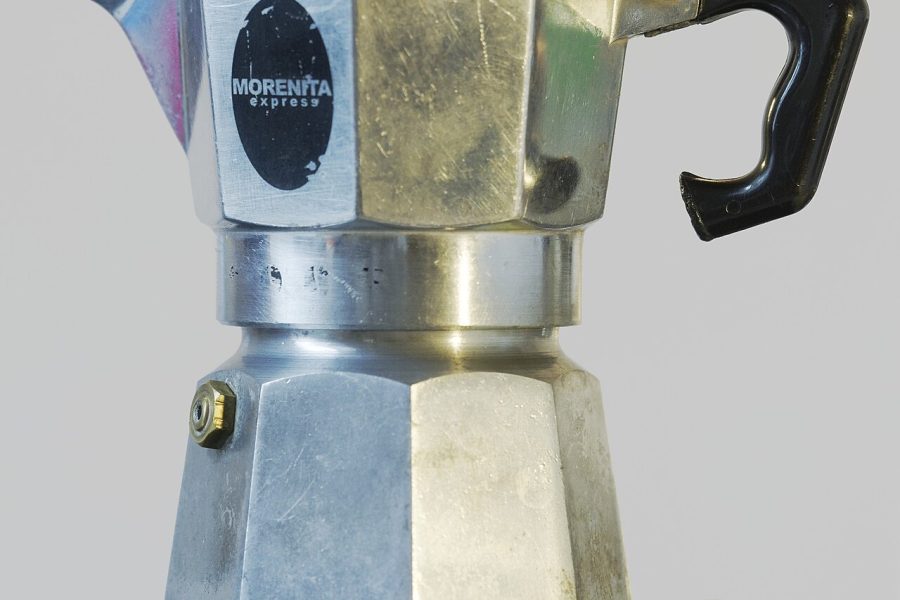
- Design: classic octagonal shape, which helps spread heat and makes pouring easy
- Parts: boiler with safety valve, filter funnel, rubber gasket, filter plate and top chamber
- Heat source: gas, electric and ceramic hobs. Aluminium does not work on induction.
Who really invented the moka pot?
Bialetti popularized the moka pot, but it did not invent the idea of steam-driven coffee. The sources agree on the broad outline, though not on every name. A patent by Elard Römershausen dates to at least 1818. Louis Bernard Rabaut drew a more portable version in 1822. Samuel Parker, a coppersmith from Middlesex, England, received a patent in January 1833 for a self-pressurised brewer. Those earlier machines were big and fussy.
What Bialetti did was make it small, cheap and made of aluminium. Sales stayed modest until Renato Bialetti took over the business in the 1940s and marketed the pot hard. The name “moka” comes from the Yemeni port of Mokha. The Moka Express has also entered design museums, including the Museum of Modern Art, which lists it as designed in 1933. Our Yemeni coffee guide covers that coffee link.
A note on dates: inventor claims differ between sources. We have kept to documented patents and the company’s own account.
What does it brew like?
A moka pot pushes water through coffee using steam pressure of about 1 to 2 bar. A real espresso machine uses around 9 bar. So moka coffee is not espresso, even if people call it that. A typical moka brew uses about 1 part coffee to 10 parts water by weight. It ends up at roughly 3–4% dissolved solids, compared with 9–10% for espresso and about 2% for filter coffee.
In the cup, that means a strong, full coffee with a thick body and little to no true crema. Many people love it, especially with milk. If you want to compare it with a machine, read moka pot vs espresso machine.
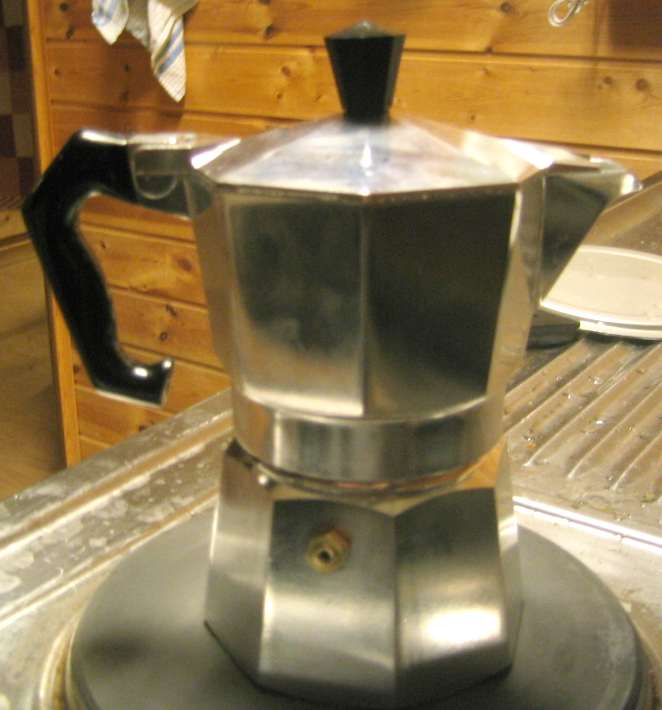
How to get a good cup from it
Most bad moka coffee comes from a few simple mistakes. This is the method we suggest. It is a starting point, so adjust to your taste.
- Fill the boiler to just below the safety valve. Do not cover the valve.
- Grind medium-fine. It should look finer than filter coffee and coarser than espresso.
- Fill the basket level and do not tamp. Pressing the grounds down can choke the flow.
- Use medium-low heat with the lid open. Watch the coffee flow. It should be steady and honey-like.
- Stop when it starts to gurgle. Researchers call this late stage the “strombolian” phase. Steam and hot water rush through the coffee and can cause over-extraction.
- Cool the base quickly. Run it under cold water or set it on a wet cloth to stop the brew.
Read next: Best moka pots · Bialetti Brikka review · Brikka vs Moka Express · Moka pot myths, Alessi 9090 vs Bialetti Moka Express.
Pros and cons
What we like
- Low price and a very long life if you look after it
- Simple design with few parts to break
- Strong, rich coffee that works well with milk
- Spare gaskets and filters are easy to find
- Small and light, so it suits a camping trip or a small kitchen
What to watch
- Not suitable for induction hobs
- Not dishwasher safe
- The rubber gasket and filter need replacing from time to time
- It takes a few tries to learn the right grind and heat
- Result is strong but not espresso, so do not expect thick crema
Moka Express vs Venus vs Brikka
Bialetti sells several pots that look alike but behave differently. Here is how they compare on the points that matter most.
| Model | Material | Induction? | Best for |
|---|---|---|---|
| Moka Express | Aluminium | No | Classic stovetop coffee, lowest cost |
| Moka Induction | Aluminium with a stainless base | Yes | Aluminium taste and induction hobs |
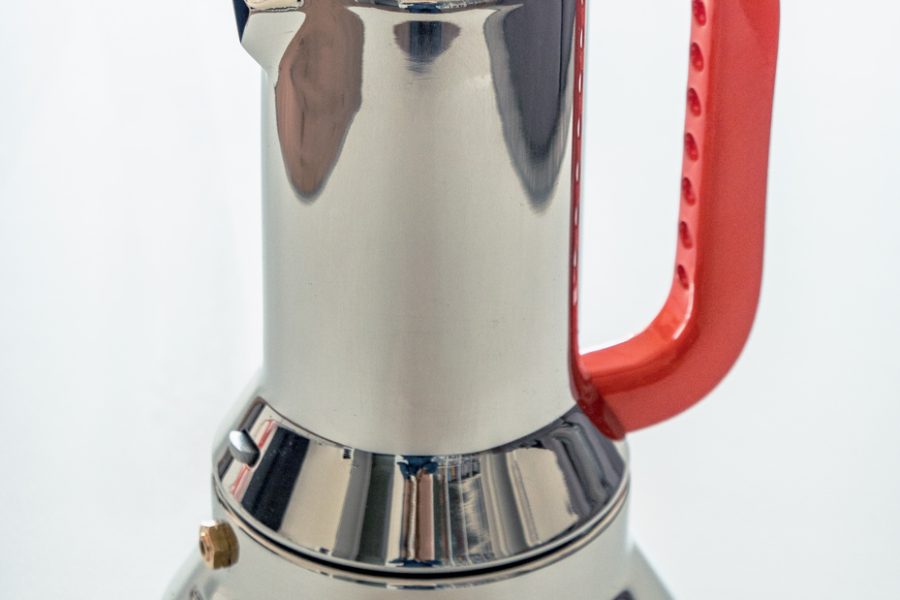
| Venus | Stainless steel | Yes | Stainless steel pot, good for induction users |
| Brikka | Aluminium with a pressure valve | No | A creamier cup with more foam |
The Brikka adds a weighted valve that raises pressure. That makes a thicker cup, but the pot is fussier to use. Our Brikka vs Moka Express comparison explains the trade-offs.
Troubleshooting: common problems and fixes
| Problem | Likely cause | Fix |
|---|---|---|
| Coffee tastes bitter or burnt | Heat too high, or brew left running | Lower the heat, stop at the first gurgle, cool the base |
| Coffee tastes sour or weak | Grind too coarse, or too little coffee | Grind a little finer and fill the basket level |
| Pot leaks at the join | Worn gasket, or grounds on the rim | Wipe the rim and replace the gasket |
| Hardly any coffee comes up | Grind too fine or tamped, or heat too low | Loosen the grind, do not tamp, raise the heat slightly |
| Water spits from the valve | Valve blocked or boiler overfilled | Fill below the valve and clean it |
Fix one thing at a time. Change the grind or the heat, not both. After two or three brews you will find your own settings.
Care, safety and aluminium
Hand wash only. Rinse with warm water and dry the pot fully. Avoid detergent if you can, and never use the dishwasher. Dishwashers can corrode the protective oxide layer and leave a dark, reactive surface. Our guide on how to clean a moka pot goes through each step.
Is aluminium safe? A study on aluminium migration from moka pots found that exposure through proper use is negligible. After the first use, the amount fell below 1% of the recommended weekly intake. After a dishwasher cycle it rose to just under 4%, so the dishwasher is best avoided. See the paper in Environmental Sciences Europe. If you have a health concern, ask your doctor.
Also check the gasket every few months. If it is hard, cracked or leaks, replace it. Make sure the safety valve is not blocked.
Which version should you buy?
The right pick depends on your hob and your habits. This part of the Bialetti Moka Express review is a quick guide. The links go to Amazon and are affiliate links, as noted at the end of this article. They do not change the verdict.
| Your situation | Best fit | Why |
|---|---|---|
| One or two drinkers, gas or electric hob | Bialetti Moka Express, 6 cups | The standard size. About 250 ml per brew. |
| Single drinker, small cup | Bialetti Moka Express, 3 cups | About 130 ml. Less waste for one person. |
| Induction hob | Bialetti Venus Induction, 6 cups | Stainless steel, works on all hobs. Listed at 235 ml. |
| You want more crema | See our Brikka review | The Brikka uses a pressure valve for a creamier cup. |
At the time of writing, the 6-cup Moka Express shows a 4.6-star average from tens of thousands of ratings on Amazon. That is a strong signal, but ratings change and they mix many opinions.
Bialetti Moka Express FAQ
Is the Bialetti Moka Express worth it?
Yes, if you like strong stovetop coffee and want a cheap, durable pot. No, if you want true espresso or you cook on induction.
How many cups is a 6-cup Moka Express?
It makes about 250 ml, which is around 4 to 6 small Italian servings. It is not six American mugs.
Does the Moka Express work on induction?
No. Aluminium does not work on induction. Choose a stainless steel model or one with an induction base.
Can you put a Moka Express in the dishwasher?
No. The maker warns against it, and the aluminium can corrode. Wash by hand.
What grind should I use?
Medium-fine. Finer than a pour-over grind, coarser than espresso. Do not tamp.
Why does my moka coffee taste bitter?
Usually the heat is too high or the brew runs too long. Lower the heat, stop when it gurgles and cool the base at once.
Your next step
If you already own a Moka Express, try one change: lower the heat and stop earlier. If you are shopping, start with the 6-cup size. Then read our guide to the best moka pots for other options.
As an Amazon Associate, IndieRoastersItaly earns from qualifying purchases. This does not change the price you pay.
IndieRoastersItaly is building a subscription for specialty coffee from independent Italian roasters, roasted to order. If that sounds good, join the waitlist on the IndieRoastersItaly home page.
This article was written with the support of artificial intelligence for content structuring, and was fully reviewed, verified, and refined by the author.

A small tip if you just bought a Moka Express: take it off the heat as soon as you hear the first gurgle, and run the base under cold water for a second. That stops the extraction before the bitter, burnt taste comes through. Start with hot water in the base, too, so the coffee spends less time on the stove. Which size do you use at home, the 3-cup or the 6-cup? Tell us in the comments.