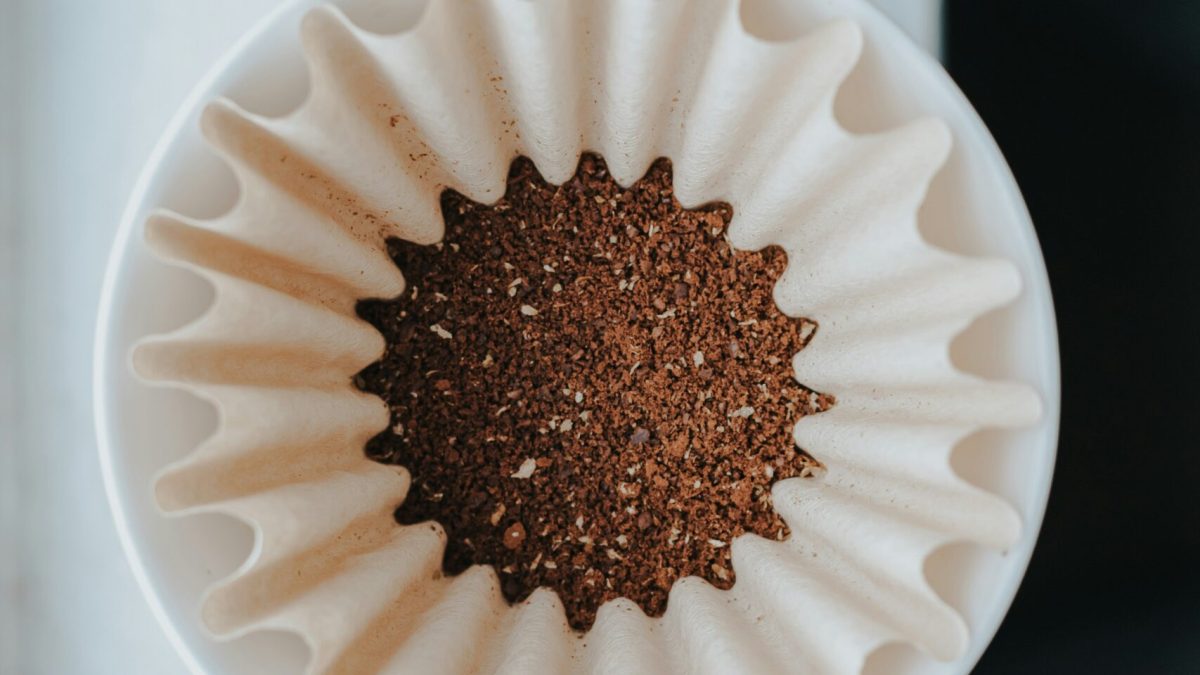
V60 vs Chemex is the classic pour-over dilemma. Both are simple cones: you pour hot water over ground coffee and let gravity do the rest. Both make clean, aromatic filter coffee that brings out the character of a good single origin. Yet they behave very differently in the hand and in the cup.
The Short Answer
The Hario V60 gives a bright, lively, slightly fuller cup and lots of control. It’s the choice of people who like to experiment. The Chemex gives a very clean, delicate, tea-like cup, is more forgiving and brews larger batches. It’s the choice for sharing, and for people who want consistency without fuss.

1. Design and History
The Chemex was invented in 1941 by the chemist Peter Schlumbohm. It is a single piece of glass shaped like an hourglass, with a wooden collar and a leather tie. It is so iconic that it sits in design museum collections.
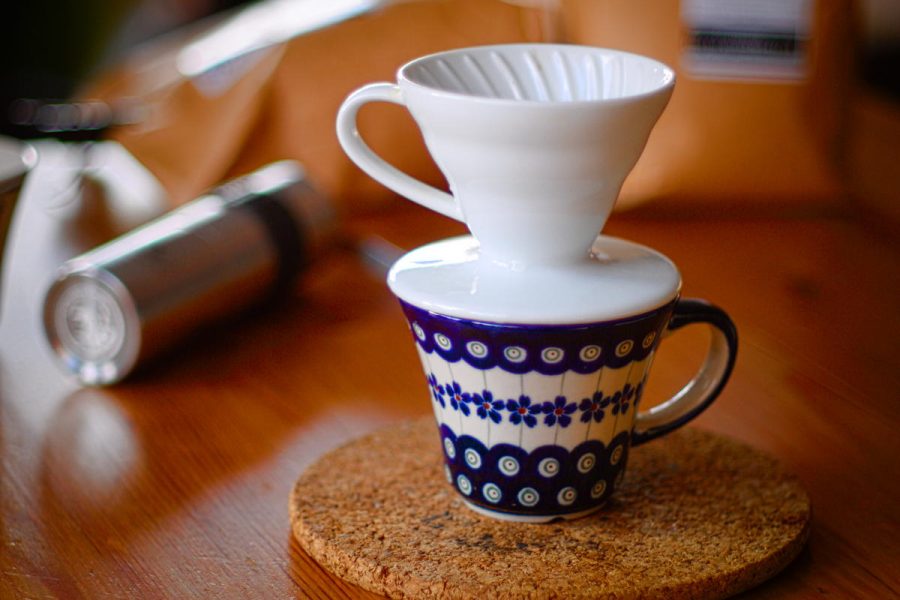
The V60 was launched by the Japanese company Hario in 2004. Its name comes from the V shape and the 60-degree angle of the cone. Inside, spiral ribs let air escape and help the water flow, and a single large hole at the bottom means the flow depends mostly on you: your grind and your pour. It’s available in ceramic, glass, plastic and metal.
2. Filters: The Biggest Difference
This is where the two brewers really split. Chemex filters are thick, bonded paper, noticeably heavier than standard filters. They hold back more oils and fine particles. The result is an extremely clean, clear cup with a lighter body.
V60 filters are thinner. More oils and a few more fines pass into the cup, which gives more body and a more vivid, juicy taste. Neither is better: it depends on the cup you like. Always rinse either filter with hot water before brewing, to remove the paper taste and warm the brewer.

3. Taste in the Cup
- V60: brighter acidity, more body, more intensity. Great for fruity African coffees, like our Ethiopian Yirgacheffe or a Kenya AA.
- Chemex: softer, cleaner, more delicate, sometimes described as tea-like. It shines with floral and elegant coffees, and it’s kind to coffees that could taste heavy in other brewers.
4. Control vs Forgiveness
The V60’s fast flow makes it very responsive. A slightly finer grind, a slower pour, a different spiral: you taste every change. That’s great if you enjoy fine-tuning, less great if you want the same cup every morning half-awake. A gooseneck kettle is almost essential.
The Chemex, with its thick filter and slower flow, is more forgiving. Small mistakes change the cup less. It needs a coarser grind, closer to medium-coarse, and total brew times are longer, often around 4 to 5 minutes for a larger batch. Our coffee grind size guide shows the difference.

5. Batch Size, Cleaning and Everyday Use
The V60 is made for one or two cups and sits directly on your mug. It’s light, easy to travel with and very cheap in plastic.
The Chemex is a brewer and carafe in one, available in sizes that serve several people. It’s ideal for brunch or for the whole family. On the other hand, it’s glass, so it needs careful handling, and the narrow neck makes cleaning a little harder. Its filters are also more expensive and harder to find than V60 filters.
Side by Side
- Filter: V60 thin; Chemex thick bonded paper.
- Cup: V60 bright and full; Chemex very clean and delicate.
- Grind: V60 medium-fine; Chemex medium-coarse.
- Control: V60 high; Chemex more forgiving.
- Batch: V60 one or two cups; Chemex multiple cups.
- Portability: V60 excellent; Chemex fragile.
Starting Recipes for V60 and Chemex
Both brewers work well with the same basic ratio, around 1:15 to 1:17 (one gram of coffee for every 15–17 grams of water). What changes is the batch size, the grind and the brew time. Use these numbers as a starting point, then adjust by taste. For more on ratios, see our coffee-to-water ratio guide.
| Hario V60 (1 cup) | Chemex (3 cups) | |
|---|---|---|
| Coffee | 15 g | 30 g |
| Water | 250 g | 500 g |
| Grind | Medium-fine | Medium-coarse |
| Water temperature | 92–96 °C | 92–96 °C |
| Total brew time | 2:30–3:00 | 4:00–4:30 |
| Bloom | 30–45 g water, 30–45 s | 60 g water, 45 s |
The Chemex needs a coarser grind because its thick filter slows the flow. If you use a V60 grind in a Chemex, the brew will stall and taste bitter. Our coffee grind size guide shows what each setting looks like. For full step-by-step instructions, read our V60 brewing guide and our Chemex brewing guide.
Which Coffees Suit Each Brewer?
Any good coffee will work in both, but each brewer has its strengths. The V60, with its thinner filter and fuller body, is great for bright, complex light roasts: a floral washed Ethiopian Yirgacheffe or a juicy Kenya AA really come alive in it.
The Chemex shines with coffees where clarity and sweetness matter, such as a balanced Colombian coffee from Huila. It is also a good choice for intense natural-process coffees: the thick filter tames heavy, winey notes and gives a cleaner cup.
V60 vs Chemex FAQ
Is Chemex coffee stronger than V60 coffee?
Not by itself. Strength depends mainly on your coffee-to-water ratio. Chemex coffee often tastes lighter because the thick filter removes more oils, which reduces body, but with the same ratio the two brewers produce coffee of similar strength.
Can I use V60 filters in a Chemex?
It is not a good idea. V60 filters are cone-shaped for a 60-degree dripper and are too small for most Chemex sizes, and they are thinner, so you lose the clean cup that makes the Chemex special. Use Chemex bonded filters or compatible filters made for it.
Do I need a gooseneck kettle?
For the V60 it is strongly recommended, because the flow depends on how precisely you pour. The Chemex is more forgiving, but a gooseneck kettle still makes it easier to pour slowly and evenly.
Which one is better for beginners?
The Chemex is usually easier to get right thanks to its slower, more forgiving flow. The V60 rewards practice: once you master it, it gives you more control over the final cup.
Practical Differences Day to Day
Think about how you actually brew. The V60 is small and quick to set up. You can rinse it and put it away in a minute. It fits a mug, a server or a travel bag. The Chemex is bigger and takes more space. It is also a carafe, so you can serve straight from it.
Cleaning is simple for both, but the Chemex has a narrow neck. Use a soft brush or a gentle sponge. Many owners also note that glass can chip, so store it with care.
- Speed: V60 brews in about two and a half to three minutes. Chemex often takes four to five.
- Taste: V60 is brighter and livelier. Chemex is cleaner and softer.
- Batch size: V60 suits one or two cups. Chemex suits two to six.
- Learning curve: Chemex is more forgiving. V60 rewards practice.
Frequently Asked Questions
Can I use the same filters?
No. Each brewer needs its own filter shape, and Chemex filters are thicker.
Which One Should You Choose?
Choose the V60 if you brew for yourself, like bright and intense coffee, and enjoy experimenting. Start with our step-by-step V60 coffee guide.
Choose the Chemex if you often brew for two or more, like a very clean and gentle cup, and want a brewer that’s also beautiful on the table. Our Chemex coffee guide walks you through it.
And if you’re still undecided, the V60 is the cheaper way in. Whichever you pick, use freshly roasted light or medium roast coffee from an independent roaster: pour-over is where good beans show their best.
Related reading: AeroPress vs French press: the essential differences · Hario V60 Review: 6 Essential Facts Before You Buy